Banner
Pilot Study: Fibromyalgia Fatigue Improved By TENS Therapy

Fibromyalgia is the term for a poorly-understood condition where people experience pain and fatigue...

High Meat Consumption Linked To Lower Dementia Risk

Older people who eat large amounts of meat have a lower risk of dementia and cognitive decline...

Long Before The Inca Colonized Peru, Natives Had A Thriving Trade Network

A new DNA analysis reveals that long before the Incan Empire took over Peru, animals were...

Mesolithic People Had Meals With More Tradition Than You Thought

The common imagery of prehistoric people is either rooting through dirt for grubs and picking berries...

User picture.
News StaffRSS Feed of this column.

News Releases From All Over The World, Right To You... Read More »

Blogroll

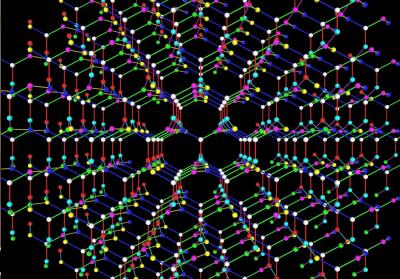
For centuries, human beings have been entranced by the captivating glimmer of the diamond. What accounts for the stunning beauty of this most precious gem?

As mathematician Toshikazu Sunada explains in an article in the Notices of the American Mathematical Society, some secrets of the diamond's beauty can be uncovered by a mathematical analysis of its microscopic crystal structure. It turns out that this structure has some very special, and especially symmetric, properties. In fact, as Sunada discovered, out of an infinite universe of mathematical crystals, only one other shares these properties with the diamond, a crystal that he calls the "K_4 crystal".

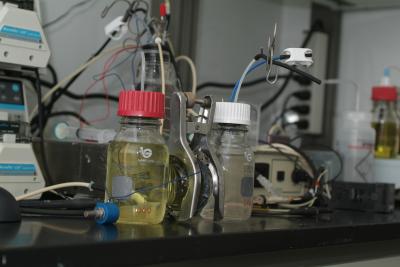
Researchers at the Biodesign Institute are using bacteria as a viable option to make electricity. The next step could be commercialization of a promising microbial fuel cell (MFC) technology.

"We can use any kind of waste, such as sewage or pig manure, and the microbial fuel cell will generate electrical energy," said Marcus, a Civil and Environmental Engineering graduate student and a member of the institute's Center for Environmental Biotechnology. Unlike conventional fuel cells that rely on hydrogen gas as a fuel source, the microbial fuel cell can handle a variety of water-based organic fuels.

"There is a lot of biomass out there that we look at simply as energy stored in the wrong place," said Bruce Rittmann, director of the center.

In the first study examining American physicians' use of placebos in clinical practice in the 21st Century, 45 percent of Chicago internists report they have used a placebo at some time during their clinical practice researchers report in the January issue of Journal of General Internal Medicine.

This study indicates a need for greater recognition of the use of placebos and unproven therapies and discussion about its implications," say the study authors, Rachel Sherman, a fourth year medical student at the University of Chicago's Pritzker School of Medicine, and John Hickner, MD, MSc, professor of family medicine, at the University of Chicago and University of Chicago Medical Center.

The authors sent questionnaires inquiring about placebo use to 466 internists at the University of Ch

As structures made of metal get smaller — as their dimensions approach the micrometer scale (millionths of a meter) or less — they get stronger. Scientists discovered this phenomenon 50 years ago while measuring the strength of tin "whiskers" a few micrometers in diameter and a few millimeters in length.

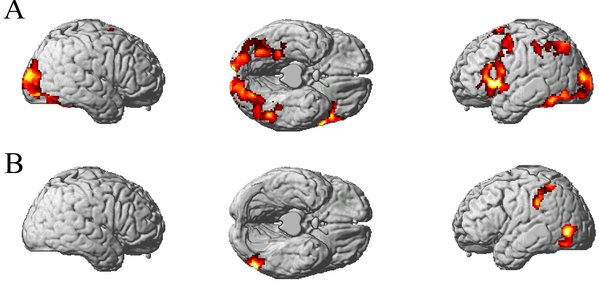
The activation pattern evoked by a familiar object isn’t located in just one place in the brain, according to team of Carnegie Mellon University computer scientists and cognitive neuroscientists who combined methods of machine learning and brain imaging and found a way to identify where people’s thoughts and perceptions of familiar objects originate in the brain.

For instance, thinking about a hammer activated many locations. How you swing a hammer activated the motor area, while what a hammer is used for, and the shape of a hammer activated other areas.

This new method was developed over two years under the leadership of neuroscientist Professor Marcel Just and Computer Science Professor Tom M. Mitchell.

Index to ring finger length ratio (2D:4D) is a trait known for its sexual differences. Men typically have shorter second than fourth digits; in women, these fingers tend to be about equal in length.

Smaller 2D:4D ratios have intriguing hormonal connections, including higher prenatal testosterone levels, lower estrogen concentrations, and higher sperm counts. Reduction in this ratio has also been linked to athletic and sexual prowess. Whether this trait affects the risk of osteoarthritis (OA), a progressive joint disease associated with both physical activity and estrogen deficiency, has not been examined. Until recently.