Banner
Social Media Is A Faster Source For Unemployment Data Than Government

Government unemployment data today are what Nielsen TV ratings were decades ago - a flawed metric...

Gestational Diabetes Up 36% In The Last Decade - But Black Women Are Healthiest

Gestational diabetes, a form of glucose intolerance during pregnancy, occurs primarily in women...

Object-Based Processing: Numbers Confuse How We Perceive Spaces

Researchers recently studied the relationship between numerical information in our vision, and...

Males Are Genetically Wired To Beg Females For Food

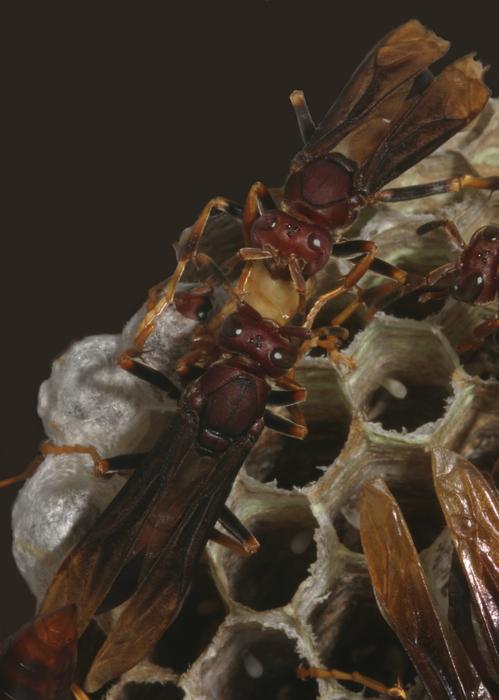
Bees have the reputation of being incredibly organized and spending their days making sure our...

User picture.
News StaffRSS Feed of this column.

News Releases From All Over The World, Right To You... Read More »

Blogroll

With prices of gourmet coffee approaching sticker-shock levels, scientists in Illinois are reporting development of a method to "fingerprint" coffee to detect when corn has been mixed in to short-change customers.

Gulab Jham and colleagues point out that such adulteration of Brazilian coffee is among the most serious problems affecting coffee quality -- with cereal grains, coffee twigs, and brown sugar sometimes mixed into the genuine article. Their research focuses on detecting corn, probably the most widely used adulterant.

British astronomers from the University of Cambridge and the California Institute of Technology (Caltech) have developed a new camera that gives much more detailed pictures of stars and nebula than even the Hubble Space Telescope, and it does all this from the ground. Images from ground-based telescopes are usually blurred out by the atmosphere.

Astronomers have tried to develop techniques to correct the blurring called adaptive optics but so far they only work successfully in the infrared where the smearing is greatly reduced. However a new noise-free, high-speed camera has been developed at the Institute of Astronomy in Cambridge which makes very high resolution imaging in the visible possible.

Plant biologists at the Max Planck Institute of Developmental Biology and the University of North Carolina at Chapel Hill have discovered that an autoimmune response, triggered by a small number of genes, can be a barrier to producing a viable offspring.

Studying Arabidopsis thaliana, sometimes called thale cress, the researchers identified a phenotype that, when paired together from a male and female, produced plants that survived only long enough to produce a few leaves, then died – a phenomenon called hybrid necrosis; literally, death.

Many breeds of African, Asian, and Latin American livestock are at risk of extinction, say scientists from the Consultative Group on International Agricultural Research (CGIAR) and they have called for the rapid establishment of genebanks to conserve the sperm and ovaries of key animals critical for the global population’s future survival.

An over-reliance on just a few breeds of a handful of farm animal species, such as high-milk-yielding Holstein-Friesian cows, egg-laying White Leghorn chickens, and fast-growing Large White pigs, is causing the loss of an average of one livestock breed every month according to a recently released report by the UN Food and Agriculture Organization (FAO).

Stars do not like to be alone. Indeed, most stars are members of a binary system, in which two stars circle around each other in an apparently never-ending cosmic ballet. But sometimes, things can go wrong. When the dancing stars are too close to each other, one of them can start devouring its partner. If the vampire star is a white dwarf – a burned-out star that was once like our Sun – this greed can lead to a cosmic catastrophe: the white dwarf explodes as a Type Ia supernova.

In July 2006, ESO’s Very Large Telescope took images of such a stellar firework in the galaxy NGC 1288.

A nationwide survey of the religious beliefs and practices of American physicians has found that the least religious of all medical specialties is psychiatry. Among psychiatrists who have a religion, more than twice as many are Jewish and far fewer are Protestant or Catholic, the two most common religions among physicians overall.

The study, published in the September 2007 issue of Psychiatric Services, also found that religious physicians, especially Protestants, are less likely to refer patients to psychiatrists, and more likely to send them to members of the clergy or to a religious counselor.