
Banner
You Didn't Feel Continental Mantle Earthquakes, But They Happened. A Lot

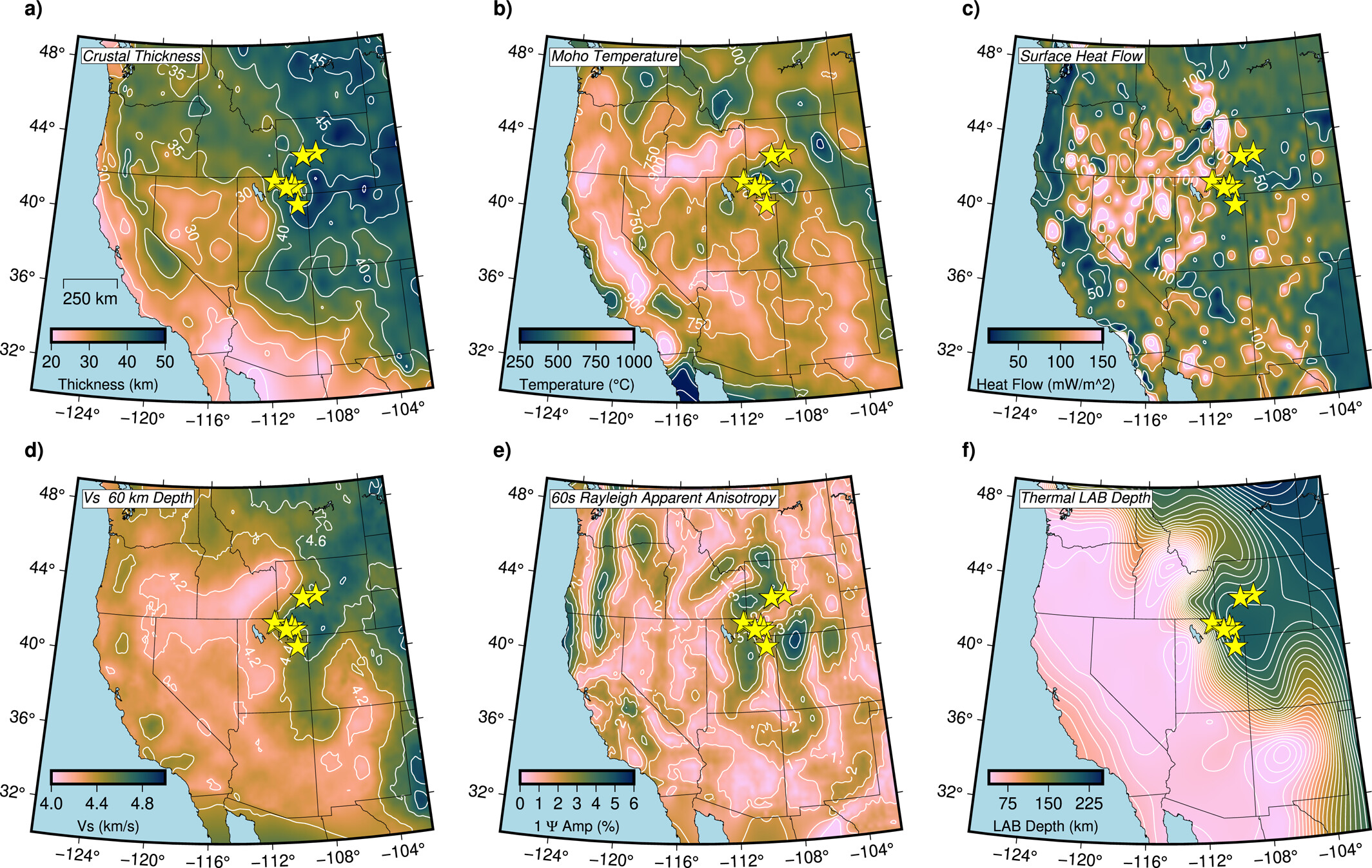
A 1979 seismic event was a different kind of earthquake, and it is has intrigued scientists ever...

How To Overcome Leadership Battles

In times of social rancor and strife, most will fight each other, but societies are saved by those...

Thousands Of Unpublished Studies Show Why Conservation Efforts Miss The Mark

Europe alone has so much unpublished, un-catalogued biological data that it is challenging to take...

Why Antarctic Sea Ice Stopped Growing In 2015

Though numerical models and popular films like An Inconvenient Truth projected Arctic ice...

User picture.
News StaffRSS Feed of this column.

News Releases From All Over The World, Right To You... Read More »

Blogroll

New evidence of the brutish and short lives of Stone Age Britons has been revealed by researchers from Cardiff University and the University of Central Lancashire.

Carbon dating of 14 human remains discovered at a prehistoric burial site suggests that most could have died together in a massacre, possibly in a scramble for land or a cattle raid.


The prehistoric chambered long barrow where the remains of 14 people were discovered. Credit: Cardiff University

Ethanol is widely touted as an eco-friendly, clean-burning fuel. But if every vehicle in the United States ran on fuel made primarily from ethanol instead of pure gasoline, the number of respiratory-related deaths and hospitalizations would likely increase, according to a new study by Stanford University atmospheric scientist Mark Z. Jacobson.

Climate model simulations for the 21st century indicate a robust increase in wind shear in the tropical Atlantic due to global warming, which may inhibit hurricane development and intensification. Historically, increased wind shear has been associated with reduced hurricane activity and intensity. This new finding is reported in a study by scientists at the Rosenstiel School of Marine and Atmospheric Science at the University of Miami and NOAA’s Geophysical Fluid Dynamics Laboratory (GFDL) in Princeton, N.J.


Warmer oceans feed storms, yet increased wind shear is able to also impair their intensity. Credit: NOAA GFDL

There will be 10 million workers in nanotechnology related jobs by 2014, according to Andrew Maynard and Robert Aitken. Measuring the health of these workers, and their exposure to airborne engineered nanomaterials, is vital.

Maynard is chief science advisor at the Wilson Center's Project on Emerging Nanotechnologies and Aitken is director of strategic consulting at the Institute of Occupational Medicine in Edinburgh.

According to a new review of studies, women who received an advance supply of birth control pills for emergency contraception had the same chance of becoming pregnant as women who did not have early access to the pills.

Contrary to the fears of critics, the study says, the presence of Plan B does not provoke riskier sexual behavior but advance access to emergency contraception is also no antidote for the national problem of unintended pregnancy.

Surgery is about to change with the introduction of a new surgical robotic system at the University of Calgary/Calgary Health Region. NeuroArm aims to revolutionize neurosurgery and other branches of operative medicine by liberating them from the constraints of the human hand.

The world's first MRI-compatible surgical robot, unveiled today, is the creation of neurosurgeon Dr. Garnette Sutherland and his team. Dr. Sutherland has spent the last six years leading a team of Canadian scientists, in cooperation with MacDonald, Dettwiler and Associates Ltd. (MDA), to design a machine "that represents a milestone in medical technology."




