Banner
Could Niacin Be Added To Glioblastoma Treatment?

Glioblastoma, a deadly brain cancer, is treated with surgery to remove as much of the tumor as...
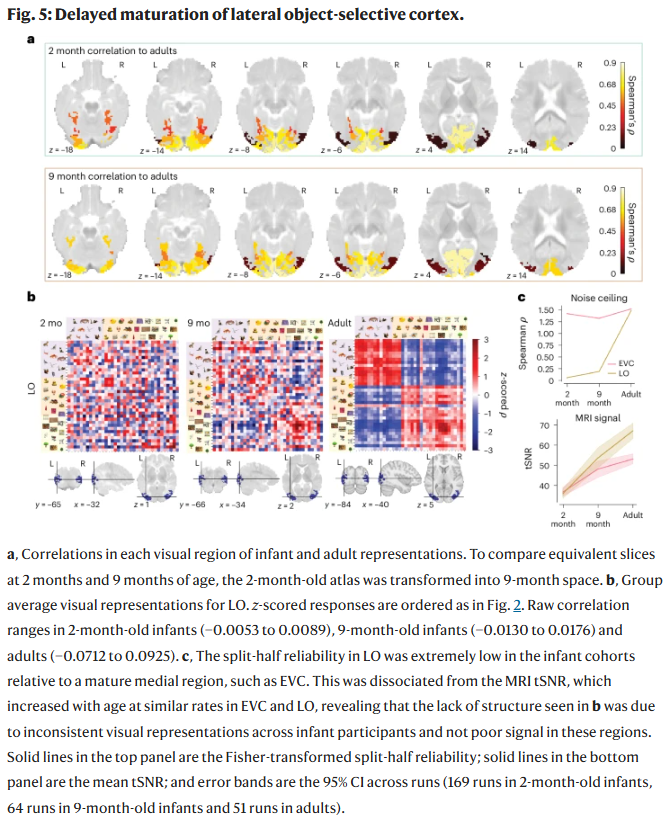
At 2 Months, Babies Can Categorize Objects

At two months of age, infants lack language and fine motor control but their minds may be understanding...

Opportunistic Salpingectomy Reduces Ovarian Cancer Risk By 78%

Opportunistic salpingectomy, proactively removing a person’s fallopian tubes when they are already...
Environmental Activists Hate CRISPR - And They're Dooming People With HIV

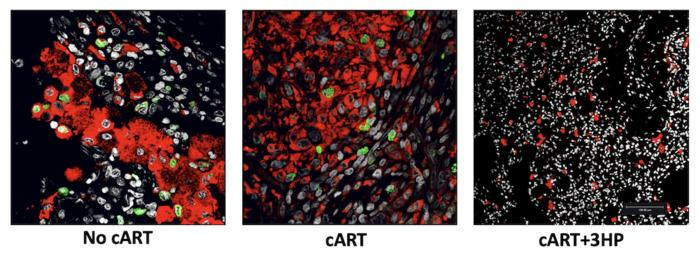
Existing treatments control HIV but the immune system does not revert to normal. They is why people...

User picture.
News StaffRSS Feed of this column.

News Releases From All Over The World, Right To You... Read More »

Blogroll

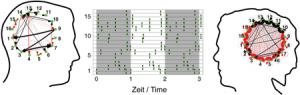
Although no two brains are alike, they can display a comparable pattern of neural activity when exposed to similar sensory input. Scientists at the Max Planck Institute for Dynamics and Self-Organization in Göttingen have now developed a mathematical method to design networks from neural cells which exhibit a predefined pattern dynamics. The researchers hope that their method will assist them in getting closer to understanding which of the possible network configurations was privileged by evolution -- and why (Physica D: Nonlinear Phenomena, December, 2006).


Different neuronal networks can bear the same pattern of activity -- as shown in this example of a network made of 16 neurons.

For cells that hold so much promise, stem cells' potential has so far gone largely untapped. But new research from Rockefeller University and Howard Hughes Medical Institute scientists now shows that adult stem cells taken from skin can be used to clone mice using a procedure called nuclear transfer. The findings are reported in the Feb. 12 online edition of the Proceedings of the National Academy of Sciences.


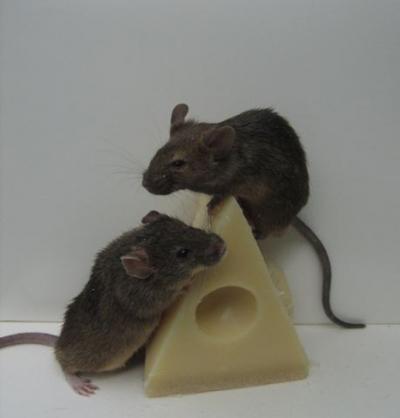
Using a technique called nuclear transfer, mice were cloned using adult skin stem cells (right) and a more differentiated type of skin cell (left). The mouse on the right is almost two years old and the mouse on the right is one and a half.

The Scripps Research team, led by neuroscientists Manuel Sanchez-Alavez and Tamas Bartfai, discovered that mice genetically altered to lack a molecule known as the EP3 receptor tend to be more active during their normal sleep cycle and to eat more. In the study, this led to weight increases of up to 30 percent relative to mice with the receptors.

The EP3 receptor is one of four types of receptors for prostaglandin E2 (PGE2), the most important inflammatory mediator that controls a variety of physiological functions including fever, fertility, and blood pressure.

Some breaking news, just in time for Valentine's Day: Researchers have identified something called "sperm competition" that they think has evolved to ensure a genetic future. In sexual reproduction, natural selection is generally thought of as something that happens prior to – and in fact leads to -- the Big Event. This thinking holds, for example, that we are drawn to physical features that tell us our partner is healthy and will give us a fighting chance to carry on our genetic lineage.

Two of Greenland's largest glaciers shrank dramatically and dumped twice as much ice into the sea during a period of less than a year between 2004 and 2005. And then, less than two years later, they returned to near their previous rates of discharge.

The variability over such a short time, reported online Feb. 9 on Science magazine's Science Express, underlines the problem in assuming that glacial melting and sea level rise will necessarily occur at a steady upward trajectory, according to lead author Ian Howat, a post-doctoral researcher with the University of Washington's Applied Physics Laboratory and the University of Colorado's National Snow and Ice Data Center.

A new statistical method of determining genetic traits that influence social interactions among animals may provide for more productive livestock.

Scientists from Purdue University, the Netherlands and England designed mathematical equations based on traits to choose animals that are more congenial in groups, said William Muir, a Purdue Department of Animal Sciences geneticist. The new method is a tool that may contribute both to animal well-being and to securing the world's future food supply, including possibly permitting more animals to be domesticated, Muir said.

The tool makes it possible to design selective breeding programs to effectively reduce competitive interactions in livestock, he said.