Fake Banner
Environmental Groups Back In Court To Help Fellow Rich White People

The Usual Suspects of the anti-science movement, Center for Biological Diversity(1), Environmental...
Batteries Are Stuck In The 1990s Because Solid-State Batteries Keep Short-Circuiting

The electric car industry is held back by reliance on conventional energy. Despite spending trillions...
Dogs Have Been 'Man's Best Friend' For 14,000 Years

The bond between humans and dogs is one of the oldest stories in anthropology. It may also be a...
Is This The D'Artagnan Made Famous In 'The Three Musketeers' By Dumas?

“I have lost D’Artagnan, in whom I had every confidence,” wrote King Louis XIV to his Queen...

User picture.
picture for Fred Phillipspicture for Tommaso Dorigopicture for picture for Hontas Farmerpicture for Atreyee Bhattacharyapicture for Patrick Lockerby
Hank CampbellRSS Feed of this column.

I founded Science 2.0® in 2006 and since then it has become the world's largest independent science communications site, with over 300,000,000 direct readers and reach approaching one billion. Read More »

Blogroll
It's long been hiding in plain sight that Russia funnels money to activist groups in the U.S. that will help their causes. Russia's top two exports are food and energy so it was no surprise when activists began to claim that hydraulic fracturing ("fracking") would lead to earthquakes and cause the earth to deflate, or that 400 miles of Keystone XL pipeline in addition to 20,000 miles of pipeline already on top of an aquifier would be risky too environmentally hazardous. 
Wealthy elites from Manhattan have been retreating to their vacation homes while year-round residents wish they would stay away. Urban residents are being treated look poor refugees during pandemics, famine, and war. They will bring the problem with them, it is believed. 

While it may seem like an odd stance for progressive elites in the northeast to take about their fellow man, it is likely the first time that these issues were anything except academic to them. And they are not wrong for believing that people from cities are more likely to be carriers.

But while cities are more likely to be carriers, they are also more likely to have infrastructure to handle it.(1) 
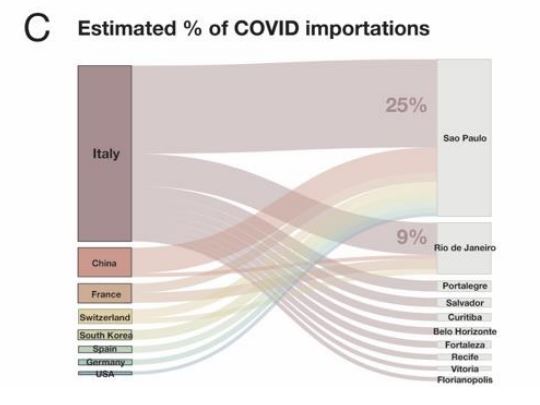
There is no question that travel restrictions and social distancing have helped reduce the spread of SARS-CoV-2, that coronavirus strain that originated in Wuhan, China late last year and then spread worldwide.

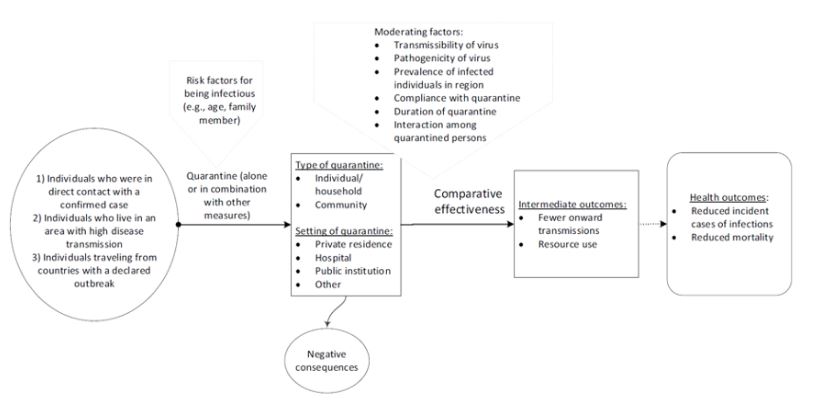
What about quarantine?

A new review hopes to shed some light but because the review is primary of modeling papers - many of which looked like estimates and some more like guestimates - it may be only partially useful from an applied health policy perspective. The real answers may not be known for years.
Political critics can argue that the U.S.
Environmental Working Group recently rolled out its annual Dirty Dozen list of foods that ... wait, did they?

This year, no one seems to know or care if a group of lawyers paid an intern to go through USDA pesticide data and did simple arithmetic to declare how 'toxic' fruit was unless the pesticides on it were made by their clients.
During the SARS-CoV-2 pandemic, the 2019 form of the coronavirus that originated in Wuhan, China and has caused the COVID-19 disease worldwide, there has been concern about protecting those with preexisting conditions, which will be many seniors. Though the risk is negligible in young people, since coronavirus is in the same family as the common cold anyone can carry it without being symptomatic and that means extra precaution is being taken regarding the elderly.

Yet social isolation can be harmful as well. If you've ever watched the television show "Alone", you know even the ablest survivalist can crack under actual isolation in the wilderness. And families may regard it as too risky to visit right now.