



I thought I'd write a compelling story about Humboldt squid and one of their favorite prey items, the lightfish Vinciguerria. These two creatures are quite the dynamic duo: one flashing like a red-and-white strobe, the other studded with glowing photophores. They clearly belong at some kind of deep-sea rave.

But I'm riding a train, and I keep getting distracted by the scenery. I can't help it; I love the California hills!

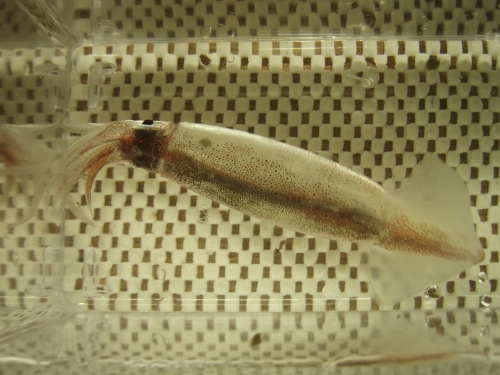
By the fifth false start, I realized that if I wanted to post anything today, it would have to be light and fluffy. So here is a picture I took of a juvenile Humboldt squid in an aquarium:


For the crowd watching an Illinois high school football game last fall, it was a sickening feeling watching one of their Unity High School cornerbacks collapse to the ground after delivering a heads-down tackle on an opposing running back (see video here.) 

For Steven Broglio, an assistant professor of kinesiology at the University of Michigan, it was a mixed feeling of concern and curiosity as to the extent of the injury.  Since 2007, Broglio has been collecting data on the violent collisions that occur in high school football and their contribution to concussions and other head injuries.
The Posthumous Memoir of Ignaz Venetz


This memoir was published by the Swiss Natural Sciences Society, shortly after the death of Ignaz Venetz, to honor his great contribution to science.

For background information, please see part 1 of this article -
The Posthumous Memoir Of Ignaz Venetz
 and 
Ignaz Venetz - Climate Change Pioneer.

As with the 1821 paper, my plain ASCII transcription retains the original pagination, using rows of dots as page breaks.

The transcription of the memoir begins below this page break >>
The Posthumous Memoir of Ignaz Venetz

My  three part article on Venetz's prize-winning 1821 paper began with some facts tending to prove that he was the first person to discuss climate change scientifically.  Since beginning my researches concerning Venetz, I have discovered many more facts.


The discovery of climate change.
Science 2.0 favorite Lawrence Krauss of ASU tackled the James Webb Space Telescope issue on the Richard Dawkins website and a commenter there linked to my rationalization that canceling it might be okay, with the hasty disclaimer that he does not agree with what I write - the Dawkins site moderators, and perhaps Dawkins himself, have made their distaste for anyone outside the echo chamber well known so perhaps his rapid disavowal was necessary, though it seems odd Krauss would have the same conce

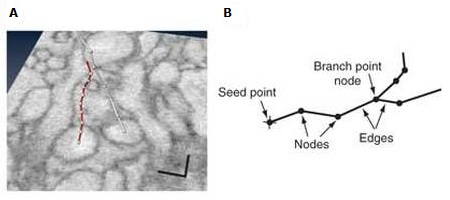
The brain is quite complex (talking about an understatement), with its billions of neurons with many connections between them. These neurons and their connections form an intricate three-dimensional structure which forms the seat for cognition, awareness and much more. Its intricacy, however, also makes mapping it a daunting challenge. Nevertheless, there are some research groups that have put themselves to the task (for example, the Human Brain Project).

Freethoughtblogs.com has now been announced. PZ Myers’ “Pharyngula” and Ed Brayton’s “Dispatches from the Culture Wars” together with three other blogs start a new network.

I have always liked dolphins but I can't pinpoint why - maybe it was "Flipper" when I was a kid, it can't be "Star Trek IV: The Voyage Home" because a whale was saving the Earth in that one.  

 It could certainly be Manfred Mann's Earth Band.  If you aren't familiar with Manfred Mann, he was a keyboard player from South Africa who made it big in England in the 1960s and then quit to simultaneously be more cynical than the pop hit factory his band had become and more pure at the same time; by doing jingles to pay the bills while he made the music he wanted on the side.

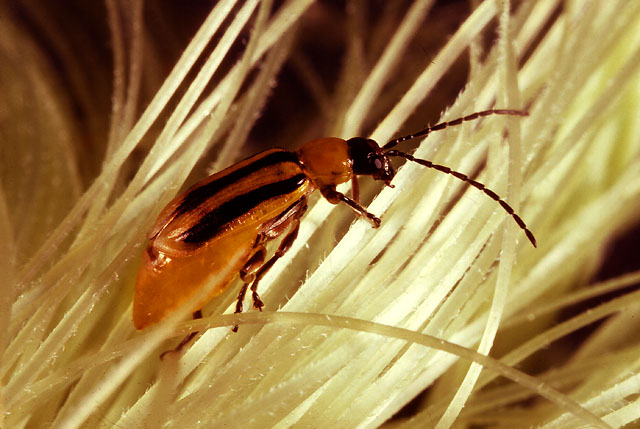
Large amounts of research and money have been invested in the development of transgenic, or GM (genetically modified) crops. These crops are genetically engineered to withstand drought, excessive rain or other weather conditions, or to improve their yield or increase their rate of development, or to express certain toxins that would limit the amount of insects feeding on them.

Before embarking on this discussion it is important to try and resolve some language and definition issues that will likely occur in this post.

One of the main difficulties in addressing this problem stems from the limitations of language.  Language exists for humans, so by default, many of our words convey a meaning that is primarily interpreted within a human context.  As a result, when it comes to describing other living things we often find ourselves faced with terms that carry a significance that is misplaced when addressing other organisms.  I want to be clear that there is nothing in the following discussion that is intended to be anthropomorphic.

