Fake Banner
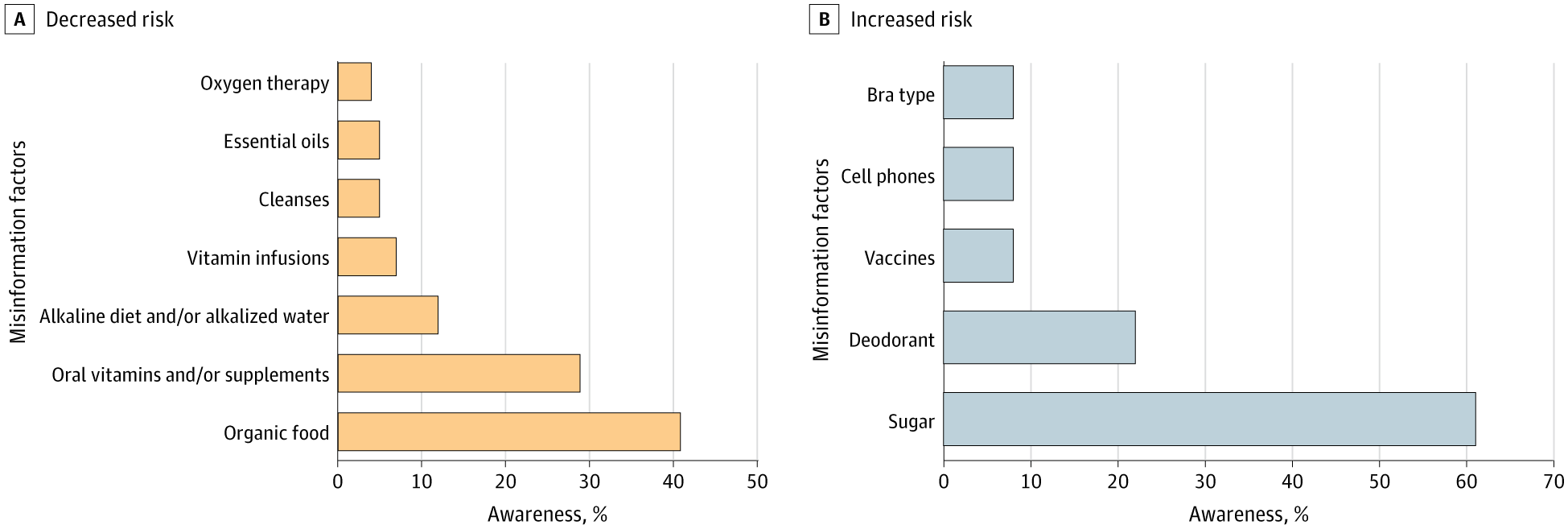
Misinformation Common Among Women With Breast Cancer

Vaccines are getting American media attention now that Republicans are engaging in misinformation...
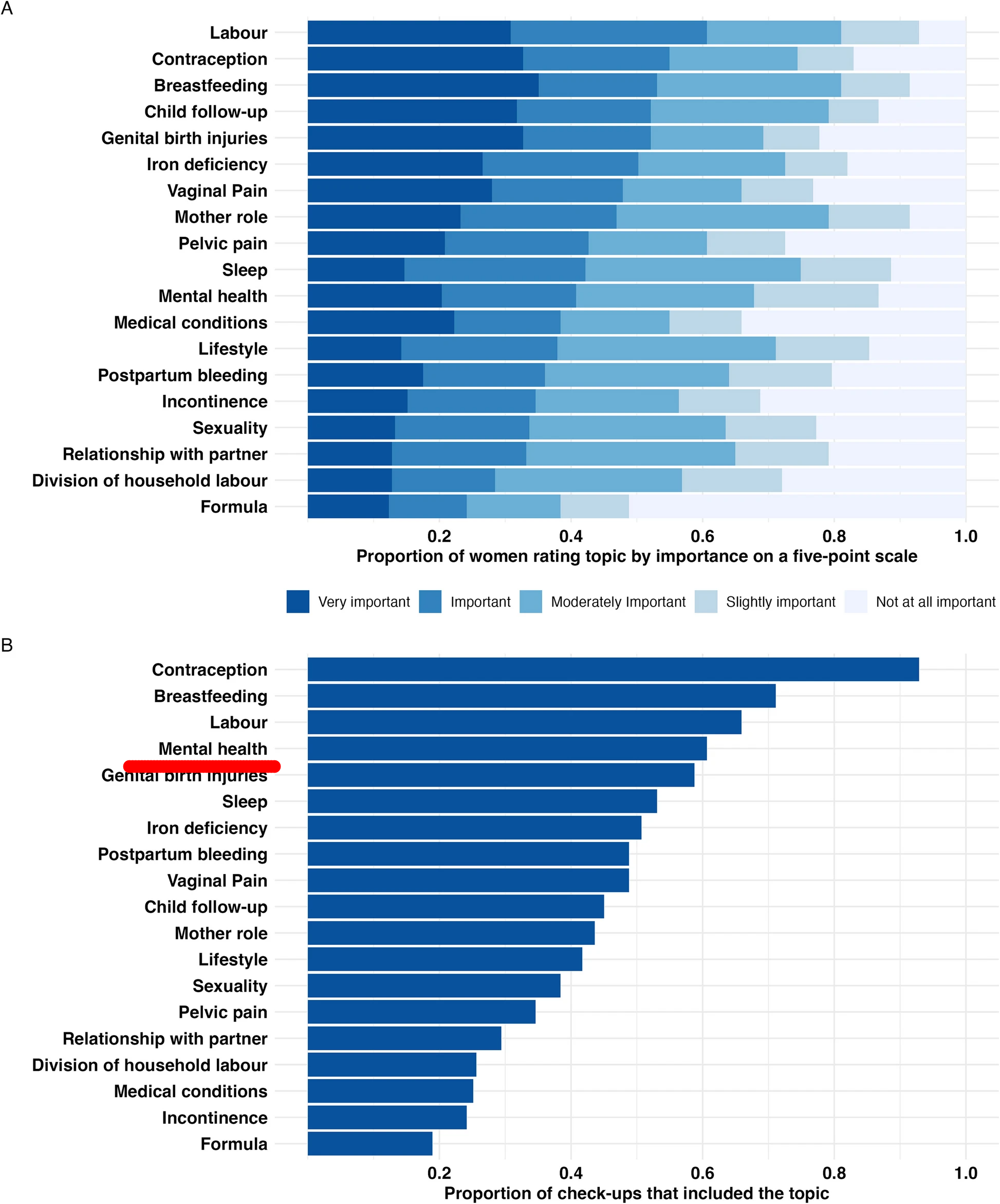
Even With Universal Health Care, Mothers Don't Go To Postnatal Check-Ups

For decades, health care costs have been a political topic in America. Advocates argue it is the...

Happy Twelfth Night - Or Divorce Day, Depending On How Your 2026 Is Going

Today is, in Christian observance, Twelfth Night, the end of The 12 Days of Christmas in that song...
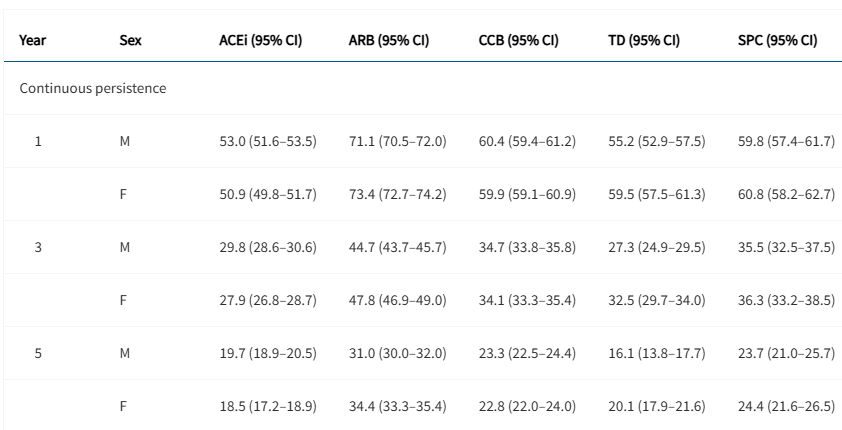
Blood Pressure Medication Adherence May Not Be Cost, It May Be Annoyance At Defensive Medicine

High blood pressure is an important risk factor for developing cardiovascular disease and premature...

User picture.
picture for Tommaso Dorigopicture for Fred Phillipspicture for Hontas Farmerpicture for picture for Patrick Lockerbypicture for Ilias Tyrovolas
Hank CampbellRSS Feed of this column.

I founded Science 2.0® in 2006 and since then it has become the world's largest independent science communications site, with over 300,000,000 direct readers and reach approaching one billion. Read More »

Blogroll
The anti-vaccine movement tries to portray itself as scrappy grassroots outsiders standing up to Big Pharma and Big Government, but it's nothing of the kind, finds a recent Washington Post exposé.

The National Vaccine Information Center, which claims to be the largest "awareness" non-profit opposing vaccines, actually gets almost half of its funding from corporations. And their largest corporate benefactor is the osteopath Joe Mercola, head of a $100 million empire that sells alternatives to medicine for nearly everything.  And who funds lots of groups opposed to science, from medicine to food.
Two years ago we were helping my mother-in-law get settled into her new place and, with the manual labor done and my usefulness diminished, she and her daughters talked details and I sat in a chair. A Hallmark movie was on. I had never seen it before but I was convinced I had.

After about 10 minutes, when a seemingly avoidable misunderstanding occurred onscreen, I began taking notes on my phone and talking about the action. My family asked what I was doing and I declared that this was brilliant storytelling. This formula could work with anything, it was that rock solid.
Board games, where you play on an actual board, were once common in every household. Games have a long history, thousands of years, but board games took off in diversity in the 20th century, thanks to "Monopoly" and then others.

It's impossible to predict the future so they may never again reach the peak popularity they once had, or they may stage a resurgence as young people want to take a break from an increasingly digital society. They may even become bigger than ever. I never once played Texas Hold 'em as a young guy in Pennsylvania but in the 2000s it took off nationwide and has now become the most popular form of poker.(1) My kids have never played draw or stud but I showed them how to play Hold'em.
Filtered coffee has been linked to lower risk of type 2 diabetes by an epidemiology group.

That's an awfully narrow claim, right? Like a baseball player arguing he led the team in 9th inning doubles in the month of August.(1) Coffee has already been touted as a way to lower risk of type 2 diabetes for a while. Before you get too excited about this "filtered" coffee preventing diabetes, we need to remember what they are measuring - numbers, not coffee. This is not a science finding, it is an "exploratory" result. Drinking coffee, filtered in paper or Turkish in a pan, is not going to prevent diabetes any more than a juice cleanse prevents whatever that stuff is claiming to prevent.
A joke in nutrition circles is that while you once needed to be rich to be fat, now you need to be rich to be thin. Scientific progress has given us cheap food, anyone can afford to eat well, and after an existence of worrying about food availability it takes generations for culture to change to not eating as much as we can. Rich people, though, have gym memberships.
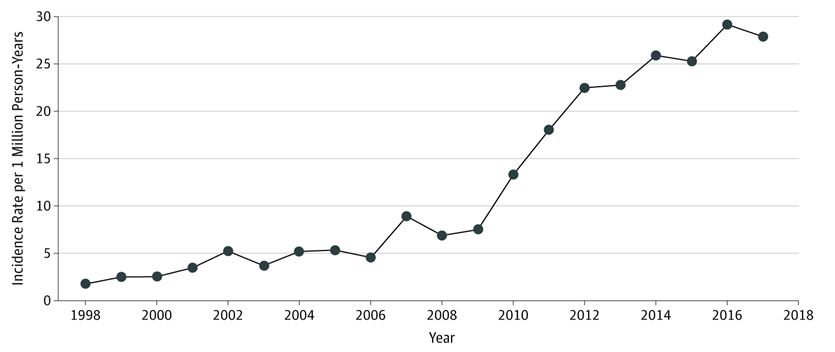
A cross-sectional study has found that head and neck injuries related to cell phone use increased steadily over a recent 20-year period.

But that may not be meaningful in a relative risk way. The sample was just over 2,500 cases from 1998 through 2017. Media will trumpet 300 percent since 2007 but that doesn't make injuries common. It just means that as phones changed from phones to messagers to full-on portable televisions and computers people are able to walk and be distracted more.