
Holidate Science: Relationship Differences Between Gay and Heterosexual Men
Men may be men but gay and heterosexual men express differences about relationships when it comes to perceived stability, attachment anxiety, and avoidance.
Men may be men but gay and heterosexual men express differences about relationships when it comes to perceived stability, attachment anxiety, and avoidance.

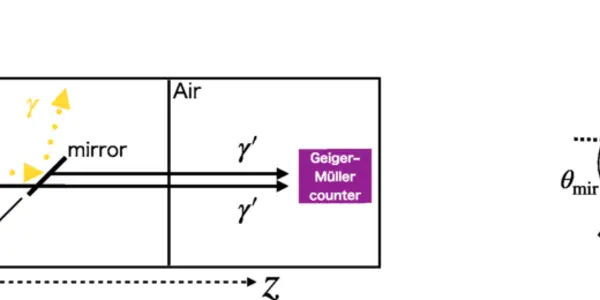
There are many hypothetical particles proposed to explain dark matter and one idea to explore how strongly hypothetical dark photons interact with normal photons wouldn't even involve a new and expensive dedicated facility, says Tokyo Metropolitan University Associate Professor Wen Yin.

Chronic pain is reported by over 20 percent of the global population but there is no scientific determination of what that even means.There are metrics but standard 0-to-10 scales and questionnaires are subjective and basically only useful for justifying treatments to insurance companies, they are clinically not much help.Pain patients were demonized by the Obama administration in their war on Big Pharma and "opiods" that many in Congress now claim to support and that may be why both doctors and patients minimize their symptoms on official forms. No patient wants to be told their pain is just recreational desire while doctors are the easy targets for government. That plus general recall bias and confusion about what a pain scale really means clouds the issue.

An analysis of 6.14 million maternal-child health records has linked prescription medications to higher rates of Autism Spectrum Disorder in offspring. Sterol biosynthesis–inhibiting medications (SBIMs) inhibit the cholesterol synthesis pathway and are include antidepressants, antipsychotics, anxiolytics, beta-blockers and statins; aripiprazole, atorvastatin, bupropion, buspirone, fluoxetine, haloperidol, metoprolol, nebivolol, pravastatin, propranolol, rosuvastatin, sertraline, simvastatin, cariprazine and trazodone. These include some of the most commonly prescribed medications in the United States, accounting for more than 400 million annual prescriptions.
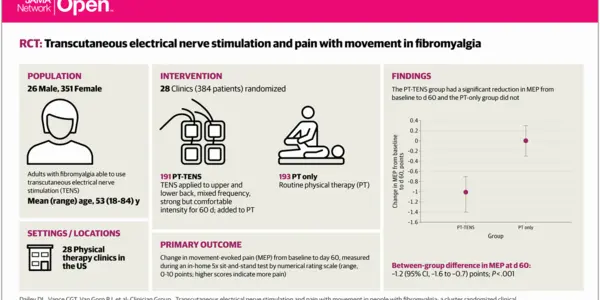
Fibromyalgia is the term for a poorly-understood condition where people experience pain and fatigue while moving but have no testable inflammation or damage. Because fatigue is a non-specific symptom, fibromyalgia becomes a 'diagnosis of exclusion', where pain persists but testable conditions are ruled out. It is said to affect about four percent of the population.

Older people who eat large amounts of meat have a lower risk of dementia and cognitive decline than they should have with a gene that some link to increased risk. The gene that has been linked to increased risk is Apolipoprotein E, which plays a role in the transport of cholesterol and fats in the brain and blood. The gene exists in three main variants: epsilon 2, 3 and 4. Since each person inherits two APOE genes, one from each parent, giving six possible genotypes): 2/2, 2/3, 2/4, 3/3, 3/4 and 4/4. In Sweden, where the study was done, approximately 30 per cent of the population are carriers of the gene combinations APOE 3/4 or APOE 4/4.

A new DNA analysis reveals that long before the Incan Empire took over Peru, animals were being transported across the Andes, a trek that also involved rainforests, highlands and deserts. The analysis was of parrot feathers discovered at Pachacamac, Peru, a religious hub that is far outside the birds’ native rainforest range. The burial feather assemblage included the Scarlet Macaw, Blue-and-yellow Macaw, Red-and-green Macaw and Mealy Amazon. DNA sequencing, isotope chemistry and computational landscape modeling says the western side of the Andes was just as inhospitable to these species one thousand years ago as it is today.

The common imagery of prehistoric people is either rooting through dirt for grubs and picking berries, or hunting mastodons with spears. Those are both true but some also had a good variety in meals. They were also fishers, not just hunter-gatherers.

Epidemiologists say that pollen can cause worse outcomes for students in math, chemistry and physics.Allergic rhinitis, an allergic reaction to things such as dust, pet hair, and pollen, is common. Epidemiologists link that to cardiovascular health and even blanket terms like wellness. There is no question people with allergies suffer, especially during peak pollen production, but a new paper says allergy sufferers may be less likely to be good at math and science, and pollen could be why.
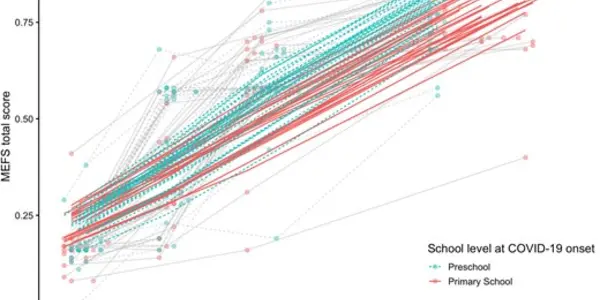
COVID-19 lockdowns were an important tool in mitigating risks of acquiring the disease and putting those with comorbidities at higher risk, but objective epidemiologists questioned the value of lockdowns beyond three weeks. Some areas exceeded SAR and R0 models by months or, in states like California, years.The value of public education over home-schooling or private has been touted by proponents as social adjustment, so there was also concern about how children might be stunted by not having access to anything except close family and device screens.

A new study finds that even in urban environments, trees make a terrific contribution to offsetting carbon dioxide emissions in cities, while grass is less valuable.Soil respiration of grass exceeds photosynthesis so grassy areas release more carbon dioxide than they bind, making them a source of CO2 rather than mitigation, whereas on summer days, tree absorption can cover the emissions from Munich's urban car traffic and even exceed them at times.

A new paper says the way to lower your risk of acquiring type 2 diabetes is not losing weight and exercising more, but sleeping 7 hours and 18 minutes every night.You can't multiply that by seven days and catch up by sleeping more on the weekend and it also means if you just sleep less, you are out of luck. That is why like all epidemiological correlation, this is only EXPLORATORY. Science has not confirmed this and the correlation arrows could easily go the other way; insulin misfires may make you sleep less.

A randomized, double-blind, placebo-controlled clinical trial tested a four-day oral supplement, “FoTv,” which is made from the mycelium — the root-like network — of two types of mushrooms: Fomitopsis officinalis and Trametes versicolor (FoTv). Participants began taking the supplement on the same day they received their vaccine and the authors reported that the supplement acted as a natural immune regulator and decreased vaccine side effects while preserving or increasing antibody levels and helping vaccine protection last longer. They say it could replace synthetic immune adjuncts which help the body produce a stronger antibody response - but have been linked to side effects such as fever, chills, fatigue and muscle aches.


