
Why Both Stimulating And Blocking GLP-1R Helps People Lose Weight
Understanding which brain circuits respond to weight loss medications and how they behave could lead to better weight loss with fewer side effects.
Understanding which brain circuits respond to weight loss medications and how they behave could lead to better weight loss with fewer side effects.

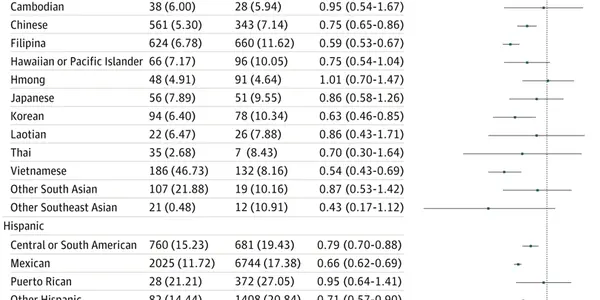
New survey results find that sociocultural factors may be involved in how likely someone is to report moderate to severe depression symptoms and get a prenatal depression diagnosis.

FDA-approved flu treatments target viral enzymes of influenza but the virus mutates, which is why there is a new vaccine each year. Recent work showed that a cocktail of antibodies offered protection mice from nearly every strain of influenza. Even avian and swine flu. Their cocktail did not allow viral escape, even after a month of repeated exposure.
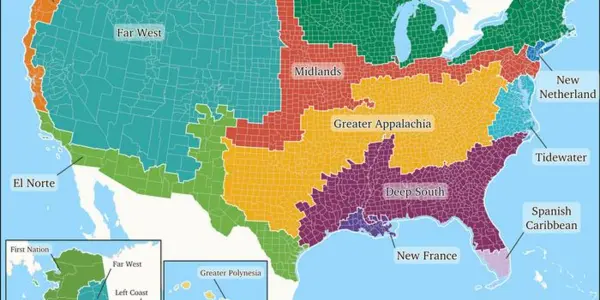
People in the northeast of the United States think they have greater "wellness" than everywhere else except California. People in the southern United States think they have more wellness than everywhere else.Which is right? They both are. Wellness may be in social media ad campaigns and have diets and apps and fads under the umbrella, but it's entirely subjective. The northeast believe they have greater wealth and social standing, which they consider traditional wellness. The south sense of purpose and community identity, which is existential wellness.

If you have spent any time on social media, you have a different kind of bystander effect in action. Psychologists say if many people are around, the bystander effect is why everyone is less likely to help. They believe someone else will be more competent or know something you don't. If you walk by a person laying unconscious in New York City, based on experience they did not have a heart attack and are in peril. They are on drugs or alcohol.

Colors trigger unique brain responses, the subjective nature of our brains and eyes, not to mention different media, is why a famous blue dress experiment took countries by storm.To try and help determine how different people have the same brain responses to colors, researchers measured color-induced brain responses from one set of participants. Next, they predicted what colors other participants were observing by comparing each individual’s visual cortex brain activity to color-induced responses of the first set of observers.

One key hallmark of being human is walking on two legs. It was a seismic shift seen in no other primates. Like much of evolution, it happened in fits and starts. The 4.4 million year-old Ardipithecus of Ethiopia was a tree climber with a grasping toe that would walk upright 3.2 million year old Lucy had a pelvis brought upright walking closer, with flaring hip blades for bipedal muscles.Some of that legacy remains in our closest relatives, the African apee, e.g. chimpanzees, bonobos, and gorillas, have upper hipbones (ilia) that are tall, narrow, and oriented flat front to back which anchor large muscles for climbing.

Some sixty million years ago a fountain of hot rock that rises from Earth’s core-mantle boundary unleashed volcanic activity across a vast area of the North Atlantic, from Scotland to Greenland. We can detect the effects in spectacular basalt columns of the Giant’s Causeway in Ireland.But why Iceland’s fiery mantle plume had such a dramatic impact has been the subject of debate.

Advanced cancer often brings preparation for the worst and proponents of the modern health care system use terms like "advocate" and "empowered" when everyone who isn't part of the system knows patients have trouble doing the former and certainly are not the latter.Government, health insurers, and hospitals make the real decisions, and even if that goes your way doctors may do what they want. That is why nearly 40% say their wishes are ignored when it comes to their care goals.

There us something new to talk about around Uranus, the seventh planet from the Sun. Uranus is a “sideways planet” due to its extreme axial tilt, and the ice giant owes its cyan-color to a deep atmosphere composed of hydrogen, helium and methane. And it has moons. Lots of moons. Now it has one more. A James Webb Space Telescope survey found the as-yet unnamed new one, provisionally designated S/2025 U 1, bringing the total to 29, thanks to 10 long exposures obtained by the JWST Near-Infrared Camera.Why it escaped detection for so long

A new international, randomized clinical trial is evaluating a vaccine developed to protect against 21 strains of pneumococcus, up from the current 13 strains covered now. That means greater protection to babies against the common infection that causes pneumonia, sinusitis and meningitis.Pneumococcal disease can lead to serious illness and death among children under two years of age. The US had 31,000 cases and more than 3,500 deaths from invasive pneumococcal disease (bacteremia and meningitis)Participants will receive four doses of the vaccine at two, four, and six months of age and a booster dose at 12-15 months. To stay within real-world conditions they will still receive the usual vaccines.

A new computer simulation says that climate change may may ruin the tall beech trees common in Europe. Unfortunately, many other simulations already said it was too late to curb runaway emissions by India and China as of 2016.For the last 2,000 years, the area from southern Sweden to central France has been a temperate deciduous forest zone, and beech tries thrived. The new estimate says that future summers will be warmer, drier and reminiscent of the Mediterranean climate, which are fine for people but not beech trees.

We usually associate smell with bad things, like body odors or fire or a gas leak, but a keen sense of smell helps us enjoy food and other pleasures in life. Many things cause loss of smell; aging is number one, but also brain injuries and loss of smell was a common complaint about COVID-19 infections. It's not a life-threatening condition, which may be why there are very few effective treatments.


