Fake Banner
Happy Twelfth Night - Or Divorce Day, Depending On How Your 2026 Is Going

Today is, in Christian observance, Twelfth Night, the end of The 12 Days of Christmas in that song...
Blood Pressure Medication Adherence May Not Be Cost, It May Be Annoyance At Defensive Medicine

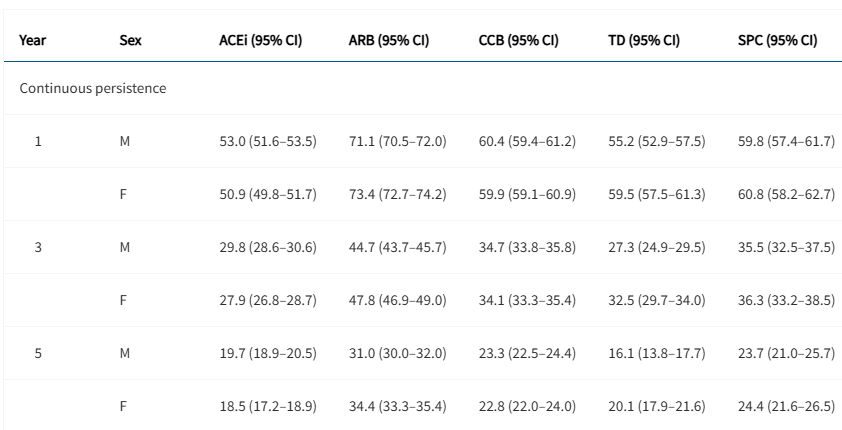
High blood pressure is an important risk factor for developing cardiovascular disease and premature...

On January 5th, Don't Get Divorced Because Of Hallmark Movies

The Monday after New Year's is colloquially called Divorce Day, but it's more than marriages ending...

Does Stress Make Holidate Sex More Likely?

Desire to have a short-term companion for the holidays - a "holidate" - is common enough that it...

User picture.
picture for Tommaso Dorigopicture for Fred Phillipspicture for Hontas Farmerpicture for picture for Patrick Lockerbypicture for Ilias Tyrovolas
Hank CampbellRSS Feed of this column.

I founded Science 2.0® in 2006 and since then it has become the world's largest independent science communications site, with over 300,000,000 direct readers and reach approaching one billion. Read More »

Blogroll
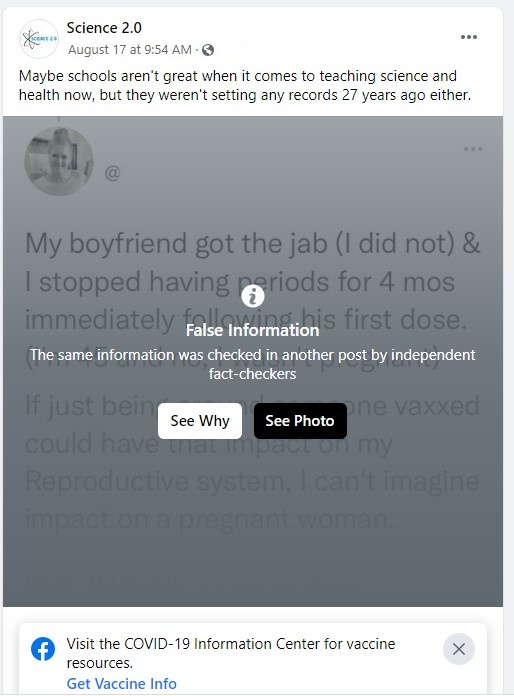
It has become common for political activists to demand that social media engage in bans and content warnings, because the other side is too stupid to know false facts from the real kind. In reality, everyone who takes their politics too seriously is inclined to believe the worst when it comes to others, and calling for bans is more of a patronizing way to pretend they care about discourse when they most just want to control it.

This has led to companies like Facebook and Twitter either outright censoring some content or putting nonsensical fact checking warning labels on it. Here is a case in point from our own Facebook page:


Here is what it was ridiculing:
COVID-19 is certainly worse than the SARS and MERS pandemics that occurred a few years prior, and the reasons why SARS-CoV-2 is worse than those others is open for debate, but one thing is not; pandemics, even extreme ones, are not as rare as many believe.

The big difference between pandemics now and those of prior generations is the prevalence of real-time media and worldwide connections never available before. We have no real way to know how many people the Asian Flu of the 1950s killed because there was even less transparency in China then than there is now. Likewise, the Spanish Flu may have killed far more than we know, just as we don't know how many died in a country like Brazil or China.
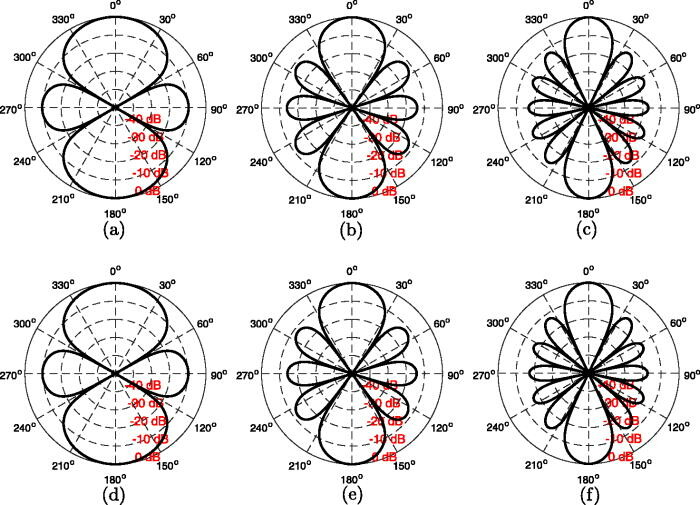
Devices we watch and listen on are smaller than ever, which means speakers for sound are as well. In the past, it was difficult to get quality sound from small parts because sound is still analog when it gets to us, and that takes surface area. 

Like synthetic grape flavor, using one important part when it requires lots means a result is not quite right. Today's compact speakers are more like synthetic banana flavor; you are unlikely to know the difference, and that is due to mastering physics beyond the surface area - controlled destruction of sound waves.
During the COVID-19 pandemic, the American public fell back in love with science. In the first 19 years of this century, Californians denied vaccines to such an extent a law had to be passed to prevent coastal parents from creating a Whooping Cough pandemic. Every building had cancer warnings somewhere - even oncology wards in hospitals warned cancer patients they might get cancer by visiting their doctor - and Non-GMO Project rock salt(!) took off.

That has now changed.(1) For most of the country, Purell, Clorox, and Lysol replaced bottles of useless green-labeled goop that claimed to be natural alternatives. People wanted what worked.
The EPA is requesting public comment on a biological evaluation of three seed treatment pesticides, called neonicotinoids. Neonicotinoids were created in the 1990s to require less mass spraying and possible damage to the environment. They are seed treatments, so they protect plants when they are most vulnerable to pests and that means less strain on the environment with spraying.

The sounds great, but so does limiting them when you read "each of these chemicals is likely to adversely affect certain listed species or their designated critical habitats" because that reads authoritative.
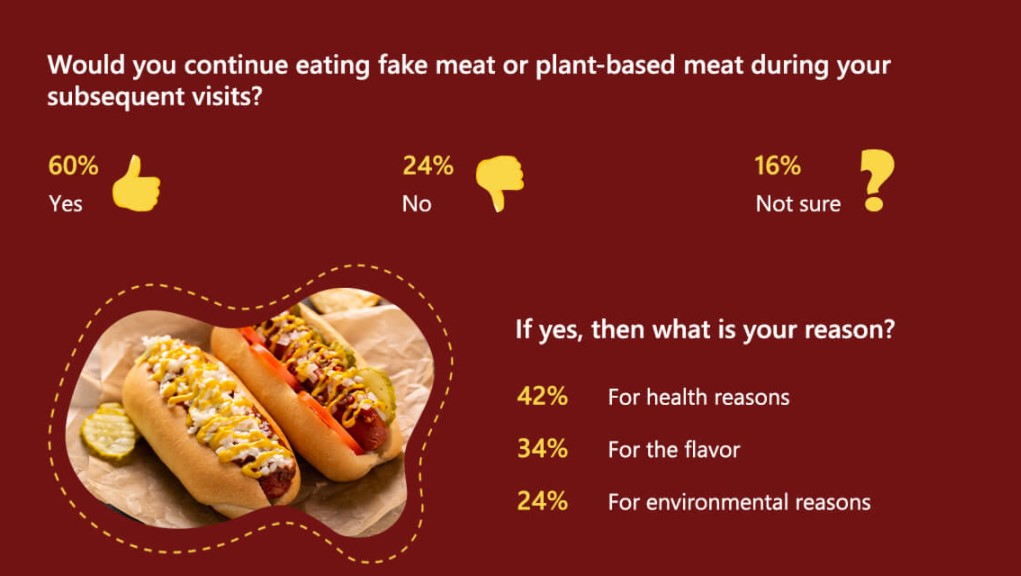
A new survey has good news for the alternative-to-cattle market, Beyond Burgers and the like; 54 percent of surveyed Americans claim they have tried it and 70 percent of those thought it okay.(1)  

Burger King is a game changer on that, and over 40 percent reported buying it there. That all sounds great, but there is a confounder. The survey of 30,700 conflates lab-grown meat and vegetable patties, which have gigantic differences among consumer beliefs. That said, it still has some good news for companies in that space.