




It still can be a “poisoned present” though if nothing is done to control climate change because a pattern of widespread affected species is also the first step to mass extinctions. Although the work by Wilfried Thuiller, Miguel Araújo and colleagues does not predict how many species will disappear as result of the present course of climate change the pattern that reveals is a wakeup call for the need to effectively and rapidly tackle its threat. The disappearance of species throughout earth’s history is part of life constant evolution, after all only 3% of those that have ever lived on earth are still alive. But human intervention - from destroying habitats to pushing climate change - is accelerating this process to such levels that some scientists have started talking about the possibility of a new episode of mass extinction like the one that led to the disappearance of the dinosaurs 65 million years ago.
The unavoidable reality is that an exceptional number of species are at risk – the International Union for Conservation of Nature (IUCN) in 2009 calculated that as much as 36% of all known species were in risk of disappearing, with the rate of species loss now 100-1,000 times faster than previous values..
Climate change has already been responsible for at least an episode of species mass extinction - a very abrupt and severe cooling is believed to have caused the first widespread disappearance of life – and currently is considered the main cause of species disappearance.
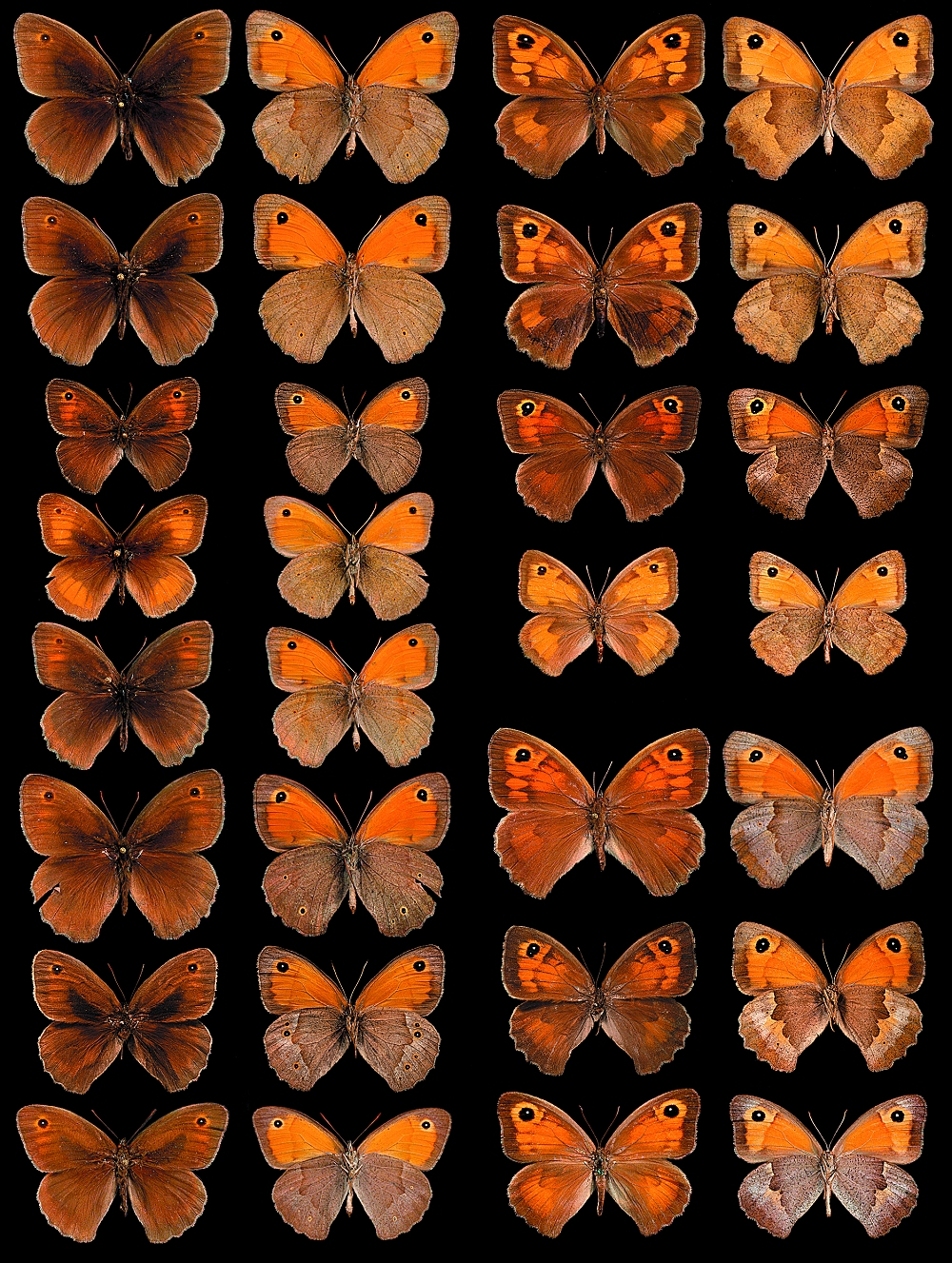
The reality is that its effects are more conspicuous than ever from polar bears losing their habitat to birds and butterflies migrating in mass to cooler regions.
The leading international body for the assessment of climate change – the Intergovernmental Panel on Climate Change (IPCC) – is predicting that if global warming is bigger than 2.5° C about 20-30% of species worldwide will be at risk of extinction, while to cross the barrier of 3.5° C will be enough to eradicate 40-70% of them.
But different species have different vulnerabilities to climate change - large animals, those living in small territories or in very specific ecosystems are among the most vulnerable - what can create additional problems. In fact, if many similar species (with similar susceptibilities) vanish together there will a drastic reduction of biodiversity compromising not only the potential for future evolution - after all each time a species disappears the independent evolutionary history existent in that lineage is lost forever - but also the normal functioning of earth’s many ecosystems. Ecosystems - groups of living organisms (plants, animals and others) that interact in the same area – are the basis of all life on earth affecting from the atmosphere to the water surfaces.
And like a building where bricks are species, if too many bricks close together are being removed the entire building foundation - in this case earth’s ecosystems – can collapse.
By compromising biodiversity climate change effects could then be much more complicated than the “just” the loss of individual habitats or species.
To address this possibility Thuiller, Araújo and colleagues constructed a detailed tree of life – where organisms are grouped according to their evolutionary closeness – for a large number of plants, birds and mammals from Europe and then using several climate models predicted what would happen to them in 2020, 2050 and 2080. “To distinguish extinctions by climate change from those that would occur normally we created normal random extinction scenarios as controls” explains the article first author Wilfried Thuiller from the French National Centre for Scientific Research (CNRS) in Grenoble, France.
Interestingly, and contrary to other threats, the researchers found that climate change effects were similar to “normal” random extinctions and would not create large “holes” in the tree of life as others have hypothesised before. “This happens because vulnerable species do not have less or closer relatives than less vulnerable species” explain the researchers. And this is good news as the potential to disaster would be much quicker otherwise. But only if climate change levels do not reach extreme levels...
Miguel Araújo from the University of Évora in Portugal and National Museum of Natural Sciences, Madrid explains: “whether random extinctions throughout the tree of life are less dangerous or not than extinctions in very specific parts of the tree only depends on the levels of climate change – if extinction is moderated the loss of specific parts of the tree can be more danger than disperse extinctions even if it only because it affects the potential for evolution on earth. But if extinctions reach the level seen in episodes of mass extinctions then a more spread pattern of extinctions can be catastrophic because it compromises the future of too many biological groups”
Thuiller, Araújo’s work also predicts that the south will be the most affected region in Europe with reduction of biodiversity while the opposite will occur in the north of the continent leading to a homogenization of the map of species throughout Europe what can help in the design of conservation policies.
But why are Thuiller, Araújo’s results different than those of previous research? The difference lies in the groups they use - they are the first ones looking at the effects of climate change in phylogenetic groups - where species are grouped according to their true evolutionary relatedness – in opposition to the taxonomic groups used in previous studies. And while taxonomic groups also reflect evolutionary relations these are deduced from form and function making them much less accurate when predicting future evolutions. Phylogeny after all it is called the tree of life and considered to represent the true underlying structure of life.
(1)Nature – 2011Volume: 470,Pages: 531–534 (24 February 2011) doi:10.1038/nature09705 “Consequences of climate change on the tree of life in Europe” http://www.nature.com/nature/journal/v470/n7335/full/nature09705.html


Comments