

Banner
    Women In Science: So What?
    By Hank Campbell | October 7th 2007 10:54 PM | 4 comments | Print | E-mail | Track Comments
    About Hank

    I'm the founder of Science 2.0® and co-author of "Science Left Behind".

    A wise man once said Darwin had the greatest idea anyone...

    View Hank's Profile
    Another article last week, Do Inferior Numbers Scare Women Away From Science And Engineering?, expressed concern that there aren't enough women ( and minorities ) in science, engineering and math. A lot of math and science and engineering is getting done, it is just getting done primarily by men and that is a concern.

    But why? I know why it should be a concern. I have enough of a liberal leaning to reflexively know it is supposed to be a concern but that is balanced out by age and the hard-earned realization that spending more money, in the case of awareness programs, or implementing quotas won't actually produce better science.


    This issue has come up frequently in the last three years. In 2004, Donna Nelson of the University of Oklahoma presented a study showing that only 8.3 percent of full professorships in math were women. This was a correlation/causation relationship to fewer women students in math, she said.

    "Women are less likely to go into and remain in science and engineering when they lack mentors and role models," the survey said. "When female professors are not hired, treated fairly and retained, female students perceive that they will be treated similarly."

    Yet in that same study she justifies a need for more female math professors on the basis that 48.2 percent of math students are women. Almost half of all math students are women yet the contention is unless more professors are women, women won't become math students. That doesn't make much sense.

    Would it not be the case that women will become math students if they like math rather than on the basis of gender representation? If anything, the notion that women will only become math students if their professors are female is more of an insidious slight on the reasoning powers of women than claims of academic bias by men. I think we all agree that the gender of the teacher should have no impact but, if it does, how much?

    The latest census says that 71% of America's 6.2 million teachers are women. If just elementary and middle schools are included, that number is 79 percent. I never see articles lamenting there aren't enough men in education but that's a separate issue. Looking at these numbers, if girls are being discouraged from entering science and math, they are being discouraged by women.

    I have talked about 'science' in a broad sense but that doesn't tell the entire story. In biology, for example, the numbers of degrees matches closely with the population. In psychology, women receive an overwhelming 73 percent of the degrees.

    Is anyone funding a campaign to place more men in psychology? Not likely.

    Back to the issue, 71 percent of teachers are female yet females only receive 37 percent of science and engineering doctorates. Is that a cause for action? It is if you believe so, much like you might want to believe there aren't enough white NBA players or Muslim farmers in America or men in psychology.

    Yet this was bound to come up, especially after former Harvard president Lawrence H. Summers's controversial remarks about the roles of 'issues of intrinsic aptitude' ( designed to be provocative and evoke debate, he stated, though he must regret provoking debate in an academic audience now ) in limiting the number of female professors in science and math.

    The news release by APS again brings up Summers

    suggesting that women may not possess the same “innate ability” or “natural ability” in these fields as do men

    which seems to be implying that those northeastern colleges are a good old boy network showing bias against women. There's no evidence for that, other than extrapolating the remarks of one person out to be endemic of all academia. And the circumstantial evidence the other way is more overwhelming: women get 37 percent of doctorates in science, math and engineering today but 40 years ago that number was only 8 percent.

    A few points need to be made. First, science is hard. Less than 35% of degrees conferred are in science. We just plain need more scientists. Men, women, black, white, green aliens from Mars, wherever they will come from, we need more than we are producing now.

    Second, assuming we can't produce more American scientists, we should make more scientists Americans, or at least make it easier for foreign scientists who do their post-docs here to get their green cards. We are basically training our competitors and sending them back home, spurned. We can fix the brain drain by keeping more of our brain power here rather than trying to encourage demographics who aren't drawn to science to become scientists.
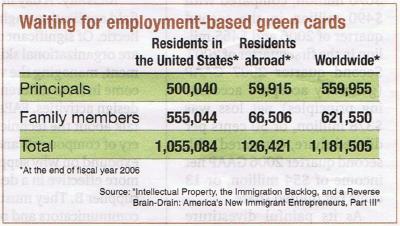


    Third, if universities and the private sector are going to take issues regarding equality, gender is not the place to start. Disabilities are.

    National Science Foundation (NSF) data states that fewer than 300 people with disabilities receive Ph.D.s in science or engineering each year - yet 140,000 freshmen students list a disability. Census data show that people with disabilities are 10.4 percent of the overall workforce but only 2.7 percent science and engineering.

    So if we're going to start targeting demographics based on under-representation, we can start there. If the goal is to make sure all occupations will have representation based on population, we're also going to need a lot more Latino hockey players.


    References:

    Persistent Disparity in Science, Mathematics, and Engineering, National Science Foundation.

    Census.gov, U.S. Census Bureau’s Facts for Features

    Testimony to the Commission on the Advancement of Women and Minorities in Science, Engineering, and Technology Development , National Academy of Engineering

    National Center For Education Statistics, Institute of Education Sciences, US Department of Education

    Comments

    Hank
    I concede that it's easy for the white guy to say 'there is no problem' but there are small problems, like women being 51.1% of the population but only 37% of Ph.D.s, and then there are huge problems, like far too many scientists getting advanced experience here and then leaving because of a ridiculous immigration policy.

    Spending money trying to convince Americans to be scientists is nowhere near as effective as simply allowing people of every gender, race and nationality who already want to be scientists to remain here.

    Want more no-nonsense, independent science? Buy Science Left Behind
    Hfarmer
    I have an interesting perspective on this. I am a transsexual and I am a physicist. An educated psychologist once informed me of how rare it is to find that combination in someone as young as I. He was helpful to me even as I did not 100% fit a model he liked. A less informed one told me that transsexuals who are like me but for being interested in science don't exist... and the ones who are interested in science are nothing like me. Therefore I must just be gay. :-? In the second case what you see is me being subjected to a form of sexism. Deep down our society has certain ideal images. When it comes to jobs. For me, that makes it self known in my life by way of people who think a nice looking transsexual woman cannot be a scientist. I am supposed to limit myself to certain professions. Ones that are feminine. I guess my point is that it's ok to notice that in general there are gendered differences, like the first psych did. It's just not ok to take those general differences and turn them into rules that punish people for contradicting them. Dont tase me bro
    Science advances as much by mistakes as by plans.
    Hank
    We all have to make educated judgments every day, because we all see many people. That's what stereotypes are and our willingness to deviate from them is based on 'risk', be it physical or social or business.

    If I open my garage door tomorrow morning and see a tiger sitting there, I am not going to take the time to get to know this individual tiger - I am closing the door.

    Likewise when I tell you I am a white Republican male in my 40s, you probably have a whole raft of political and social positions attached to me, based on your experience.

    Psychologists are in the 'solution' business. To come up with a solution, you need to know the problem so any person defaults to some baselines first and then only gets more creative if it's warranted. Stereotyping? In a way, but logical.

    Likewise there are women who aren't successful in science and women who are social advocates who will see everything through a prism of a gender problem and their solution is quotas, awareness campaigns, etc. without considering that you can't always have results equal to the population, much like you don't have many latino hockey players in the US yet a disproportionate percentage of Jewish bankers.

    Want more no-nonsense, independent science? Buy Science Left Behind
    As for women in science, It's not a bias thing... I think. I have not experienced a sexist remark or treatment in science so I can only go on my own personal experience. I believe it is a social issue as children and what is considered the image of "being like-able" to a child. Most girls see being brainy or nerdy is not acceptable because the nerd is someone who does not have lots of friends and is not well liked. This image is also sold in the media they watch. As a child your perspective is mostly what is going on right now. Science to most girls is seen as being "nerdy," "being a weirdo," and "unlike-able" so the interest is trained subconsciously to not want to go into that field but a more acceptable one at a very young age. As for boys math and science is expected so it's not a "nerdy" thing... the arts is more "nerdy" for them. Boys are also trained subconsciously because of culture that they should like the non-nerdy girls, so in that perspective science is not too appealing to a girl if she wants a boy. It starts from the beginning. Although some of those same girls who do show up in colleges in the science/math departments... usually end up falling way to the subconscious urges and go into more of social sciences. Personally I do not fall into that category b/c I just didn't care what people thought and I had to fight bigger issues which was a disability. This is what I just see and that is I see children of today fall way to culture and culture teaches us that you have to choose the path of glamorous popularity or the way of the nerd. (been like that for years)
    Personally I've been teaching what ever girl that comes my way that you can be it all and don't let them tell you any different... :) You can be a really smart artsy, scientist, who so happens to be a jock that wears fashionably girl-y clothes or whatever you choose. It's ok to be the oxymoron of "stereotypes" in the world. :)
    If you want discrimination here some real ones:
    "whole brainers" are the ones who are discriminated because they get it from the Left dominate thinkers saying that you are too "Artsy" and are not taken seriously in the so called "left thinking" work field and the Right thinkers say that you are too "Logical" or what ever they say and are not taken seriously from them in the "Right thinking" work field. I get it all the freakin time. Sometimes I just want to wear a shirt that says "YES I do science and Art Equally and I'm dam good at both too!" just to save the trouble. haha

    OR the very attractive girl syndrome... "you can't take them seriously."

    OR if you really want a "shock and awe" moment in the realm of being sexist where this industry has the science industry schooled by light years of being "sexist." Enter into the world of "behind the scenes in TV/film land"... You will find yourself stepping back into time in the ways of thinking... and I'm talking 1950's thinking or earlier. There forget skills as a woman, you are mostly expected to put out or get out... not joking either.
