Fake Banner
Feeling no pain: plants were first to let it happen

Age of Herbals somewhere  during  1565 in this part of globe saw many medical man searching...

Sitopaladi churna is an ayurvedic medicine for cough and cold

Sitopaladi churna is an ayurvedic medicine for cough and cold and sneezing nose. A little portion...

Ethnobotany and Ocimum sanctum (Tulsi)

The term 'ethnobotany' was first applied by Harshberger in 1895 to the study of plants used by...

Gene, gene expression, gene silencing and RNAi

Gene Expression?–What is a Gene?A gene codes for a homogeneous ‘functional unit’ – classically...

User picture.
picture for Patrick Lockerbypicture for Akshit Kumarpicture for Damon  Isherwood
Ashwani KumarRSS Feed of this column.

Professor Emeritus ,Former Head of the Department of Botany, and Director Life Sciences, University of Rajasthan, Jaipur. 302004, India At present freelance consultant with Bioenergia. Spain and... Read More »

Blogroll
Ethanol is the way of the future. Although hydrogen power is the talk of the world, in truth it is a distant solution, possibly as far away at fifty years. Ethanol/Gasoline will be available in mass production in 10 to 15 years, and a major source will be Brazilian ethanol plants.
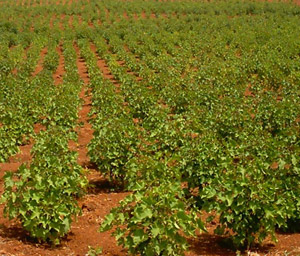



Bio-diesel is an alternative fuel derived from either Soy or Jatropha, and it is big in Brazil. By 2012, the Brazilian government will mandate an 8% blend of bio-diesel. The prospect of this increased demand for bio-diesel is causing a large ramp up in the bio-diesel industry.

Brazilian Soy farms for bio-diesel are very big business. Bunge is the largest soy grower in Brazil, followed by ADM and Cargill – all are foreign companies. To make bio-diesel, soy is mechanically processed and separated into oil (used to make the bio-diesel) and soy meal (used for animal feed). Soy farming is very profitable - in addition to the 150 gallons of bio-diesel produced per hectare, farms also produce valuable animal feed as a byproduct.

Mumbai: India’s second largest airline by passengers carried, Kingfisher Airlines Ltd, has signed an agreement with three international firms to explore development and production of an alternative jet fuel to reduce carbon emissions. Power backup: Kingfisher Airlines chairman Vijay Mallya. Pankaj Nangia / Bloomberg Regular jet fuel or aviation turbine fuel (ATF), a colourless refined kerosene, accounts for up to 40% of the total operating cost of airlines in India. “We have already signed up with three companies to develop the biofuel. We are working on the cost-benefit analysis for the project,” said a senior Kingfisher Airlines executive who did not want to be identified as he is not authorized to speak to the media.
Environmentalists worried over global warming affecting Kashmir climate ANI 25 December 2009, 09:53pm ISTText Size:|Topics:Kashmir Valley Chilai Kalan SRINAGAR: Environmentalists have expressed concern over Chilai Kalan, the 70-day-long coldest period of winter, losing its chill due to global Twitter Facebook Share Email Print Save Comment warming. During Chilai Kalan the Kashmir Valley used to receive heavy snowfall. The snow graph is however, decreasing for the last decade and experts are concerned for the environment of the state.
'Copenhagen could mean end of Kyoto' TNN 28 December 2009, 02:55am ISTText Size:|Topics:India Saran Copenhagen Kyoto NEW DELHI: Prime Minister's special envoy on climate change Shyam Saran on Sunday admitted in a TV interview that the Copenhagen Accord that India Twitter Facebook Share Email Print Save Comment negotiated at the recently concluded climate talks has left a window open for the burial of Kyoto Protocol.
Arctic could face seasonally ice-free conditions: Study PTI 30 December 2009, 12:58pm ISTText Size:|Topics:arctic US Geological Survey WASHINGTON: US Geological Survey (USGS) has warned that the Arctic could face seasonally ice-free conditions and much warmer temperatures in the Twitter Facebook Share Email Print Save Comment future which may lead to intensified storms and increased winter precipitation. The USGS scientists have found evidence that the Arctic Ocean and Nordic Seas were too warm to support summer sea ice during the mid-Pliocene period, over three million years ago, when temperatures were similar to those projected for the end of this century. They said the warm period is also used as an analog to understand future conditions.