Banner
Pilot Study: Fibromyalgia Fatigue Improved By TENS Therapy

Fibromyalgia is the term for a poorly-understood condition where people experience pain and fatigue...

High Meat Consumption Linked To Lower Dementia Risk

Older people who eat large amounts of meat have a lower risk of dementia and cognitive decline...

Long Before The Inca Colonized Peru, Natives Had A Thriving Trade Network

A new DNA analysis reveals that long before the Incan Empire took over Peru, animals were...

Mesolithic People Had Meals With More Tradition Than You Thought

The common imagery of prehistoric people is either rooting through dirt for grubs and picking berries...

User picture.
News StaffRSS Feed of this column.

News Releases From All Over The World, Right To You... Read More »

Blogroll
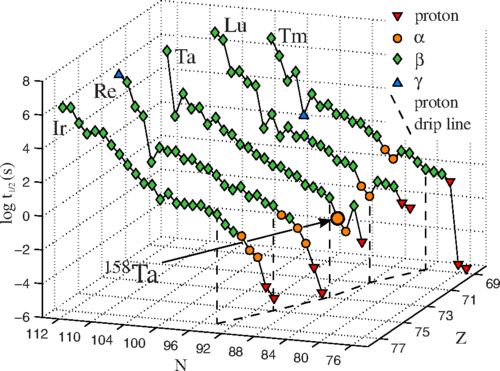
Identifying the full extent of the nuclear landscape, essentially how many isotopes exist, is vital for nuclear physics.

There is a lot left to learn. Beyond the stable nuclei that we find on Earth, there are many unstable nuclei that are formed in stellar events such as supernovae, but which are short-lived. There is a limit to how many protons and neutrons a nucleus can hold – too many and the excess will literally ‘pop out’. These limits are known as the proton and neutron ‘drip lines’.

Although these drip lines can be calculated, getting experiments to agree is another issue. Even finding them experimentally can be a difficult prospect. 
ReferralPlus is a tool to match patients who disqualify for one study with others they might qualify for, using a geo-therapeutic matching algorithm with other studies, similar to how OpenTable matches people with the restaurants they are interested in by using demographic and time availability algorithms. It was created because 95% of patients who respond to a trial recruitment advertisement do not qualify and/or enroll in that study. 

Most of those patients never enroll in another study. 
National Oceanic and Atmospheric Administration Fisheries has decided to adopt a national recreational fishing policy, a move greeted enthusiastically by sportfishing and boating enthusiasts, who have been urging efforts by the National Marine Fisheries Service to advance and protect saltwater recreational fishing.

Small, independent businesspeople want more centralized, remote decision-making? Absolutely, when the alternative is up different states all being lobbied by activists. 
The National Space Biomedical Research Institute (NSBRI), based at Baylor College of Medicine, is a consortium of biomedical institutions that study the health risks related to long-duration spaceflight and developing the technologies and countermeasures needed for human space exploration missions.

The EyeBoxCNS, a diagnostic device developed to assess brain health through tracking eye movement, and eFormulations, software enabled therapeutics which combine prescription medicines with customized software apps for brain-related conditions, have both been funded for further development by NSBRI.
XBiotech, a company involved in commercializing biological therapies, has published the results from its Phase I/II oncology study conducted at MD Anderson Cancer Center in Houston.

The study describes the outcome in 52 advanced cancer patients treated with their Xilonix™ non-cytotoxic, anti-tumor therapy. The so-called true human antibody therapy was reported to have an excellent safety profile and the report describes comprehensive measures of patient performance during therapy with Xilonix.

Chronic pain is an unknown issue with unknown causes and a subjective definition but some people clearly have it. Researchers recently analyzed 2,721 people, all taking prescription opioid pain medications, for genes COMT, DRD2, DRD1 and OPRK1. The participants also rated their perception of pain on a scale from zero to 10. People who rated their pain as zero were not included in the study.

Low pain perception was defined as a score of one, two or three; moderate pain perception was a score of four, five or six; and high pain perception was a score of seven, eight, nine or 10. 

9 percent of the participants had low pain perception, 46 percent had moderate pain perception and 45 percent had high pain perception.