Banner
Pilot Study: Fibromyalgia Fatigue Improved By TENS Therapy

Fibromyalgia is the term for a poorly-understood condition where people experience pain and fatigue...

High Meat Consumption Linked To Lower Dementia Risk

Older people who eat large amounts of meat have a lower risk of dementia and cognitive decline...

Long Before The Inca Colonized Peru, Natives Had A Thriving Trade Network

A new DNA analysis reveals that long before the Incan Empire took over Peru, animals were...

Mesolithic People Had Meals With More Tradition Than You Thought

The common imagery of prehistoric people is either rooting through dirt for grubs and picking berries...

User picture.
News StaffRSS Feed of this column.

News Releases From All Over The World, Right To You... Read More »

Blogroll
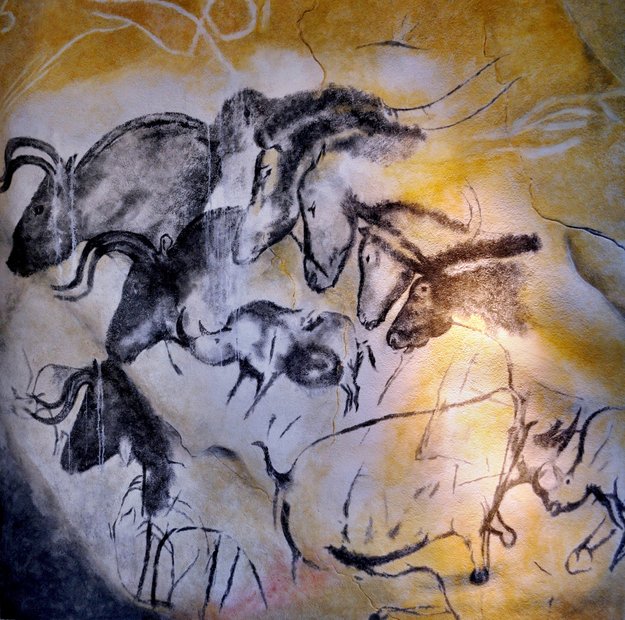
Sometimes you don't need fancy modern compounds - primitive cavemen had the answer.

Burnt bone charcoal, used in prehistoric cave paintings, will be applied to the ESA’s Solar Orbiter titanium heatshield to protect it from the Sun’s close-up glare. 

Solar Orbiter, due for launch in 2017, will carry instruments to perform high-resolution imaging of Sol from as close as 42,000,000 km – a little more than a quarter of the distance to Earth. Operating in direct view of the Sun, the mission must endure 13 times the intensity of terrestrial sunlight and temperatures rising as high as 520° C.

Innate lymphoid cells (ILCs) are among the first components of the immune system to confront certain pathogens and they have a critical function at mucosal barriers, like the bowel or the lung, where the body comes in direct contact with the environment.  

But they went undetected by researchers until just five years ago. The reason is that immune cells are found in the blood, lymph nodes, or spleen and these cells aren't there. Once they mature they directly go to tissues, such as the gut or the skin, rather than blood.And they are rare.A mouse might have 200 million lymphocytes but only a few thousand ILCs.  

Large stars go supernova but smaller stars sometimes end up as planetary nebulae – colorful, glowing clouds of dust and gas.

These nebulae have been observed to often emit powerful, bipolar jets of gas and dust. But how do spherical stars evolve to produce highly aspherical planetary nebulae?

A hypothesis published in the Monthly Notices of the Royal Astronomical Society by a University of Rochester undergraduate student and a professor states that only "strongly interacting" binary stars – or a star and a massive planet – can feasibly give rise to these powerful jets.

In 1832, the HMS Beagle arrived at Bahia Blanca, Argentina and Charles Darwin disembarked. On his way to Buenos Aires, Darwin collected several fossils of large mammals along with many other living organisms, including several insects.

February 12 is Darwin's birthday scientists and scientists have named after him a long lost but new to science beetle genus and species from his collection.

Since most people don't want to engage in the only weight loss plan guaranteed to work - consuming fewer calories than they burn - options are limited in America's battle of the bulge and are likely to stay limited.

The Federal Drug Administration has approved few drugs for long-term weight loss and some are no longer marketed because of safety issues.

The precautionary principle says when it comes to health, you err on the side of caution, and a well-publicized effort to get annual screening for breast cancer paid off - but it hasn't lowered mortality rates in women aged 40-59. An annual physical examination does just fine, according to a 25-year study.