
Banner
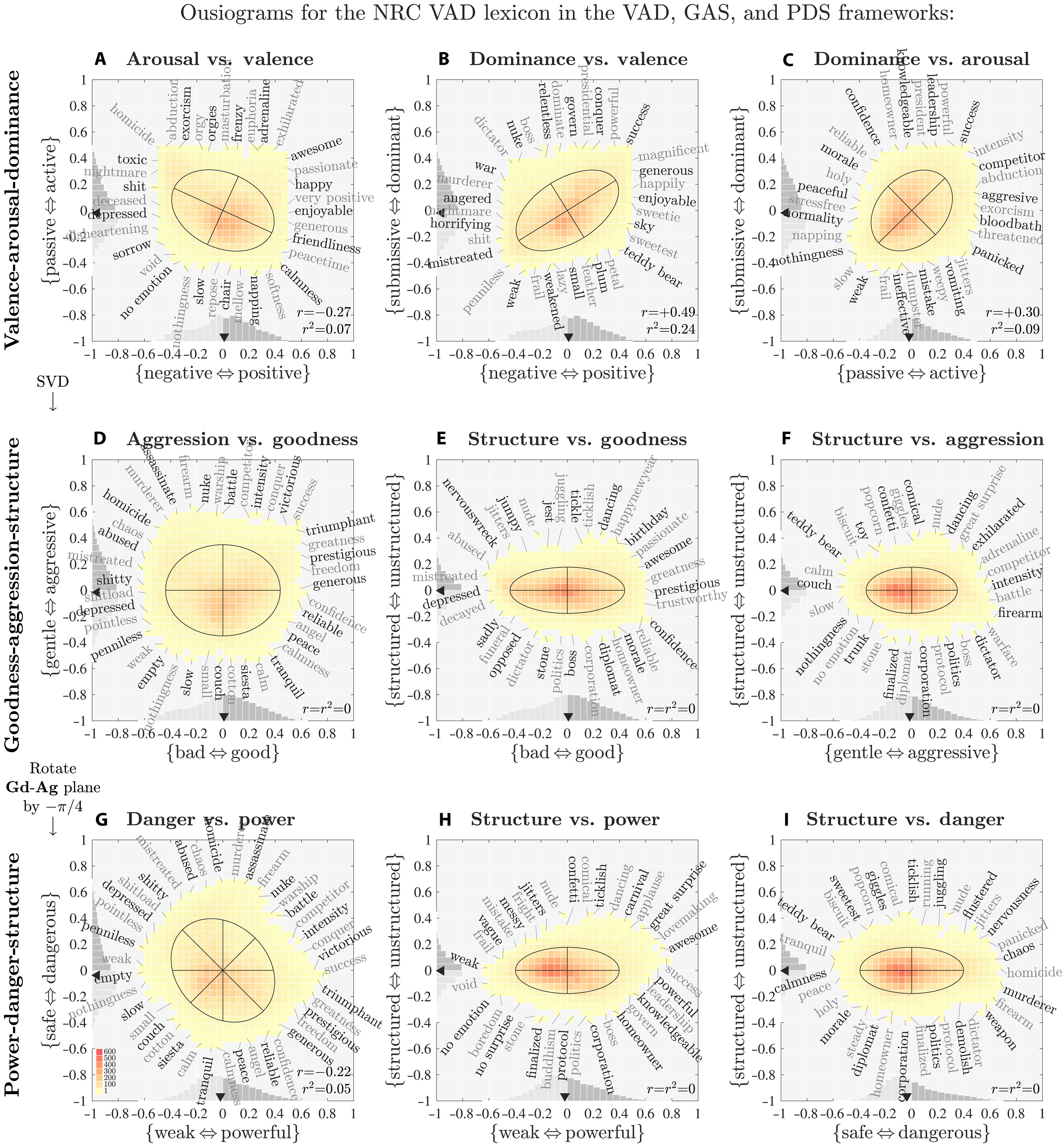
Ousiometrics Analysis Says All Human Language Is Biased

A new tool drawing on billions of uses of more than 20,000 words and diverse real-world texts claims...
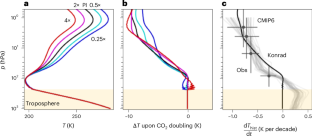
Wavelengths Of Light Are Why CO2 Cools The Upper Atmosphere But Warms Earth

There are concerns about projected warming on the Earth’s surface and in the lower atmosphere...

Here's Where Your Backyard Was 300 Million Years Ago

We may use terms like "grounded" and terra firma to mean stability and consistency but geology...

Convergent Evolution Cheat Sheet Now 120 Million Years Old

One tenet of natural selection is a random walk of genes but nature may be more predictable than...

User picture.
News StaffRSS Feed of this column.

News Releases From All Over The World, Right To You... Read More »

Blogroll

Like most of the developed world, European citizens are suffering from 'green fatigue' - claims that it is too late to do anything about climate change alternating with demands that more action is needed right now. Solar power has been an expensive endeavor and hasn't led to private sector uptake as promised. Even Chinese solar panel companies that relied on Western subsidies are collapsing.

In reality, no one is sure what works and what doesn't but the heads of the EU member states are meeting in Brussels to discuss the adoption of a 40 percent greenhouse gas reduction target for 2030. Advocates claim such front runner action could reduce future global warming by more than 1 degree - if their bold leadership induced others to join by 2030.

Football fascinates millions of fans, almost all of them unaware that the game is subject to the laws of physics. Despite their seemingly arbitrary decisions, players obey certain rules, as they constantly adjust their positions in relation to their teammates, opponents, the ball and the goal. A team of Japanese scientists has now analysed the time-dependent fluctuation of both the ball and all players' positions throughout an entire match. They discovered that a simple rule governs the complex dynamics of the ball and the team's front-line. These findings, published in EPJ B, could have implications for other ball games, providing a new perspective on sports science.

University of Adelaide mathematicians have devised a method for identifying how cell clusters have formed by analysing an image of the cluster.

Published in the Journal of Theoretical Biology, their mathematical modelling tool will be useful in helping biologists and tissue engineers to move towards growing human tissue such as liver in the laboratory.

"When any tissue or organ develops, the cells have to organise themselves into the correct structure," says Dr Edward Green, researcher in the University's School of Mathematical Sciences. "This self-organisation process is important in regenerative medicine where scientists are trying to grow tissues in the laboratory. Getting the right structure is key to ensuring the tissue is viable and functional.

Fortunately, more and more people survive critical illnesses and accidents. A new Danish-American survey shows, however, that hospitalisation where the patient has received mechanical ventilation can have serious consequences:

- Of course, the good news is that more and more patients survive critical illness and treatment using ventilators. But at the same time, the bad news is that we have now documented that the ventilator patients have a considerable risk of developing psychological problems.

The first few months after discharge are really critical, says professor of clinical epidemiology Henrik Toft Sørensen, Aarhus University and Aarhus University Hospital.

Researchers of Ludwig-Maximilians-Universitaet (LMU) in Munich have discovered a novel feedback mechanism that provides a mechanistic link between chronic inflammation and carcinogenesis.

Researchers have shown that they can detect tiny, misfolded protein fragments in cerebrospinal fluid taken from patients. Such fragments have been suggested to be the main culprit in Alzheimer's disease. The findings reported in the Cell Press journal Cell Reports lend hope that doctors might soon have a way to diagnose the disease while treatments might have a better chance of working—that is, before extensive brain damage and dementia set in.

Scientists used to think amyloid plaques were the problem in Alzheimer's disease.


