
Banner
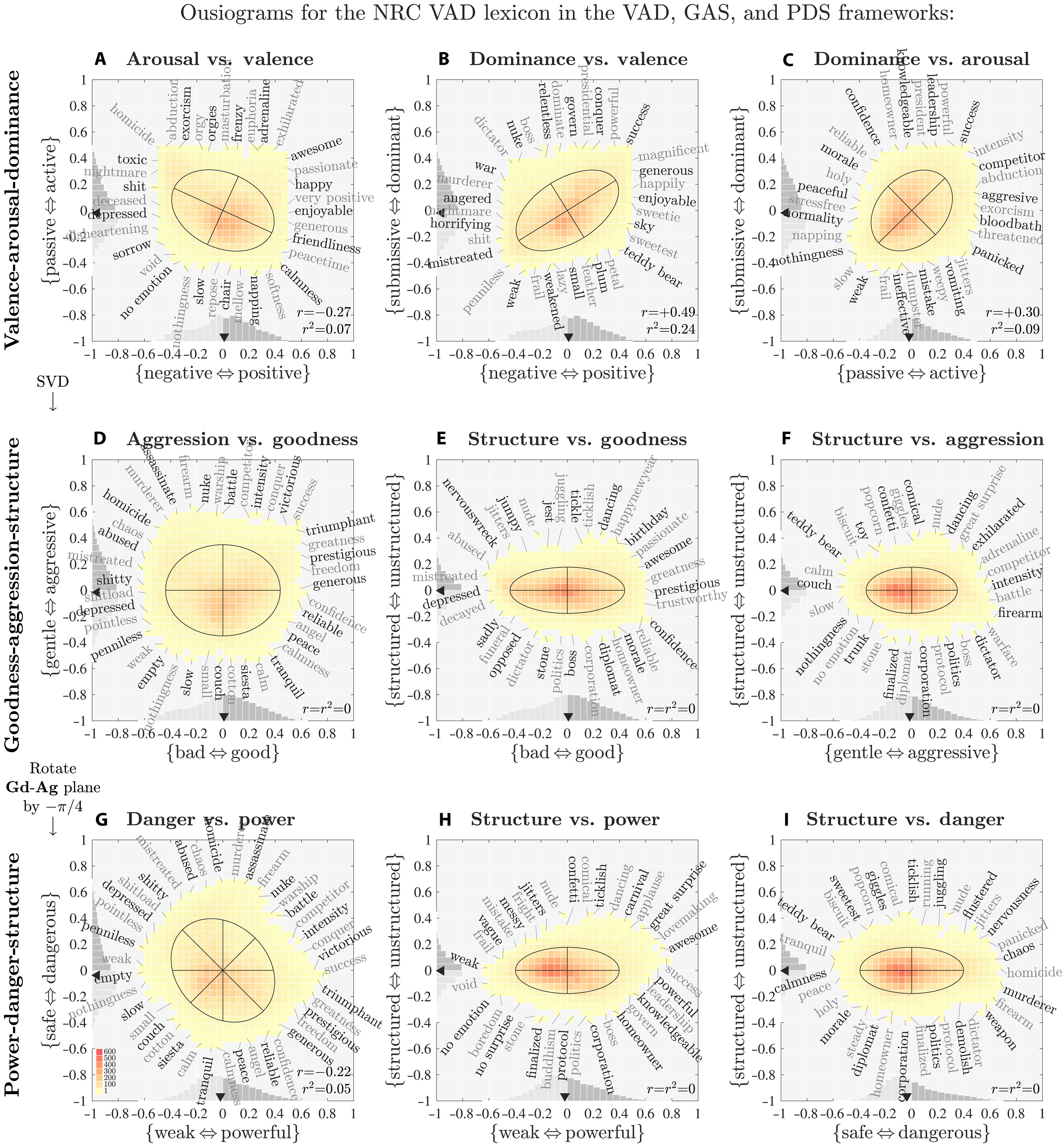
Ousiometrics Analysis Says All Human Language Is Biased

A new tool drawing on billions of uses of more than 20,000 words and diverse real-world texts claims...

Wavelengths Of Light Are Why CO2 Cools The Upper Atmosphere But Warms Earth

There are concerns about projected warming on the Earth’s surface and in the lower atmosphere...

Here's Where Your Backyard Was 300 Million Years Ago

We may use terms like "grounded" and terra firma to mean stability and consistency but geology...

Convergent Evolution Cheat Sheet Now 120 Million Years Old

One tenet of natural selection is a random walk of genes but nature may be more predictable than...

User picture.
News StaffRSS Feed of this column.

News Releases From All Over The World, Right To You... Read More »

Blogroll

Researchers from The University of Manchester have discovered a new mechanism that governs how body clocks react to changes in the environment.

And the discovery, which is being published in Current Biology, could provide a solution for alleviating the detrimental effects of chronic shift work and jet-lag.

The team's findings reveal that the enzyme casein kinase 1epsilon (CK1epsilon) controls how easily the body's clockwork can be adjusted or reset by environmental cues such as light and temperature.

The top predators of the Southern Ocean, far-ranging seabirds, are tied both to the health of the ocean ecosystem and to global climate regulation through a mutual relationship with phytoplankton, according to newly published work from the University of California, Davis.

When phytoplankton are eaten by grazing crustaceans called krill, they release a chemical signal that calls in krill-eating birds. At the same time, this chemical signal — dimethyl sulfide, or DMS — forms sulfur compounds in the atmosphere that promote cloud formation and help cool the planet. Seabirds consume the grazers, and fertilize the phytoplankton with iron, which is scarce in the vast Southern Ocean. The work was published March 3 in the journal Proceedings of the National Academy of Sciences.

Physicists are one step closer to developing the world's first room-temperature superconductor thanks to a new theory from the University of Waterloo, Harvard and Perimeter Institute.

The theory explains the transition phase to superconductivity, or "pseudogap" phase, which is one of the last obstacles to developing the next generation of superconductors and one of the major unsolved problems of theoretical condensed matter physics.

Their work was published in this week's issue of the prestigious journal Science.

Superconductivity is the phenomenon where electricity flows with no resistance and no energy loss. Most materials need to be cooled to ultra-low temperatures with liquid helium in order to achieve a superconductive state.

A three-year study of ancient clam gardens in the Pacific Northwest has led researchers, including three from Simon Fraser University, to make a discovery that could benefit coastal communities' food production. PLOS ONE, a peer-reviewed science journal, has just published their study.

Amy Groesbeck, an SFU alumna, SFU professors Anne Salomon, an ecologist, and Dana Lepofsky, an archaeologist, and Kirsten Rowell, a University of Washington biologist are the authors.

The researchers discovered that ancient clam gardens made by Aboriginal people produced quadruple the number of butter clams and twice the number of littleneck clams as unmodified clam beaches. This is the first study to provide empirical evidence of ancient clam gardens' superior productivity.

Obesity isn't always presenting an accurate picture of health. BMI is a nice metric for television shows but in reality, simplistic notions of height, weight and circumference are only a guideline when it comes to predicting health.

A lack of physical activity, a poor diet and hours every day reading Science 2.0 isn't a great idea, but obesity alone is not providing insult into metabolic fitness. Not everyone obese is going to get diabetes, though you'd be hard-pressed to know that if you read the New York Times or watch Dr. Oz.

2 million images collected by NASA's orbiting Spitzer Space Telescope, which went into space in 2003, have been stitched together to create a 360 degree portrait of the Milky Way.

