Banner
Ousiometrics Analysis Says All Human Language Is Biased

A new tool drawing on billions of uses of more than 20,000 words and diverse real-world texts claims...

Wavelengths Of Light Are Why CO2 Cools The Upper Atmosphere But Warms Earth

There are concerns about projected warming on the Earth’s surface and in the lower atmosphere...

Here's Where Your Backyard Was 300 Million Years Ago

We may use terms like "grounded" and terra firma to mean stability and consistency but geology...

Convergent Evolution Cheat Sheet Now 120 Million Years Old

One tenet of natural selection is a random walk of genes but nature may be more predictable than...

User picture.
News StaffRSS Feed of this column.

News Releases From All Over The World, Right To You... Read More »

Blogroll

Hungry dogs would be expected to choose alternatives leading to more food rather than less food. But just as with humans and monkeys, they sometimes show a "less is more" effect. Thus conclude Kristina Pattison and Thomas Zentall of the University of Kentucky in the US, who tested the principle by feeding baby carrots and string cheese to ten dogs of various breeds. The findings are published in Springer's journal Animal Cognition.

The research was conducted on dogs that would willingly eat cheese and baby carrots when offered, but showed a preference for the cheese. However, when given a choice between one slice of cheese, or the cheese together with a piece of carrot, nine of the ten dogs chose the cheese alone. That is, they chose less food over more food.

New research led by the University of Exeter suggests that rising global temperatures will increase the quantity of the key greenhouse gas methane emitted from freshwater ecosystems to the Earth's atmosphere – which could in turn lead to further warming.

The collaborative study, led by Dr Gabriel Yvon-Durocher from the University of Exeter, collated data from hundreds of laboratory experiments and field surveys to demonstrate that the speed at which methane fluxes increase with temperature was the same whether single species populations of methanogens, microbial communities or whole ecosystems were analyzed.

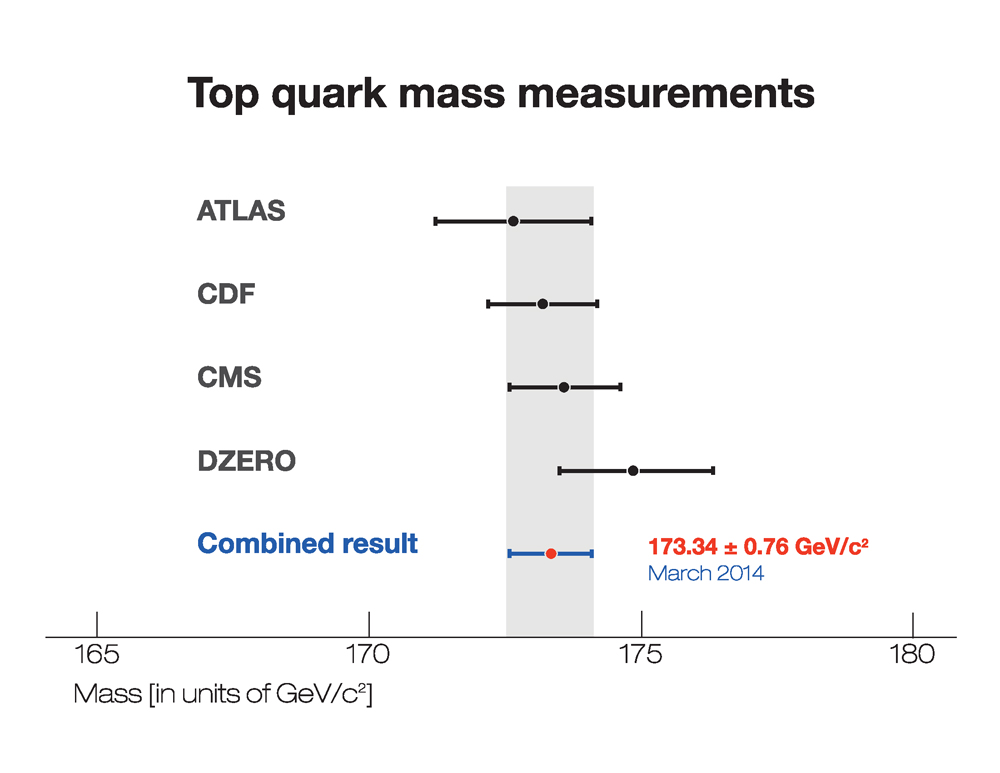
The world's leading particle collider experiments, Fermilab's Tevatron and CERN's Large Hadron Collider (LHC), have joined forces. Scientists from the four experiments involved — ATLAS, CDF, CMS and DZero — announced their joint findings on the mass of the top quark today at the Rencontres de Moriond international physics conference in Italy. 

They pooled their data analysis power to arrive at a new world's best value for the mass of the top quark of 173.34 plus/minus 0.76 GeV/c2.

Building a strong connection to a social group helps clinically depressed patients recover and helps prevent relapse, according to a new study.

For the paper, Canadian Institute for Advanced Research (CIFAR) Senior Fellow Alexander Haslam, lead author Tegan Cruwys and their colleagues at the University of Queensland conducted two studies of patients diagnosed with depression or anxiety. The patients either joined a community group with activities such as sewing, yoga, sports and art, or partook in group therapy at a psychiatric hospital.

The genome of the loblolly pine is truly massive, aound seven times bigger than the human genome, making it the largest genome sequenced to date and the most complete conifer genome sequence ever published.

The achievement, described in GENETICS and Genome Biology, marks the first big test of a new analysis method that can speed up genome assembly by compressing the raw sequence data 100-fold.

Loblolly pine is the most commercially important tree species in the United States and the source of most American paper products. The tree is also being developed as a feedstock for biofuel. The genome sequence will help scientists breed improved varieties and understand the evolution and diversity of plants.

Rutting stags and clawing bears are but two examples of male animals fighting over a mate, but research in New Phytologist has uncovered the first evidence of similar male struggles leading to the evolution of weaponry in plants.

The team, led by Dr. Andrea Cocucci from the Instituto Multidisciplinario de Biologia Vegetal of Argentina, studied a species of milkweed (Apocynaceae), found in tropical climates. While plants do not mate like animals, but rather reproduce via pollinators such as insects or birds, competition between individuals to exploit those pollinators can result in confrontation between the plants.