
Banner
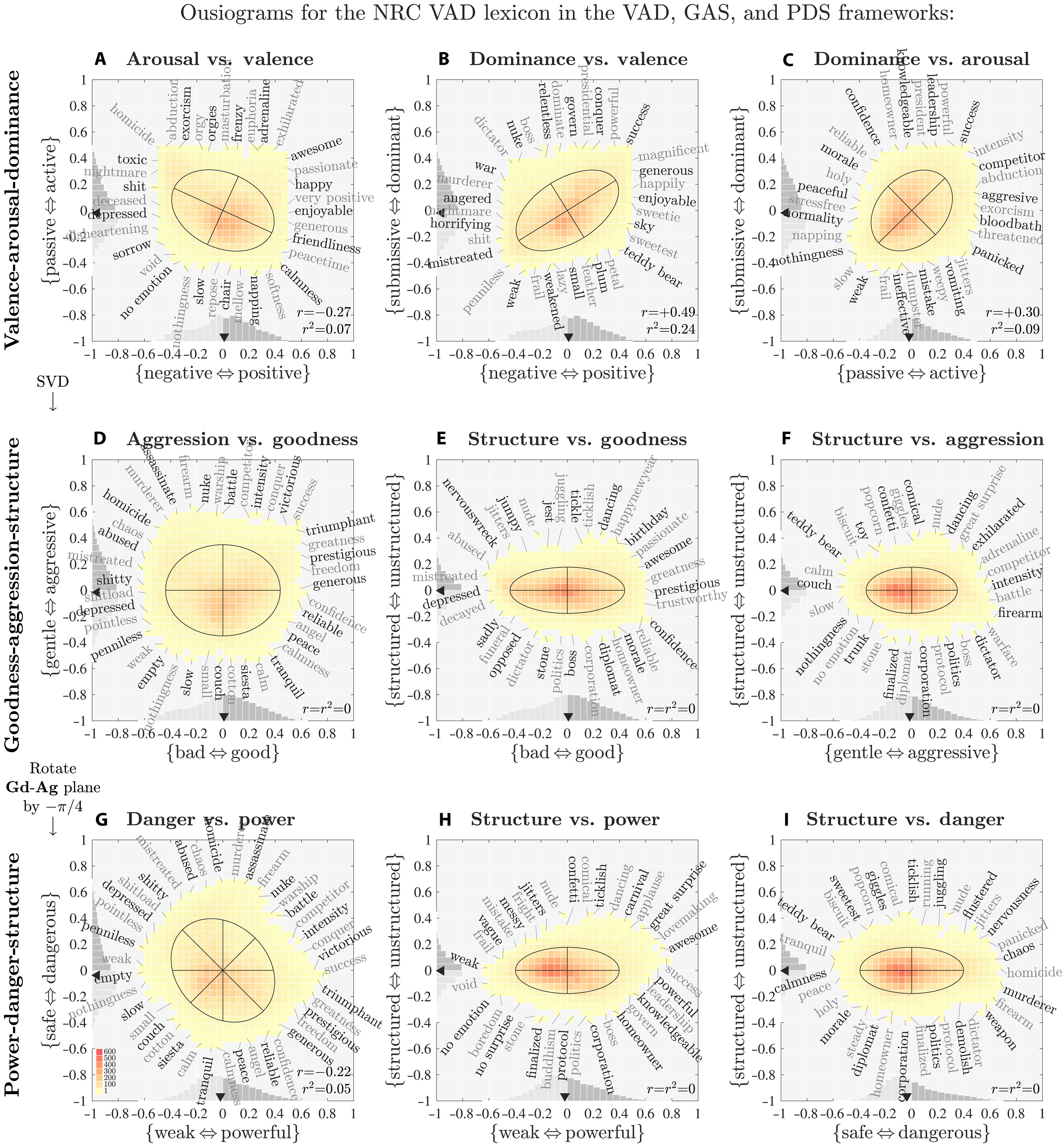
Ousiometrics Analysis Says All Human Language Is Biased

A new tool drawing on billions of uses of more than 20,000 words and diverse real-world texts claims...
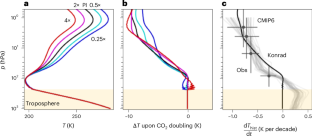
Wavelengths Of Light Are Why CO2 Cools The Upper Atmosphere But Warms Earth

There are concerns about projected warming on the Earth’s surface and in the lower atmosphere...

Here's Where Your Backyard Was 300 Million Years Ago

We may use terms like "grounded" and terra firma to mean stability and consistency but geology...

Convergent Evolution Cheat Sheet Now 120 Million Years Old

One tenet of natural selection is a random walk of genes but nature may be more predictable than...

User picture.
News StaffRSS Feed of this column.

News Releases From All Over The World, Right To You... Read More »

Blogroll

Scientists have described a new species of scorpion, Euscorpius lycius, from  the regions of the Muğla and Antalya Provinces in Southwestern Turkey, what was once known as ancient Lycia, fought over by Persians and Greeks for centuries due to it being a good source of wheat and timber. The last remaining Greeks were forced to leave after the 1919-1922 war with Turkey.

Euscorpius is a genus of scorpions, commonly called small wood-scorpions. As their name suggest these scorpions don't impress with a large size, the biggest representative being around 5 cm long. The group is widespread in North Africa and across Europe. Euscorpius scorpions are relatively harmless, with poison that has effects similar to a mosquito bite.

'Huh?' - what you tell your children not to say when they did not understand what you just told them - has nonetheless taken over the word. 

Supernovae, those intensely bright objects formed when a star reaches the end of its life, 'start' with a big, expelling most of their material out into space, and it's always interesting when we see it.

Spiral galaxy NGC 6984 played host to one of these explosions back in 2012, SN 2012im. Now, another star has exploded, forming supernova SN 2013ek, which is visible in this image as the prominent, star-like bright object just slightly above and to the right of the galaxy's center.

A new study has affirmed the hypothesis that microorganisms which produce methane swim toward the hydrogen gas they need to stay alive.

The sun emitted its sixth significant flare since Oct. 23, 2013, peaking at 11:26 p.m. EST on Nov. 7, 2013.

Solar flares are powerful bursts of radiation - the radiation from a flare can't pass through Earth's atmosphere to affect us but, when intense enough, they can disturb the atmosphere in the layer where GPS and communications signals travel.

This flare is classified as an X1.1 flare. X-class denotes the most intense flares, while the number provides more information about its strength. An X2 is twice as intense as an X1, an X3 is three times as intense, etc.

First responders working at ground zero in New York City following the 9/11 terrorist attacks on the World Trade Center were exposed to cement dust, smoke, glass fibers, and heavy metals.

Research presented at the American Society of Nephrology Kidney Week 2013 in Atlanta, GA say  exposure to high levels of such particulate matter caused significant damage to first responders' kidneys.


