
Banner
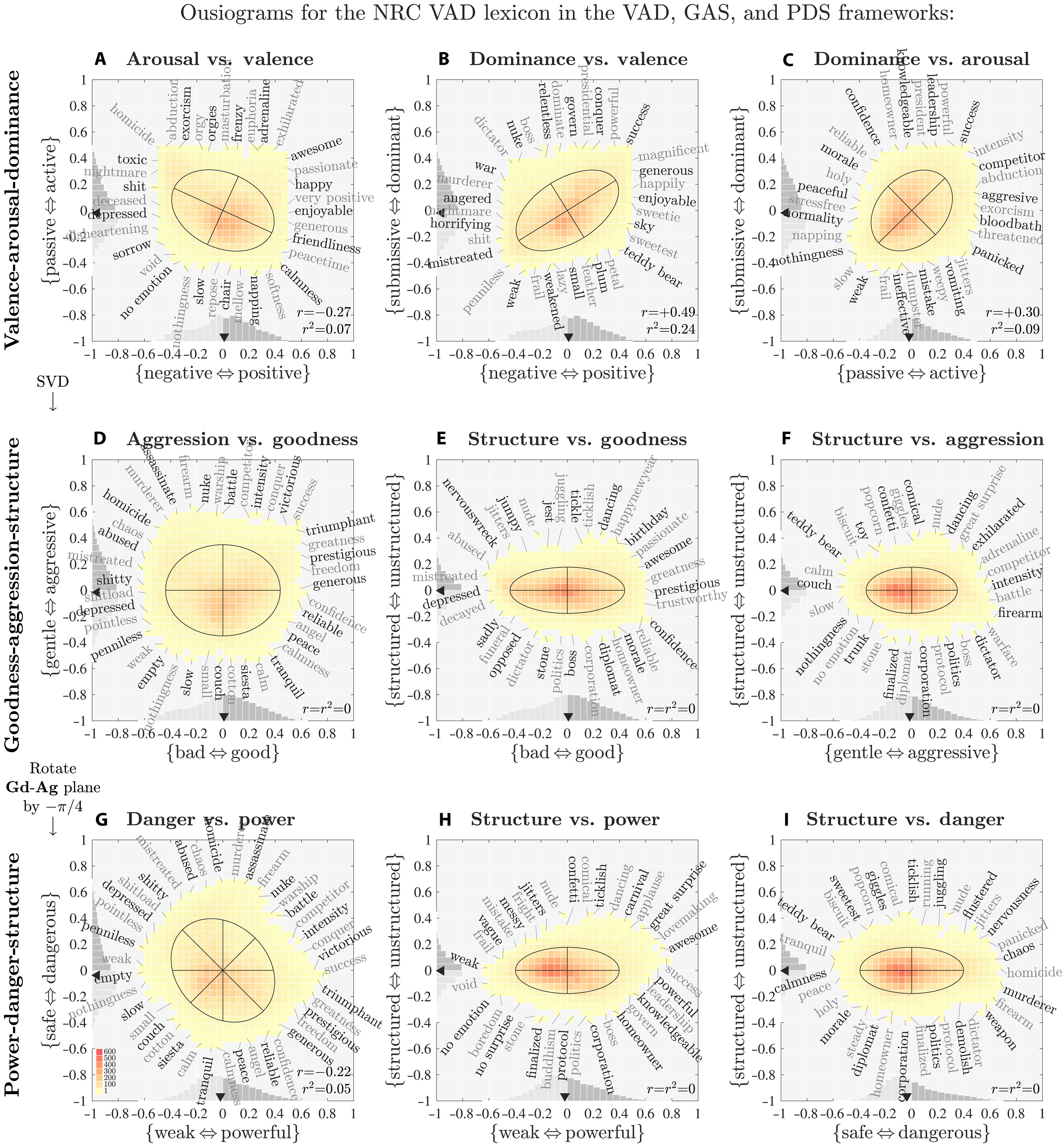
Ousiometrics Analysis Says All Human Language Is Biased

A new tool drawing on billions of uses of more than 20,000 words and diverse real-world texts claims...
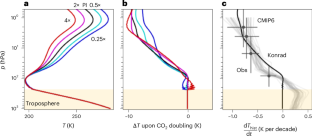
Wavelengths Of Light Are Why CO2 Cools The Upper Atmosphere But Warms Earth

There are concerns about projected warming on the Earth’s surface and in the lower atmosphere...

Here's Where Your Backyard Was 300 Million Years Ago

We may use terms like "grounded" and terra firma to mean stability and consistency but geology...

Convergent Evolution Cheat Sheet Now 120 Million Years Old

One tenet of natural selection is a random walk of genes but nature may be more predictable than...

User picture.
News StaffRSS Feed of this column.

News Releases From All Over The World, Right To You... Read More »

Blogroll

A bio patch  bone-regeneration kit uses a collagen platform seeded with particles containing the genes needed for producing bone to regenerate missing or damaged bone - basically, it puts DNA into a nano-sized particle that delivers bone-producing instructions directly into cells.

In experiments, the gene-encoding bio patch successfully regrew bone fully enough to cover skull wounds in test animals. It also stimulated new growth in human bone marrow stromal cells in lab experiments.

Cocaine addicts may become trapped in drug binges not because they are always seeking euphoric highs but rather to avoid emotional lows, says a study in Psychopharmacology.

Rutgers neuroscientists Professor Mark West and doctoral student David Barker dispute that drug addiction occurs because users are always going after the 'high'. Their animal studies found that the initial positive feelings of intoxication are short lived and are quickly replaced by negative emotional responses when drug levels begin to fall. 

If these animal models are a mirror into human addiction, then addicts who learned to use drugs to either achieve a positive emotional state or to relieve a negative one are vulnerable to situations that trigger either behavior.

Black holes, with gravitational forces so strong that not even light can escape them, come in a variety of sizes.

On the smaller end of the scale are the stellar-mass black holes that are formed during the deaths of stars. At the larger end are supermassive black holes, which contain up to one billion times the mass of our sun. Over billions of years, small black holes can slowly grow into the supermassive variety by taking on mass from their surroundings and also by merging with other black holes.

But this slow process can't explain the problem of supermassive black holes existing in the early universe; such black holes would have formed less than one billion years after the Big Bang.

New findings may help to test a model that solves this puzzle.

Researchers writing in 
Science Translational Medicine have shown that monkeys can control the movement of both arms of an avatar - using just their brain activity. 

To enable the monkeys to control the two virtual arms, researchers recorded nearly 500 neurons from multiple areas in both cerebral hemispheres of the animals' brains, the largest number of neurons recorded and reported to date.

A new species of tyrannosaur, Lythronax Argestes, has been unearthed in Grand Staircase-Escalante National Monument in southern Utah. Lythronax translates as "king of gore," and the second part of the name, argestes, refers to its geographic location in the American Southwest.

The huge carnivore inhabited Laramidia, a landmass formed on the western coast of a shallow sea that flooded the central region of North America, isolating western and eastern portions of the continent for millions of years during the Late Cretaceous Period, between 95-70 million years ago.

The argument for using different bats in high school and the major leagues is primarily cost: wooden bats break when a fastball is hit too low on the bat. 

But aside from skewing results for players - balls that would go nowhere due to a broken bat can be a hit using metal or composite bats - there is also a safety issue. For young players on defense, the ball can move much faster, because non-wood bats transfer energy to the ball better, a phenomenon called the "trampoline effect."

That makes the ball more dangerous. Such concerns have led to uniform bat regulations in college and high school baseball, but amid uncertainty about how non-wood bats perform in the hands of younger players, the rules are less consistent for that age group.


