Banner
Here's Where Your Backyard Was 300 Million Years Ago

We may use terms like "grounded" and terra firma to mean stability and consistency but geology...

Convergent Evolution Cheat Sheet Now 120 Million Years Old

One tenet of natural selection is a random walk of genes but nature may be more predictable than...

Synchrotron Could Shed Light On Exotic Dark Photons

There are many hypothetical particles proposed to explain dark matter and one idea to explore how...

The Pain Scale Is Broken But This May Fix It

Chronic pain is reported by over 20 percent of the global population but there is no scientific...

User picture.
News StaffRSS Feed of this column.

News Releases From All Over The World, Right To You... Read More »

Blogroll

It seems European countries are discovering the issue Science 2.0 has discussed about America for many years. Granting student visas and then denying them work ones after their degrees under the guise of job protectionism means educating the best people and then sending them abroad to be competitors.

 The study, "Mobile Talent? The Staying Intentions of International Students in Five EU countries", published by the Research Unit of the Expert Council of German Foundations on Integration and Migration (SVR), compared European frameworks for international students and investigated the staying intentions of 6,239 non-EU international students in the UK, France, Germany, the Netherlands, and Sweden. 

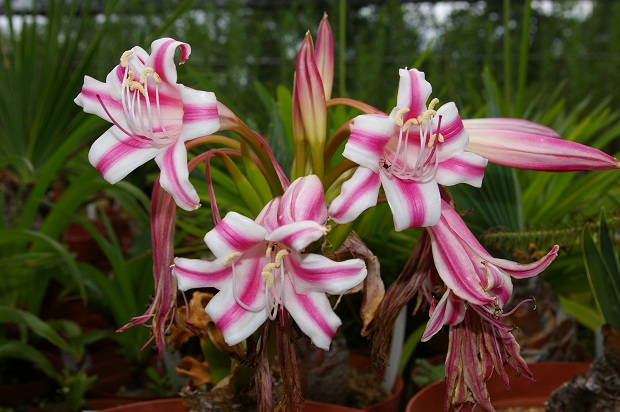
Plant compounds from a South African daffodil may be used to treat depression, according to a University of Copenhagen study, where they tested those substance in a laboratory model of the blood-brain barrier.

Substances from the South African plant species Crinum and Cyrtanthus – akin to snowdrops and daffodils, respectively – have characteristics that enable them to negotiate the defensive blood-brain barrier, a key challenge in all new drug development.

Obviously you should not run out and start eating daffodils just yet.  The lab test does not show which compounds can be used in drug development. 
Stonehenge is interesting, though any mystical (or downright alien) symbolism is lost when you visit much larger sites, like Avebury Henge, that are clearly not mystical at all. Because of its fame, people have long sought answers as to why Stonehenge was built.

A group of archaeologists now contend it was indeed symbolic - but not religious symbolism, it was more political.
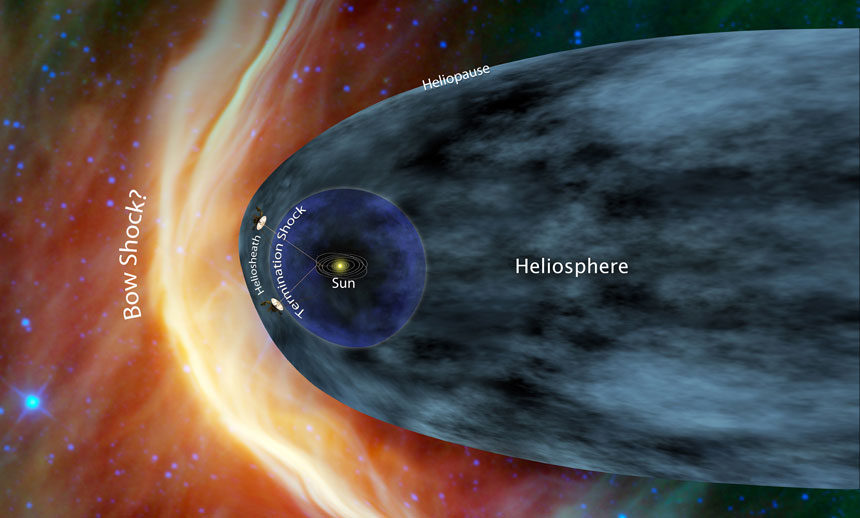
NASA's Voyager 1, launched in 1977, was propelled into deep space with the help of Jupiter's and Saturn's gravity. Now it is about to leave the solar system. But exactly when is unclear.

Voyager 1 is traveling at a speed of about 3.6 Astronomical Units (AU) per year - one 'AU' equals the distance between the Sun and the Earth, or 93 million miles.
A new review of studies suggests that fructose may not be as bad for us as previously thought - it may even provide some benefit. 

Fructose, which is naturally found in fruit, vegetables and honey, is a simple sugar that together with glucose forms sucrose, the basis of table sugar. It is also found in high-fructose corn syrup, the most common sweetener in commercially prepared foods.

A report from market research agency Conquest into the social media habits of 14-24 year olds claims that Facebook's core audience - teenagers - are starting to fall out of love with the website and that activity may have peaked amid a groundswell of dissatisfaction and concerns over privacy and even bullying.