Banner
Pilot Study: Fibromyalgia Fatigue Improved By TENS Therapy

Fibromyalgia is the term for a poorly-understood condition where people experience pain and fatigue...

High Meat Consumption Linked To Lower Dementia Risk

Older people who eat large amounts of meat have a lower risk of dementia and cognitive decline...

Long Before The Inca Colonized Peru, Natives Had A Thriving Trade Network

A new DNA analysis reveals that long before the Incan Empire took over Peru, animals were...

Mesolithic People Had Meals With More Tradition Than You Thought

The common imagery of prehistoric people is either rooting through dirt for grubs and picking berries...

User picture.
News StaffRSS Feed of this column.

News Releases From All Over The World, Right To You... Read More »

Blogroll

Score one for the nurture side of the nature vs. nurture debate, as North Carolina State University geneticists have shown that environmental factors such as lifestyle and geography play a large role in whether certain genes are turned on or off.

By studying gene expression of white blood cells in 46 Moroccan Amazighs, or Berbers – including desert nomads, mountain agrarians and coastal urban dwellers – the NC State researchers and collaborators in Morocco and the United States showed that up to one-third of genes are differentially expressed due to where and how the Moroccan Amazighs live.

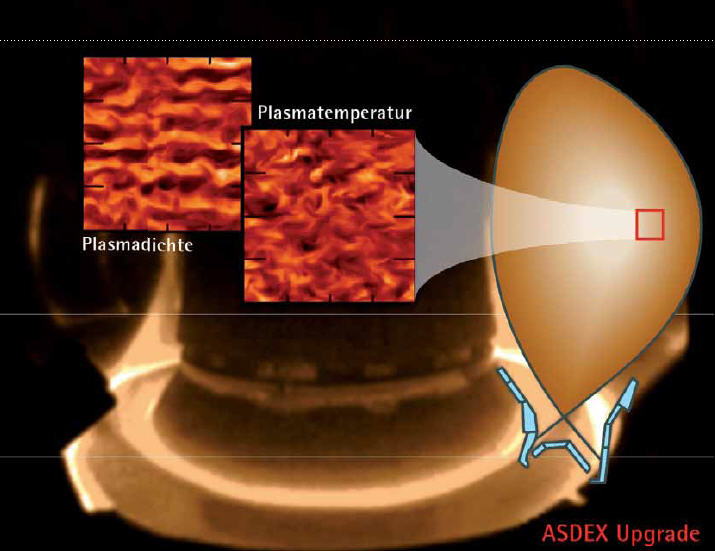
Magnetic confinement fusion could be a safe, environmentally friendly way to provide a substantial part of the world’s energy needs in the 21st century but before that can happen science needs to understand the complex behavior of hot collisionless plasmas (ion gases) in strong magnetic fields.

Such plasmas are subject to temperature and density gradient driven microturbulence which leads to particle and heat losses and tends to keep the plasma from reaching a "burning" state.

Simulations are necessary if we are to understand and control plasma microturbulence but, because fusion plasmas are virtually collisionless, a three-dimensional (i.e., in space) fluid description must, in principle, be abandoned, in favor of a six-dimensional (i.e., in phase space) kinetic one.

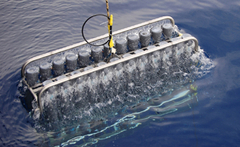
While the recent Arctic summer was the warmest on record satellite images from the Antarctic summer have shown the largest sea-ice extent ever recorded, according to the Polarstern expedition. ANT-XXIV/3 was dedicated to examining the oceanic circulation and the oceanic cycles of materials that depend on it. Warming is a lot less global when you get south of Chile, it seems.

In the coming years autonomous measuring buoys will be used to find out whether the cold Antarctic summer induces a new trend or was only a 'slip.'

Under the direction of Dr. Eberhard Fahrbach, Oceanographer at the Alfred Wegener Institute, 58 scientists from ten countries were on board the research vessel Polarstern in the Southern Ocean from 6 February until 16 April, 2008. They studied ocean currents as well as the distribution of temperature, salt content and trace substances in Antarctic sea water.

We're a long way from machine cognition but scientist are making improvements, mostly in recognition. Researchers have managed to teach a computer’s vision system to recognise up to 100 objects.

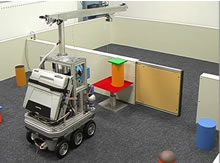
But there is another radically different approach available that European researchers have applied to the study of robotics and AI. The MACS project does not attempt to get robots to perceive what something is, but how it can be used.

This is an application of the cognitive theory of ‘affordances’, developed by the American psychologist James J. Gibson between 1950 and 1979. He rejected behaviourism and proposed a theory of ‘affordances’, a term signifying the range of possible interactions between an individual and a particular object or environment. The theory focuses on what a thing or environment enables a user to do.

Using a multidisciplinary mix of geometry, biological research and techniques developed to solve problems on supercomputers, scientists at the University of California, San Diego have shown for the first time how a genome is organized in three-dimensional space.

Researchers led by Cornelis Murre, a professor of biology at UC San Diego, and Steve Cutchin, senior scientist for visualization services at the San Diego Supercomputer Center (SDSC), used the gene encoding the immunoglobulin heavy chain locus — responsible for generating diverse kinds of antibodies — to demonstrate the structure of the genome.

The observations, the researchers say, permit an insight into the structure of the human genome, which until now has remained elusive.

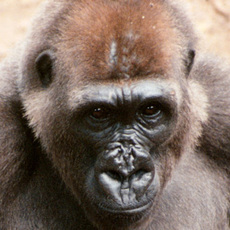
The government of Cameroon has created the Kagwene Gorilla Sanctuary, the world’s first sanctuary exclusively for the Cross River gorilla, the world’s rarest kind of great ape.

“The creation of this sanctuary is the fruit of many years of work in helping to protect the world’s rarest gorilla subspecies,” said Dr. Roger Fotso, Director of the Wildlife Conservation Society’s Cameroon Program, which worked in tandem with the Cameroon Ministry of Forestry and Wildlife in laying the groundwork for the sanctuary.

Classified as Critically Endangered by IUCN’s Red List, the Cross River gorilla is the rarest of the four subspecies of gorilla. The entire population numbers under 300 individuals across its entire range, which consists of 11 scattered sites in Cameroon and Nigeria.