Banner
Pilot Study: Fibromyalgia Fatigue Improved By TENS Therapy

Fibromyalgia is the term for a poorly-understood condition where people experience pain and fatigue...

High Meat Consumption Linked To Lower Dementia Risk

Older people who eat large amounts of meat have a lower risk of dementia and cognitive decline...

Long Before The Inca Colonized Peru, Natives Had A Thriving Trade Network

A new DNA analysis reveals that long before the Incan Empire took over Peru, animals were...

Mesolithic People Had Meals With More Tradition Than You Thought

The common imagery of prehistoric people is either rooting through dirt for grubs and picking berries...

User picture.
News StaffRSS Feed of this column.

News Releases From All Over The World, Right To You... Read More »

Blogroll

A dietary supplement called NutraStem, also known as NT-020, is a proprietary formulation of blueberry, green tea, vitamin D3 and carnosine extracts - a combination of nutritional ingredients thought to be potent in protecting against brain damage.

“Stroke is the third leading cause of death and the leading cause for disability in the U.S. with two of every 1,000 adults experiencing their firsts stroke in any given year,” said Cesar V. Borlongan, PhD, of the Medical College of Georgia, lead author of a study that tested NT-020 post stroke effects in animal models. “We explored how increasing the nutritive diet through NT-020 supplementation might render a therapeutically potent neurogenesis following stroke.”

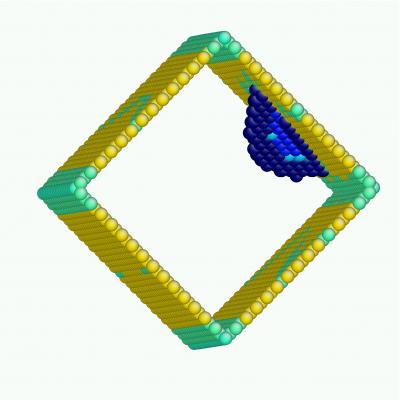
Penn engineers have developed a model that shows while metals tend to be stronger at nanoscale volumes, their strengths saturate at around 10-50 nanometers diameter, at which point they also become more sensitive to temperature and strain rate.

Using this model, they have found that, while metals tend to be stronger at nanoscale volumes, their strengths saturate at around 10-50 nanometers diameter, at which point they also become more sensitive to temperature and strain rate.

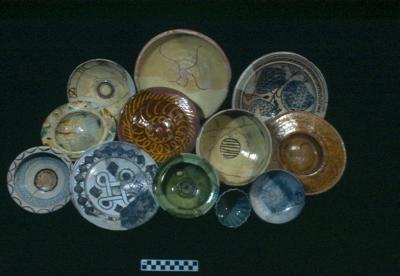
In the west, we call valuable ceramic place settings 'china' because high-quality ceramic wares were imported from the east. They were the best and had the highest value.

Not really so, at least in Israel, according to research at the University of Haifa.

According to Dr. Edna Stern, in contrast to the notion that ceramic wares were imported to Acre and surrounding ports as luxury items, the findings of her study revealed exactly the opposite.

Researchers at MIT Lincoln Laboratory have developed a powerful sensor that can detect airborne pathogens such as anthrax and smallpox in less than three minutes.

The new device, called PANTHER (for PAthogen Notification for THreatening Environmental Releases), represents a "significant advance" over any other sensor, said James Harper of Lincoln Lab's Biosensor and Molecular Technologies Group. Current sensors take at least 20 minutes to detect harmful bacteria or viruses in the air, but the PANTHER sensors can do detection and identification in less than 3 minutes.

Testosterone appears to protect people against eating disorders, providing further evidence that biological factors – and not just social influences – are linked to anorexia and bulimia, according to new research findings at Michigan State University.

An ongoing, six-year study of 538 sets of twins in Michigan indicates that females who were in the womb with male twins have lower risk for eating disorder symptoms than females who were in the womb with female twins. Previous animal research has shown that females in the womb with males are exposed to higher levels of testosterone.

Researchers at the University of Minnesota studying bacteria capable of generating electricity have discovered that riboflavin (commonly known as vitamin B-2) is responsible for much of the energy produced by these organisms.

The bacteria, Shewanella, are commonly found in water and soil and are of interest because they can convert simple organic compounds (such as lactic acid) into electricity, according to Daniel Bond and Jeffrey Gralnick, of the University of Minnesota's BioTechnology Institute and department of microbiology, who led the research effort.

"This is very exciting because it solves a fundamental biological puzzle," Bond said. "Scientists have known for years that Shewanella produce electricity. Now we know how they do it."