Banner
Pilot Study: Fibromyalgia Fatigue Improved By TENS Therapy

Fibromyalgia is the term for a poorly-understood condition where people experience pain and fatigue...

High Meat Consumption Linked To Lower Dementia Risk

Older people who eat large amounts of meat have a lower risk of dementia and cognitive decline...

Long Before The Inca Colonized Peru, Natives Had A Thriving Trade Network

A new DNA analysis reveals that long before the Incan Empire took over Peru, animals were...

Mesolithic People Had Meals With More Tradition Than You Thought

The common imagery of prehistoric people is either rooting through dirt for grubs and picking berries...

User picture.
News StaffRSS Feed of this column.

News Releases From All Over The World, Right To You... Read More »

Blogroll

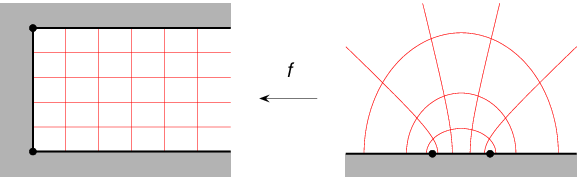
A problem which has defeated mathematicians for almost 140 years has been solved by a researcher at Imperial College London.

Professor Darren Crowdy, Chair in Applied Mathematics, has made the breakthrough in an area of mathematics known as conformal mapping, a key theoretical tool used by mathematicians, engineers and scientists to translate information from a complicated shape to a simpler circular shape so that it is easier to analyze.

This theoretical tool has a long history and has uses in a large number of fields including modelling airflow patterns over intricate wing shapes in aeronautics.

Throughout the world, amateurs, experts and the media agree that prolonged jogging raises people's spirits. And many believe that the body’s own opioids, so called endorphins, are the cause of this. But in fact this has never been proved until now.

Researchers at the Technische Universität München and the University of Bonn succeeded to demonstrate the existence of an ‘endorphin driven runner’s high’. In an imaging study they were able to show, for the first time, increased release of endorphins in certain areas of the athletes' brains during a two-hour jogging session.

Widespread damage to plants from a sudden freeze that occurred across the Eastern United States from 5 April to 9 April 2007 was made worse because it had been preceded by two weeks of unusual warmth, according to an analysis published in BioScience.

The authors of the report, Lianhong Gu and his colleagues at the Oak Ridge National Laboratory and collaborators at NASA, the University of Missouri, and the National Oceanic and Atmospheric Administration, found that the freeze killed new leaves, shoots, flowers, and fruit of natural vegetation, caused crown dieback of trees, and led to severe damage to crops in an area encompassing Nebraska, Maryland, South Carolina, and Texas. Subsequent drought limited regrowth.

Although still relatively unknown to the general public, an archaeological method called a regional settlement pattern survey is being practiced at several locations around the world.

Rather than focusing on city centers and their easilt serviceable sites, it involves walking systematically over a large landscape to find traces of archaeological sites on the surface of the ground. This field procedure can yield a holistic, integrated view of how settlement has shifted in a region over the course of history.

For the past 13 years, archaeologists from The Field Museum and Shandong University have used this method to develop a multifarious overview of an important but understudied region along the northeastern coast of The People’s Republic of China.

Two cell proteins that relax the gut and help accommodate a big meal have been identified by UCL (University College London) scientists. The proteins could offer a future drug target against weight gain, by preventing the stomach from expanding.

In a Journal of Pharmacology and Experimental Therapeutics paper, Dr Brian King and Dr Andrea Townsend-Nicholson explored the molecular basis of relaxations of the gut. In the study, the authors identified two protein receptors – P2Y1 and P2Y11 – involved in fast and slow relaxations of the gut. These proteins were identified in the guinea pig, but are also present in the human gut, and thus offer the potential as a future target for drug treatment.

Coronary heart disease, of which a major contributing factor is high cholesterol, is set to become the biggest killer disease worldwide by 2010. There are several types of cholesterol, some of which are good for you and some of which are bad. Existing over-the-counter tests do not distinguish between good and bad cholesterol so the results don't give a full picture of the patient's health. For accurate diagnosis, current tests rely on a doctor taking a blood sample from the patient and sending it to a laboratory for analysis ­ the results can take days.

The availability of immediate, accurate tests for high cholesterol at your local doctor is now a step closer. L3 Technology has secured a second round investment of £1.75 million, enabling the company to commercialize its patented technology that will provide rapid point of care cholesterol testing with laboratory accuracy.