Banner
Pilot Study: Fibromyalgia Fatigue Improved By TENS Therapy

Fibromyalgia is the term for a poorly-understood condition where people experience pain and fatigue...

High Meat Consumption Linked To Lower Dementia Risk

Older people who eat large amounts of meat have a lower risk of dementia and cognitive decline...

Long Before The Inca Colonized Peru, Natives Had A Thriving Trade Network

A new DNA analysis reveals that long before the Incan Empire took over Peru, animals were...

Mesolithic People Had Meals With More Tradition Than You Thought

The common imagery of prehistoric people is either rooting through dirt for grubs and picking berries...

User picture.
News StaffRSS Feed of this column.

News Releases From All Over The World, Right To You... Read More »

Blogroll

For more than a decade, Peter Zandstra has been working at the University of Toronto to rev up the production of stem cells and their descendants. The raw materials are adult blood stem cells and embryonic stem cells. The end products are blood and heart cells – lots of them. Enough mouse heart cells that they form beating tissue.

Less smoking or less time eating in restaurants because of a ban on smoking? Either way, the number of acute coronary events such as heart attack in adults dropped significantly after a smoking ban in public places in Italy, researchers reported in Circulation: Journal of the American Heart Association.

Researchers in Rome compared acute coronary events in the city for five years preceding a public smoking ban with those occurring one year after the ban. They found an 11.2 percent reduction of acute coronary events in persons 35 to 64 years and a 7.9 percent reduction in those ages 65 to 74.

“Smoking bans in all public and workplaces result in an important reduction of acute coronary events,” said Francesco Forastiere, M.D., Ph.D., co-author of the study and head of the Environmental and Occupational Epidemiology Unit, Department of Epidemiology, Rome E. Health Authority, Italy. “The smoking ban in Italy is working and having a real protective effect on population health.”

A butcher from Mindelheim and Fraunhofer scientists have succeeded in manufacturing tasty sausage varieties containing only two to three percent of fat. The almost fat-free sausage is now making its way onto the refrigerated shelves of German shops.

Master butcher Josef Pointner from Mindelheim hit on the idea of making low-fat sausage. “Low-fat products for varieties such as ham sausage, Leberkäse (a German meat loaf specialty) or salami or Weisswurst (Bavarian veal sausage) have never been available until now. But I was only partially successful in producing these sausage varieties,” Pointner says.

Researchers from the University of Chicago have discovered that many of the genetic variations that have enabled human populations to tolerate colder climates may also affect their susceptibility to metabolic syndrome, a cluster of related abnormalities that include obesity, elevated cholesterol levels, heart disease, and diabetes.

Scientists have long noted that humans inhabiting colder regions were bulkier and had relatively shorter arms and legs. In the 1950s, researchers found correlations between colder climates and increased body mass index (BMI), a measure of body fat, based on height and weight. Now scientists have found a strong correlation between climate and several of the genetic variations that appear to influence the risk of metabolic syndrome, consistent with the idea that these variants played a crucial role in adaptations to the cold. Also, some genes associated with cold tolerance have a protective effect against the disease, while others increase disease risk.

Researchers have provided the first global analysis of human proteins interacting with proteins of viruses and other pathogens. The network of interactions, described in an article published February 15 in the open-access journal PLoS Pathogens, reveals possible key intervention points for the future development of therapeutics against infectious diseases.

“Infectious diseases result in millions of deaths each year,” said co-author Matt Dyer. “Although much effort has been directed towards the study of how infection by a pathogen causes disease in humans, only recently have large data sets for protein interactions become publicly available.”

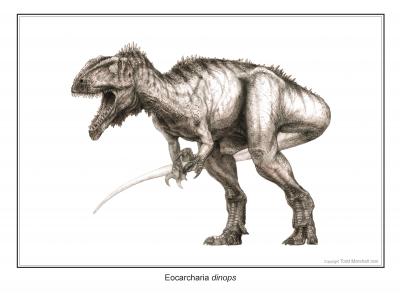
Two new 110 million-year-old dinosaurs unearthed in the Sahara Desert highlight the unusual meat-eaters that prowled southern continents during the Cretaceous Period. Named Kryptops and Eocarcharia in a paper appearing this month in the scientific journal Acta Palaeontologica Polonica, the fossils were discovered in 2000 on an expedition led by University of Chicago paleontologist Paul Sereno.

Sereno and co-author paleontologist Stephen Brusatte of the University of Bristol say the new fossils provide a glimpse of an earlier stage in the evolution of the bizarre meat-eaters of Gondwana, the southern landmass. “T-rex has become such a fixture of Cretaceous lore, most people don’t realize that no tyrannosaur ever set foot on a southern continent,” said Sereno.