Banner
Pilot Study: Fibromyalgia Fatigue Improved By TENS Therapy

Fibromyalgia is the term for a poorly-understood condition where people experience pain and fatigue...

High Meat Consumption Linked To Lower Dementia Risk

Older people who eat large amounts of meat have a lower risk of dementia and cognitive decline...

Long Before The Inca Colonized Peru, Natives Had A Thriving Trade Network

A new DNA analysis reveals that long before the Incan Empire took over Peru, animals were...

Mesolithic People Had Meals With More Tradition Than You Thought

The common imagery of prehistoric people is either rooting through dirt for grubs and picking berries...

User picture.
News StaffRSS Feed of this column.

News Releases From All Over The World, Right To You... Read More »

Blogroll

Based on the rapid evaporation of solvent from simple “inks,” University of Illinois researchers have demonstrated a process for fabrication of complex, three-dimensional nanoscale structures and shown the ability to grow individual nanowires of unlimited length.

The process has been used to fabricate freestanding nanofibers, stacked arrays of nanofibers and continuously wound spools of nanowires. Potential applications include electronic interconnects, biocompatible scaffolds and nanofluidic networks.

“The process is like drawing with a fountain pen – the ink comes out and quickly dries or ‘solidifies,’ ” said Min-Feng Yu, a professor of mechanical science and engineering, and an affiliate of the Beckman Institute. “But, unlike drawing with a fountain pen, we can draw objects in three dimensions.”

Studies have shown that children do not accurately use landmarks to orient themselves until about the age of six but those studies were done in an artificial environment. A new study taking place in a natural environment disputes that finding and says even children as young as three use 'reorientation.'

Reorientation is using things around us to regain our bearings.

Dr Alastair Smith from the Department of Experimental Psychology and colleagues from his department and the Department of Computer Science at the University of Bristol have tested the ability of children aged between three and seven to orient themselves in the great outdoors.

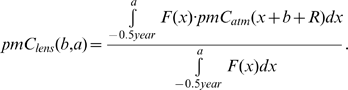
Researchers at the University of Copenhagen and Aarhus have shown they are able to use the radiocarbon dating method to study special proteins in the lens of the eye - they use a nuclear accelerator to determine the amount of Carbon-14 in as little as one milligram of lens tissue and thereby calculate the year of birth.

This will enable forensic scientists to establish the birth date of an unidentified body and could also eventually be used in cancer research.

The lens of the eye is made up of transparent proteins called crystallins. These are packed so tightly together and in such a particular way, that they behave like crystals, allowing light to pass through the lens of the eye so that we can see.

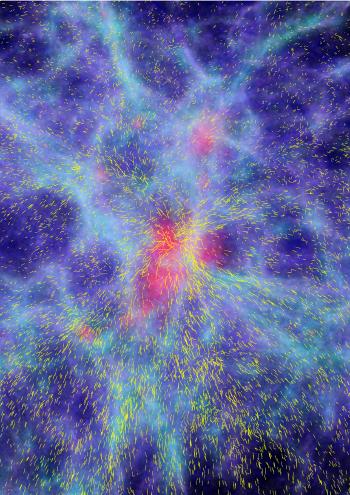
Ten years ago, astronomers made the stunning discovery that the universe is expanding at a faster pace today than it did in the past.

“Explaining why the expansion of the Universe is currently accelerating is certainly the most fascinating question in modern cosmology,” says Luigi Guzzo, lead author of a paper in this week’s issue of Nature, in which the new results are presented. “We have been able to show that large surveys that measure the positions and velocities of distant galaxies provide us with a new powerful way to solve this mystery.”

“This implies that one of two very different possibilities must hold true,” explains Enzo Branchini, member of the team.

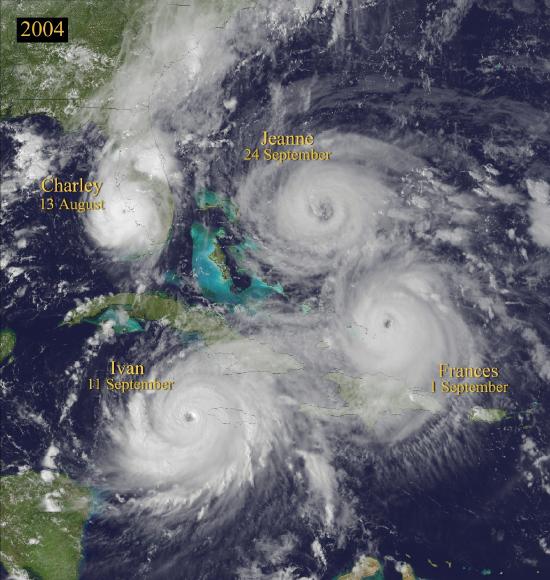
Scientists at University College London say they have established a link between changes in the temperature of the sea’s surface and increases in North Atlantic hurricane activity.

Why do some people solve problems more creatively than others? Are people who think creatively somehow different from those who tend to think in a more methodical fashion?

These questions are part of a long-standing debate, with some researchers arguing that what we call “creative thought” and “noncreative thought” are not basically different. If this is the case, then people who are thought of as creative do not really think in a fundamentally different way from those who are thought of as noncreative. On the other side of this debate, some researchers have argued that creative thought is fundamentally different from other forms of thought. If this is true, then those who tend to think creatively really are somehow different.