Banner
Pilot Study: Fibromyalgia Fatigue Improved By TENS Therapy

Fibromyalgia is the term for a poorly-understood condition where people experience pain and fatigue...

High Meat Consumption Linked To Lower Dementia Risk

Older people who eat large amounts of meat have a lower risk of dementia and cognitive decline...

Long Before The Inca Colonized Peru, Natives Had A Thriving Trade Network

A new DNA analysis reveals that long before the Incan Empire took over Peru, animals were...

Mesolithic People Had Meals With More Tradition Than You Thought

The common imagery of prehistoric people is either rooting through dirt for grubs and picking berries...

User picture.
News StaffRSS Feed of this column.

News Releases From All Over The World, Right To You... Read More »

Blogroll

Traditional ecosystems in which communities of plants and animals have co-evolved and are interdependent are increasingly rare, due to human-induced ecosystem changes. As a result, historical assessments of ecosystem health are often inaccurate.

A team of scientists present a new approach to management efforts in a paper posted this week on Frontiers e-View. The researchers suggest that such efforts should focus less on restoring ecosystems to their original state and more on sustaining new, healthy ecosystems that are resilient to further environmental change.

Timothy R. Seastedt (University of Colorado at Boulder), Richard J. Hobbs (Murdoch University in Australia) and Katharine N. Suding (University of California at Irvine) looked at ecosystem management studies from the past 12 years to develop a new approach to managing ecosystems in the face of increasing human impacts.

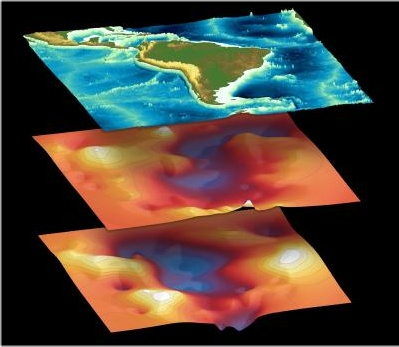
Most of the Earth’s listed active volcanoes are located at the borders between two tectonic plates, where upsurge of magma from the mantle is facilitated.

When these magmatic uprisings occur at a subduction zone, where one tectonic plate plunges under another, they give rise to volcanic massifs such as the Andes cordillera. Other volcanic chains are formed along oceanic ridges, submarine regions of ocean-floor extension.

However, some volcanoes are governed by a completely different mechanism: intraplate volcanism. As their name suggests, these volcanic constructions appear in the very centre of tectonic plates. Scientists now know that some of them, such as the Hawaii-Emperor archipelago or Reunion Island, result from magmatic upsurges generated at the boundary between the Earth’s core and mantle situated 2 900 km deep.

Others, such as those of the central Pacific, display different characteristics. They are anomalous, in their simultaneously high number, unusually high concentration and short life-span and prompt scientists to look for hypotheses other than a deep-mantle plume to explain the causes of intraplate volcanism.

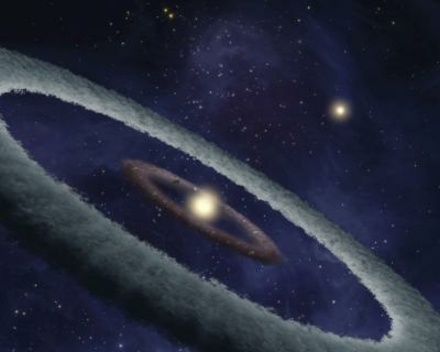
Only 4% of the universe is made of known material - the other 96% is traditionally labelled into two sectors, dark matter and dark energy. Dr HongSheng Zhao at the University of St Andrews believes dark matter and its counterpart dark energy may be more closely linked than was previously thought.

Astronomers believe that both the universe and galaxies are held together by the gravitational attraction of a huge amount of unseen material, first noted by the Swiss astronomer Fritz Zwicky in 1933, and now commonly referred to as dark matter.

Dr Zhao reports that, "Dark energy has already revealed its presence by masking as dark matter 60 years ago if we accept that dark matter and dark energy are linked phenomena that share a common origin.”

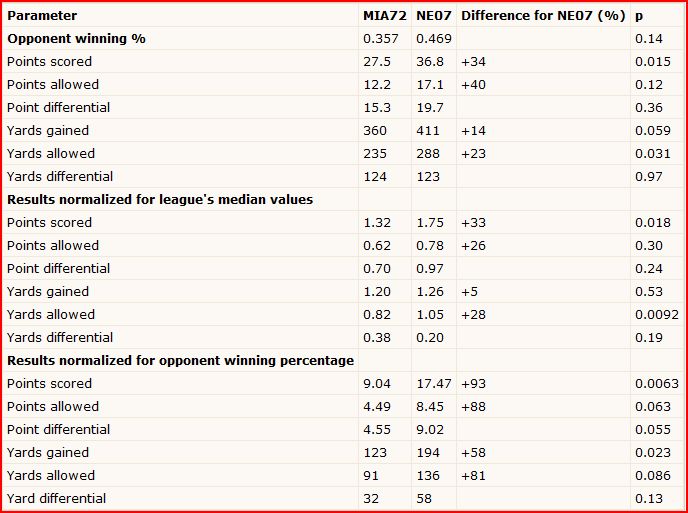
Sports pundits across the country have been comparing the so-far unbeaten 2007 New England Patriots to the perfect 1972 Dolphins all year. A New York cardiologist has used the scientific statistics used in large-scale medical trials to determine which of the two teams is superior.

Using a format and approach typically reserved for the cardiovascular therapy studies he writes and reviews, Dr.

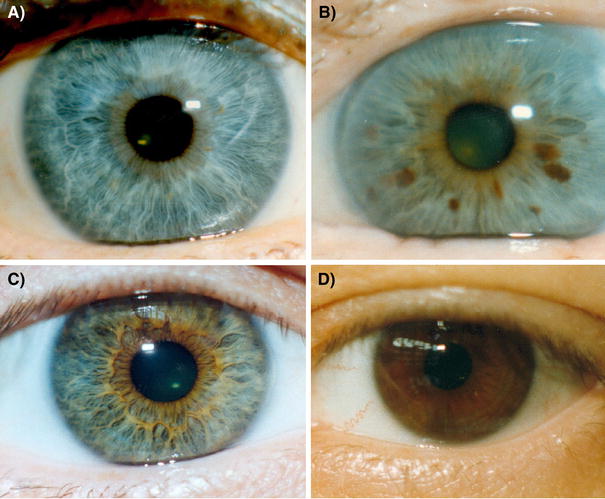
A team at the University of Copenhagen have tracked down a genetic mutation which took place 6-10,000 years ago and is the cause of the eye color of all blue-eyed humans alive on the planet today.

What is the genetic mutation?

“Originally, we all had brown eyes”, said Professor Eiberg from the Department of Cellular and Molecular Medicine. “But a genetic mutation affecting the OCA2 gene in our chromosomes resulted in the creation of a “switch”, which literally “turned off” the ability to produce brown eyes.”

The OCA2 gene codes for the so-called P protein, which is involved in the production of melanin, the pigment that gives color to our hair, eyes and skin.

Healthy consumers can handle low levels of bacteria occasionally found in cosmetics but for severely ill patients these bacteria may trigger life-threatening infections, as patients in the intensive care unit at one Barcelona hospital discovered after using contaminated body moisturizer. The Burkholderia cepacia bacteria outbreak is detailed in Critical Care.

Five patients suffered from infection including bacteremia, lower respiratory tract infection and urinary tract infection associated with the bacterial outbreak in August 2006.