Banner
Pilot Study: Fibromyalgia Fatigue Improved By TENS Therapy

Fibromyalgia is the term for a poorly-understood condition where people experience pain and fatigue...

High Meat Consumption Linked To Lower Dementia Risk

Older people who eat large amounts of meat have a lower risk of dementia and cognitive decline...

Long Before The Inca Colonized Peru, Natives Had A Thriving Trade Network

A new DNA analysis reveals that long before the Incan Empire took over Peru, animals were...

Mesolithic People Had Meals With More Tradition Than You Thought

The common imagery of prehistoric people is either rooting through dirt for grubs and picking berries...

User picture.
News StaffRSS Feed of this column.

News Releases From All Over The World, Right To You... Read More »

Blogroll

Genetic mutations in the Toll-like receptor 4 (TLR4) gene appear to have significant association with inflammatory injury to the placenta and developing baby according to researchers from the University of Pittsburgh’s department of obstetrics, gynecology and reproductive sciences.

“This indicates a possible genetic predisposition to a kind of misfire in immune system response that could contribute to placental inflammation and spontaneous preterm birth,” said Hyagriv Simhan, M.D., assistant professor of obstetrics, gynecology and reproductive sciences at the University of Pittsburgh School of Medicine, who is presenting the work. “These injuries are important because they are more common in preterm babies and associated with major health consequences like cerebral palsy.”

TLR4 enables the body to recognize pathogens and activate the immune system. This gene is expressed most abundantly in the placenta and in white blood cells.

The billions of dollars spent each year on the space program sometimes translate into practical real world improvements; if you don't know the value of Tang (1) and pens that write upside-down (2), you have just never tried them.

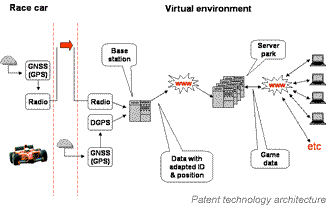
It's no different in Europe. The European Space Agency (ESA) developed Global Navigation Satellite Systems (GNSS), e.g. GPS, satellite navigation technology which allows real-time transmission of telemetric data from lots of objects on the ground and a start-up called iOpener did what you might expect with it; they used it to make a racing game, where you can compete against professionals during the race itself.

"Our product enables gamers to race live against professionals – they don't have to be a 'Schumacher' to enjoy it," says Andy Lürling, CEO and co-founder of iOpener, "it is a total immersion experience."

Although food prices rose 4.8% last year, eating nutritiously is still well within reach of the American family, according to the latest U.S. Department of Agriculture (USDA) statistics.

Analysis done by USDA's Center for Nutrition Policy and Promotion (CNPP) indicates that families could, in fact, spend even less on food than what they currently spend and eat a healthier more nutritious diet.

USDA’s Low-Cost Food Plan shows what a family on a budget can spend on food and still achieve a nutritious diet that meets current Dietary Guidelines for Americans. For December 2007, USDA estimates the cost of the Low-Cost Food Plan for a family of four (a couple ages 20 to 50 with two children ages 6 to 8 and 9 to 11) to be $167.70 per week. This compares to the $189.00 per week that the average four person household spent on food last year.

The governments of the United States, Brazil and the European Union (EU) — the world’s major producers of biofuels — today released an analysis of current biofuel specifications to facilitate expanded trade of these renewable energy sources.

Biofuels—derived from biological materials such as plants, plant oils, animal fat and microbial byproducts, are gaining popularity worldwide as both energy producers and users seek ways to move away from dependence on fossil fuels.

One potential obstacle to achieving greater efficiency in the global biofuels market is confusion over differing, and sometimes conflicting, standards for characterizing the make-up and properties of biofuels.

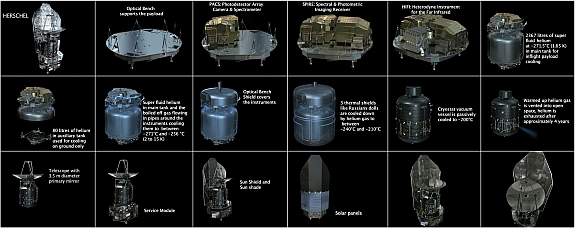
When the Herschel Space Observatory launches on an Ariane-5 rocket from the Guiana Space Centre, Kourou, French Guiana, in July 2008, astronomers will be able to examine some of the coldest objects in the universe.

Herschel will have the largest mirror of any space telescope — twice the size of the famous Hubble — that will detect the ‘glow’ of spacedust at around -250C, rather than the light from stars.

As well as being able to see star-forming regions very nearby in our own galaxy, it will be able to see galaxies forming when the universe was in its infancy, more than ten billion years ago.

It's the first space telescope to operate in the sub-millimetre part of the spectrum, between the far-infrared and microwaves.

Scientists from Commonwealth Scientific and Industrial Research Organisation (CSIRO) and Woods Hole Oceanographic Institution (WHOI)aboard the research vessel Southern Surveyor returned home today with a collection of coral samples and photographs taken in the Southern Ocean at greater depths than ever before.

Using a remotely operated submersible vehicle the international research team captured images of life found on deep-sea pinnacles and valleys up to three kilometres beneath the Ocean’s surface.

During a three-week voyage, scientists from CSIRO’s Wealth from Oceans National Research Flagship and the US collaborated to retrieve examples of live and fossilised deep-ocean corals from a depth of 1650 metres near the Tasman Fracture Zone, south-east of Tasmania.