Banner
Pilot Study: Fibromyalgia Fatigue Improved By TENS Therapy

Fibromyalgia is the term for a poorly-understood condition where people experience pain and fatigue...

High Meat Consumption Linked To Lower Dementia Risk

Older people who eat large amounts of meat have a lower risk of dementia and cognitive decline...

Long Before The Inca Colonized Peru, Natives Had A Thriving Trade Network

A new DNA analysis reveals that long before the Incan Empire took over Peru, animals were...

Mesolithic People Had Meals With More Tradition Than You Thought

The common imagery of prehistoric people is either rooting through dirt for grubs and picking berries...

User picture.
News StaffRSS Feed of this column.

News Releases From All Over The World, Right To You... Read More »

Blogroll

Stem cells, popularly known as a source of biological rejuvenation, may play harmful roles in the body, specifically in the growth and spread of cancer. Amongst the wildly dividing cells of a tumor, scientists have located cancer stem cells. Physician-scientists from Weill Cornell Medical College are studying these cells with hopes of combating malignant cancers in the brain.

"Some patients' brain tumors respond to chemotherapy and some don't," says Dr. John A. Boockvar, the Alvina and Willis Murphy Assistant Professor of Neurological Surgery and head of the Brain Tumor Research Group at NewYork-Presbyterian Hospital/Weill Cornell Medical Center. "We believe cancer stem cells may be the cause."

If you're going to experience a period of helplessness, it's best to be alone. New research at the University of Haifa found that laboratory rats that were on their own when exposed to uncontrollable conditions, which create a feeling of helplessness, learned to avoid situations which create such feelings better than rats that were exposed to uncontrollable conditions in pairs.

The way laboratory rats react to uncontrollable situations in which their behaviors have no influence on subsequent events has been researched in the past.

People who bake aren't fans of sugar substitutes. 'Equal' does well in hot things like coffee that just require absorption but, for the most part, sugar remains king in the oven.

Natur Research Foods Inc. announced that it has developed and is now distributing an all-natural sugar substitute, Natur Baker's Blend Natural Sweetener, for the purpose of baking.

According to their press release, it has 40 percent fewer calories than sugar and has been tested as low-glycemic. They say it bakes, rises, caramelizes, provides a crust and preserves similar to cane sugar.

A research team at Weill Cornell Medical College in New York City has identified two genes that may be crucial to the production of an immune system cytokine called interleukin-10 (IL-10).

The discovery fills in an important "missing link" in a biochemical pathway that's long been tied to disorders ranging from lupus and Type 1 diabetes, to cancer and AIDS.

"IL-10 production has to be kept in a delicate balance for health," explains study senior researcher Dr. Xiaojing Ma, Professor of Immunology and Microbiology in the Departments of Microbiology and Immunology and Pediatrics at Weill Cornell.

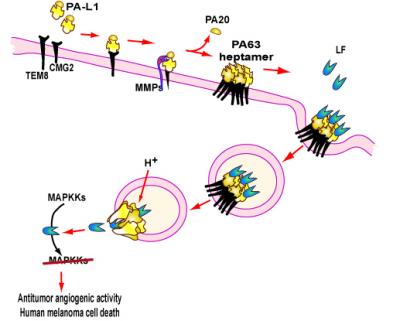
Most people wouldn’t consider anthrax toxin to be beneficial, but this bacterial poison may someday be an effective cancer therapy. Anthrax toxin has actually been shown to be fairly selective in targeting melanoma cells, although the risk of non-cancer toxicity prevents any clinical use.

To develop a better and safer treatment, Stephen Leppla and colleagues created a mutated antrax toxin that could only be turned on by matrix metalloproteinases (MMP), proteins that are overproduced only in cancer cells.

When they tested this mutated toxin in mice, the researchers observed that 100% of the animals tolerated a dose that would be lethal for the natural toxin.

As electronics designers cram more and more components onto each chip, current technologies for making random-access memory (RAM) are running out of room. European researchers have a strong position in a new technology known as resistive RAM (RRAM) that could soon be replacing flash RAM in USB drives and other portable gadgets.

On the ‘semiconductor road map’ setting out the future of the microchip industry, current memory technologies are nearing the end of the road. Future computers and electronic gadgets will need memory chips that are smaller, faster and cheaper than those of today –and that means going back to basics.

Today’s random-access memory (RAM) falls mainly into three classes: static RAM (SRAM), dynamic RAM (DRAM), and flash memory.