Banner
Could Niacin Be Added To Glioblastoma Treatment?

Glioblastoma, a deadly brain cancer, is treated with surgery to remove as much of the tumor as...

At 2 Months, Babies Can Categorize Objects

At two months of age, infants lack language and fine motor control but their minds may be understanding...

Opportunistic Salpingectomy Reduces Ovarian Cancer Risk By 78%

Opportunistic salpingectomy, proactively removing a person’s fallopian tubes when they are already...

Environmental Activists Hate CRISPR - And They're Dooming People With HIV

Existing treatments control HIV but the immune system does not revert to normal. They is why people...

User picture.
News StaffRSS Feed of this column.

News Releases From All Over The World, Right To You... Read More »

Blogroll

Which came first, the chicken genome or the egg genome?

Researchers have answered a similarly vexing (and far more relevant) genomic question: Which of the thousands of long stretches of repeated DNA in the human genome came first? And which are the duplicates?

The answers, published online by Nature Genetics on October 7, 2007, provide the first evolutionary history of the duplications in the human genome that are partly responsible for both disease and recent genetic innovations.

Almost immediately after it is donated, human blood begins to lose a key gas that opens up blood vessels to facilitate the transfer of oxygen from red blood cells to oxygen-starved tissues.

They also found that adding this gas back to stored blood before transfusion appears to restore red blood cells’ ability to transfer oxygen to tissues.

Residents of small isolated fishing villages on the northern peninsula of Newfoundland have participated in the ritual of “mumming” for centuries. According to the tradition, small groups of villagers, or mummers, disguise their identities and go to other houses to threaten violence, whereupon the people of the houses try to guess the intruders’ identities.

A study by researchers at the University of Missouri-Columbia argues that this tradition is a manner of communicating trust and trustworthiness.

Scientists are on the trail of Iapetus' mysterious dark side, which seems to be home to a bizarre 'runaway' process that is transporting vaporised water ice from the dark areas to the white areas of the Saturnian moon.

This 'thermal segregation' model may explain many details of the moon's strange and dramatically two-toned appearance, which have been revealed in exquisite detail in images collected during Cassini’s recent close fly-by of Iapetus.

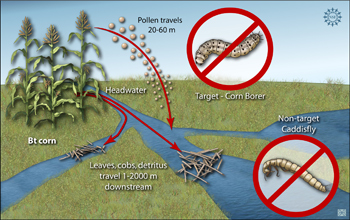
Cornell researchers and Sathguru Management Consultants of India have successfully led an international consortium through the first phase of developing a pest-resistant eggplant. By about 2009 this eggplant is expected to be the first genetically engineered food crop in South Asia. Farmers have grown genetically altered cotton in India since 2002.

The engineered eggplant expresses a natural insecticide derived from the bacteria Bacillus thuringiensis (Bt), making it resistant to the fruit and shoot borer (FSB), a highly destructive pest. The tiny larvae account for up to 40 percent of eggplant crop losses each year in India, Bangladesh and the Philippines, and other areas of South and Southeast Asia.

A special protein can be injected into the body to reverse learning problems in mice that have an animal version of Alzheimer’s disease, Saint Louis University researchers have found.

The protein -- part of the immunoglobulin M (IgM) class -- is an antibody that grabs onto the amyloid beta protein in the brain and prevents it from changing into the toxic substance believed to cause Alzheimer’s disease.

“Our research in an animal model showed that antibodies can be developed rationally for treating Alzheimer’s disease,” says William A. Banks, M.D. professor of geriatrics and pharmacological and physiological science at Saint Louis University. “It’s a major thing that people have been trying to do -- get antibodies into the brain in the right amount to treat illnesses.