Banner
Could Niacin Be Added To Glioblastoma Treatment?

Glioblastoma, a deadly brain cancer, is treated with surgery to remove as much of the tumor as...

At 2 Months, Babies Can Categorize Objects

At two months of age, infants lack language and fine motor control but their minds may be understanding...

Opportunistic Salpingectomy Reduces Ovarian Cancer Risk By 78%

Opportunistic salpingectomy, proactively removing a person’s fallopian tubes when they are already...

Environmental Activists Hate CRISPR - And They're Dooming People With HIV

Existing treatments control HIV but the immune system does not revert to normal. They is why people...

User picture.
News StaffRSS Feed of this column.

News Releases From All Over The World, Right To You... Read More »

Blogroll

The time is ripe for scientific organizations to adopt codes of ethics, according to a scientist and bioethicist from Wake Forest University School of Medicine in the current issue of Science and Engineering Ethics.

"Medical practice and human subject research is influenced by the Hippocratic tradition," said Nancy L. Jones, Ph.D., "but no similar code of ethics has been formalized for the life and biomedical sciences.

Carbon dioxide, a greenhouse gas that has become a bane of modern society, may have saved Earth from freezing over early in the planet's history, according to the first detailed laboratory analysis of the world's oldest sedimentary rocks.

Scientists have theorized for years that high concentrations of greenhouse gases could have helped Earth avoid global freezing in its youth by allowing the atmosphere to retain more heat than it lost.

A novel experiment conducted by Carnegie Mellon University Professor George Loewenstein and colleagues may explain why people try a drug, such as heroin, for the first time despite ample evidence that it is addictive. The results of the study, which are being published in the Journal of Health Economics, reveal that even longtime addicts underestimate the influence that drug cravings have over their behavior.

Almost all drugs produce a craving in their users. Loewenstein and his colleagues hypothesized that people experiment with drugs that they know are addictive in part because they can't appreciate the intensity of drug cravings, and thus underestimate the likelihood that they will become addicted.

A novel experiment conducted by Carnegie Mellon University Professor George Loewenstein and colleagues may explain why people try a drug, such as heroin, for the first time despite ample evidence that it is addictive. The results of the study, which are being published in the Journal of Health Economics, reveal that even longtime addicts underestimate the influence that drug cravings have over their behavior.

Almost all drugs produce a craving in their users. Loewenstein and his colleagues hypothesized that people experiment with drugs that they know are addictive in part because they can't appreciate the intensity of drug cravings, and thus underestimate the likelihood that they will become addicted.

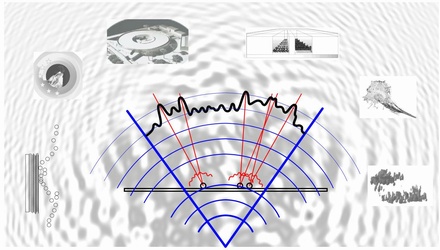
Peering backward in time to an instant after the big bang, physicists at the University of Wisconsin-Madison have devised an approach that may help unlock the hidden shapes of alternate dimensions of the universe.

A new study demonstrates that the shapes of extra dimensions can be "seen" by deciphering their influence on cosmic energy released by the violent birth of the universe 13 billion years ago. The method, published today (Feb.

Portable inspection devices that detect food safety and quality problems are being developed by Agricultural Research Service (ARS) scientists. Recent food safety outbreaks highlight the need for "space-age" ways to prevent such problems at every step in the food production process -- from farm field to grocery store or restaurant.

Scientists led by Yud-Ren Chen at the ARS Instrumentation and Sensing Laboratory, Beltsville, Md., are designing such portable inspection devices by adapting optical technology used for remote sensing of Earth.

Prototypes include binoculars with lenses that detect fecal matter on meat, produce or processing equipment--as well as diseases or quality defects.