Fake Banner
Environmentalists, What Are You Asking From Dedmoroz Lenin For Earth Day This Year?

Tomorrow is Earth Day. It is also Lenin's birthday. That's not coincidence. The leader of...
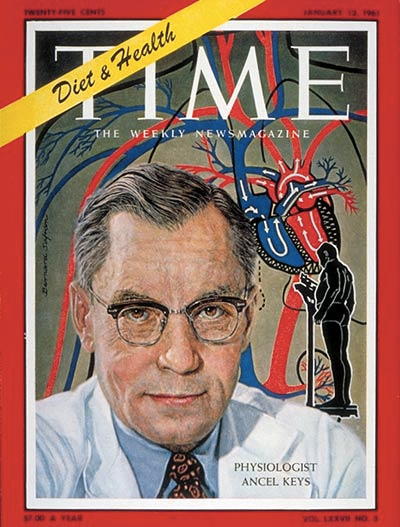
How Ancel Keys Went From MAHA Hero To MAHA Villain

If a lot of the food and health claims you read and hear today seem like things left over from...

Are Baseball Pitchers Faster Today?

On September 7, 1974, pitching for the California Angels, Nolan Ryan, known for his velocity, became...

Ground-Nesting Bee Populations Don't Get Publicity But They're Everywhere

Honeybees get attention in environmental fundraising campaigns because people don't understand...

User picture.
picture for Tommaso Dorigopicture for Heidi Hendersonpicture for Fred Phillipspicture for picture for Hontas Farmerpicture for Atreyee Bhattacharya
Hank CampbellRSS Feed of this column.

I founded Science 2.0® in 2006 and since then it has become the world's largest independent science communications site, with over 300,000,000 direct readers and reach approaching one billion. Read More »

Blogroll
How do you demonize scientists who added 3 genes to the 30,000 in rice in order to stop vitamin A deficiencies in poor countries with rice-dominated diets? There are zero pitfalls to it yet an elaborate, well-funded marketing campaign has been leveled against it.
Ann Finkbeiner, author of 2007's The Jasons: The Secret History of Science's Postwar Elite (among other things) and contributor to The Last Word On Nothing, recently had a fascinating exchange with one of my favorite journalists, USA Today's Dan Vergano.

It didn't take long before the Netflix dramedy hit "Orange Is The New Black" made its way into Psychology of Women Quarterly, a publication devoted to peer-reviewing the feminist science.

With all that humor and girl kissing and talk of beatdowns, you know an editor was excited about the chance to link a paper to the show in a press release - things have been rather tame, culturally, for readers and contributors there since "The L Word" went off the air. The American Psychological Association is, as always, happy to ride a cultural wave.(1)

What do anti-science groups do that science never seems to do?

Trot out naked women.

PETA - constantly, Greenpeace - sure, using cheescake to raise money for their corporate agenda is nothing new for groups that have neither data nor reason nor ethics.

But Babes Against Biotech is not even hiding behind a pretense of caring about a naturalistic fallacy. It is so ridiculous and goofy I at first assumed that some evil corporation had created it to make anti-science hippies look sexist.
There are two ways to influence the public - basically carrots and sticks. A stick is, of course, taxes and fees and regulations and armed federal agents at your house should you choose not to obey the law.

A carrot is to create a Behavioral Insights project, similar to one that exists in the United Kingdom, tasked with using the awesome power of social science to create the behavior they want - it's like framing on steroids. 
How would editors at National Review regard the credibility of a controlled market publication that had its economic policy articles written by astrologers using the stars as their evidence?

They might not like it but so what? Can they prove astrologers can't make economic policy? No, it's just flawed logic, sort of like me challenging someone to prove I am not an alien from space. That is the problem with National Review paying someone from the Discovery Institute to spout anti-science nonsense about 35-year-old science under the guise of 'ethics'. Because misunderstanding and logical head-faking is the strategy the Discovery Institute uses to promote doubt about biology in general and evolution in specific.