Fake Banner
Environmentalists, What Are You Asking From Dedmoroz Lenin For Earth Day This Year?

Tomorrow is Earth Day. It is also Lenin's birthday. That's not coincidence. The leader of...
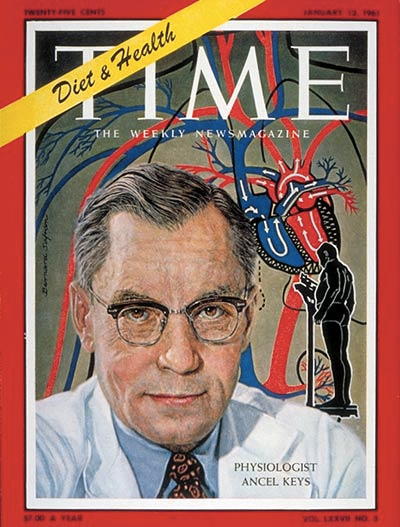
How Ancel Keys Went From MAHA Hero To MAHA Villain

If a lot of the food and health claims you read and hear today seem like things left over from...
Are Baseball Pitchers Faster Today?

On September 7, 1974, pitching for the California Angels, Nolan Ryan, known for his velocity, became...

Ground-Nesting Bee Populations Don't Get Publicity But They're Everywhere

Honeybees get attention in environmental fundraising campaigns because people don't understand...

User picture.
picture for Tommaso Dorigopicture for Heidi Hendersonpicture for Fred Phillipspicture for picture for Hontas Farmerpicture for Atreyee Bhattacharya
Hank CampbellRSS Feed of this column.

I founded Science 2.0® in 2006 and since then it has become the world's largest independent science communications site, with over 300,000,000 direct readers and reach approaching one billion. Read More »

Blogroll
That's right, it's not just scientists who are funny. In trolling the internet as I do, I came across mention of Increased Complexity: Is This The First Rule Of Evolution? on a site called ChristianDiscussionForums.org, linking to the article and with this comment:
It's too bad they didn't bury Stephen Jay Gould in a magnetic suit and wrap wire coils around his coffin.

Twice in two days Botulinum toxin (Botox) has graced our front page, and it's not just because it makes Joan Rivers look like The Joker.

Yesterday we reported that Botox has helped infants with CHARGE Syndrome and today we discovered an article in Medical Hypotheses talking about its many beneficial effects.

Not bad press for an often fatal poison produced by a rare type of food poisoning bacteria.

You can tell a lot about the concerns of society regarding science by the kinds of topics that bring people to sites like ours. Not a day goes by that people don't arrive using Google searches looking for answers about organic food. The top query is something like 'what is organic food?' and it seems odd that after hundreds of millions of dollars in advertising and $20 billion in sales, no one is sure what organic food is.

There are two sides to the organic food issue to most people; genetics and chemicals. I don't worry too much about organic food from a genetics standpoint, for example, but I am not a fan of most chemicals. I am not even a fan of other people touching my food.

We have a much bigger audience than Physical Review Letters anyway. From New Scientist:
Scientists who want to describe their work on Wikipedia should not be forced to give up the kudos of a respected journal. So says a group of physicists who are going head-to-head with a publisher because it will not allow them to post parts of their work to the online encyclopaedia, blogs and other forums. The physicists were upset after the American Physical Society withdrew its offer to publish two studies in Physical Review Letters because the authors had asked for a rights agreement compatible with Wikipedia.
We've never found an organic molecule (methane) in the atmosphere of a planet around a distant star before but NASA folks intend to announce next week it has been done. Should any of you desire to participate in this briefing, contact the Space Telescope Science Institute (Ray Villard at 410-338-4514 or Cheryl Gundy at 410-338-4707) by noon on March 19 for the call-in number and passcode. Plus, since we're discussing efforts to subvert science:
At least the folks at Galactic Mu think we are, because we print a summation, New Take On Invisibility - 'Shrinking' Nanoparticles Visible Size Without Reducing Physical Dimensions, rather than just violating the copyright of the Advanced Materials folks and reprinting their whole article. Well, we do what we can. The topic is interesting because current metamaterials can't be made (yet) in the optical range due to the limits of nanotechnology, so this is an interesting waypoint. I think it is a waypoint, in much the same way that disk compression was a waypoint on the road to ginormous hard drives.