Fake Banner
Chloe Kim And Eileen Gu In Media As Anti-Asian Narrative

Olympians Chloe Kim and Eileen Gu are both Americans but have Asian descent. Yet Kim competed for...

Misandry Vs Manosphere: Both Use Unscientific Woo To Advance Their Beliefs But One Sells Better

Culture wars are as eternal as shooting wars, and that means there will always be war profiteers...

RIP To Dr. William Foege, The Man Whose Math Eliminated Smallpox

In the modern world, it is easy to be newly concerned about the World Health Organisation. They...

Scholars Who Got Sold On The Academic Life Feel The Pressure

Professor Peter Mitchell got a Nobel Prize in 1978 for a chemiosmotic hypothesis of how ATP is...

User picture.
picture for Hontas Farmerpicture for Fred Phillipspicture for Tommaso Dorigopicture for Atreyee Bhattacharyapicture for picture for Patrick Lockerby
Hank CampbellRSS Feed of this column.

I founded Science 2.0® in 2006 and since then it has become the world's largest independent science communications site, with over 300,000,000 direct readers and reach approaching one billion. Read More »

Blogroll
Few care about nature as much as hunters, fishers, and other outdoor sporting enthusiasts. Yet, that is the opposite of the narrative created by more militant environmental groups, who promote the belief that land must be untouched by people and legally off-limits, even if it means government social authoritarianism.

Yet in their desire to raise their $2 billion a year by keeping everyone on apocalyptic red alert, they miss something obvious; if no one is allowed to experience nature, they won't appreciate it or care about it in the future. And if they don't care because it's not valuable to them, they won't support environmental lawyers.
Consumers have been so saturated with vague marketing claims that nearly 50 percent can't correctly identify what is claimed to be a "healthier" option on packages.

That sounds bad, except buying whole grain or white bread or fancy crackers are not making any difference in health anyway.
The 1948 Samuel Beckett play "Waiting for Godot" is about two people that are, as you can guess, waiting for Godot. They wait at a tree, but they have no idea who he is or if he will arrive. When the person they do not know and had no idea was ever arriving does not arrive, they decide to commit suicide using the tree, but give up on that because they don't have a rope. They say they are leaving, but stay. You get the idea. 
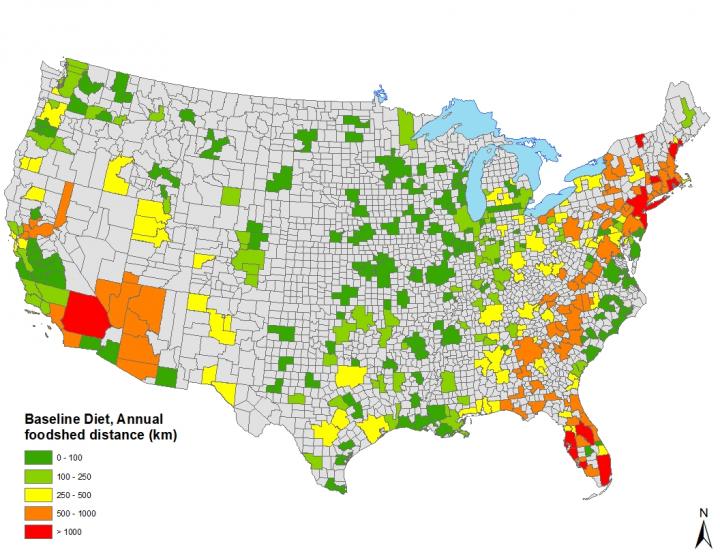
With the world COVID-19 pandemic in its sixth month, food activists are back to trumpeting locally grown, and even home grown, as a viable option for mass food production, but for most of the world how realistic is that? It's fine if Michael Pollan claims it is from his walled Berkeley back yard, but even most New York Times subscribers can't afford that.

To make it suitably ironic, environmentalists who have spent decades and $40 billion on campaigns saying single-family homes in suburbia are a blight on nature and we should all live in urban apartments are now claiming we should be growing vegetables and trading them with each other to create a more sustainable future.
Dermatopathologists, skin cancer specialists, may be ordering additional tests or second opinions out of caution but they may also be thinking about checking off boxes to prevent malpractice lawsuits.
After centuries of converging on balanced, smooth beers, the industry suddenly lurched sideways in the 21st century. While large brands now have to fear for their existence, men in beards are making a fortune selling pronounced, bitter craft brews.

The business segment may have been with us all along, according to a new analysis. The survey of 109 beer consumers in a blind experiment found that greater perceived bitterness increased the appeal of beers. This is the opposite of most foods.