




An overcommitted scientist can never truly be on parental leave, and in fact formally that period already ended for me - it made no sense to tell my employer I were on parental leave and then be as active as ever. The truth is, I cannot just disappear from one day to the next: the research groups I manage must continue their activities; students must get reference letters to apply for positions; authors must get reviews to the papers they submit to the journals I am an editor of; USERN (the network I am a president of) requires my attention; the EUCAIF and MODE collaborations deserve my input; blog readers also expect a continued flow of (hopefully insightful) articles. In other words, even if I cut to zero my code writing and own research activities (nobody complains if I do), I am still bound to continue pushing other things forth.
It is quite exhausting with twins. Infants need to be fed every three hours, and although I am not materially the entity producing and delivering the food, I must be of support; plus integration with formula milk of course requires my intervention. Even if you synchronize the two babies' eating / sleeping cycles, your nights are turbulent and sleep deprivation piles up. And so far we have been lucky enough that none of the babies got sick; I know that adds one layer of problems on top of everything else.
On the plus side, having chosen to deliver the babies in northern Sweden brought distinct advantages. Leaving alone the health system, which is exceptionally good, living in Lulea meant no hassle from friends and acquaintances: we spent six weeks in total isolation, and we loved it. Also, the darkness of the sky in these winter months is actually of help to let us capitalize on the odd half-hour of potential extra napping. We also found the cold and the snow to be allies in our softening the rythm of our days, and the occasional sauna (only for me, as sauna is not advisable for lactating mothers) a great relief.
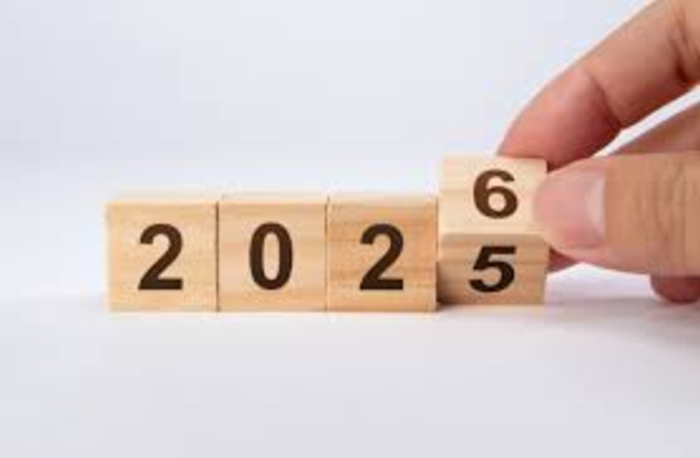
But let us go back to science. As I was trying to say, 2026 starts with a lot of promises. First of all, in April we will kick-off a project that won 3.2Meuro funding from the European Innovation Council. It is called PHINDER, which stands for Picosecond-scale Photonics Heterogeneous Integrated Neuromorphic Detector. Photonics, Neuromorphic sensing, particle detection all together is a level of innovation that indeed sounds even excessive! Nobody brought these individual research areas together even in pairs, and we are planning to bring the three together in one fell swoop. I will talk more about this project as we get started.
Another thing that is happening this year is that I will be giving a few important talks here and there. In April I will give a colloquium at the IAIFI in Boston, and seminars in Berkeley and Harvard; in June I will give an invited talk at the AI4X conference in Singapore. Other invitations are coming in, but I will have to be selective this year, as traveling with two infants around the globe is out of the question (I did it with one at a time when I was 25 years younger, and I am not going there again at 60 years of age) and I cannot really leave my wife alone for long periods. Most likely, I will spend the majority of my time here in Lulea, in northern Sweden, and do quick trips back to Italy and elsewhere to keep the ball rolling.
One thing I can promise to 2026 that is still in blueprint is a paper I have been toying with the idea to produce for a while now: a comparison of different end-to-end optimization strategies. Already for the paper I am writing for Working group 2 of EUCAIF (on co-design) I am going to show results of two different techniques combined (stochastic gradient descent and reinforcement learning), on a scientific use case I have spent some time working on as of late (the SWGO experiment). The new paper should compare those two techinques with genetic algorithms and with a statistically inspired dimensionality reduction technique based on lasso regression. This latter is an idea of Ann Lee, a Statistician at Carnegie-Mellon, and I am eager to probe it. She came up with the idea in about 3 seconds as I exposed her the problem I was trying to solve, and I love so much it when I see deep-level intuition at work, that I will pay it the homage it deserves - some detailed study.
So that is more or less it for 2026. I have not mentioned, mainly because it has become commonplace in my yearly agenda, the september trip to Crete, where i will attend to two back-to-back conferences (ICNFP and MODE) and spend some extra time in vacation. And how is your 2026 going to be? Please share your plans below!



Comments