
Fake Banner
Living At The Polar Circle

Since 2022, when I got invited for a keynote talk at a Deep Learning school, I have been visiting...

Conferences Good And Bad, In A Profit-Driven Society

Nowadays researchers and scholars of all ages and specialization find themselves struggling with...
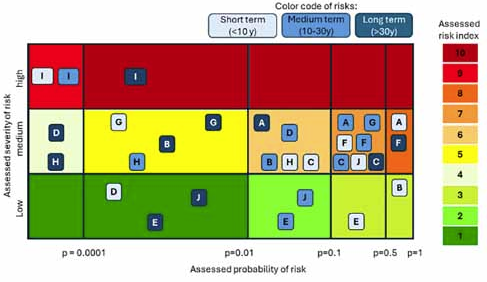
USERN: 10 Years Of Non-Profit Action Supporting Science Education And Research

The 10th congress of the USERN organization was held on November 8-10 in Campinas, Brazil. Some...
Baby Steps In The Reinforcement Learning World

I am moving some baby steps in the direction of Reinforcement Learning (RL) these days. In machine...

User picture.
picture for Hank Campbellpicture for Patrick Lockerbypicture for Heidi Hendersonpicture for Bente Lilja Byepicture for Sascha Vongehrpicture for Johannes Koelman
Tommaso DorigoRSS Feed of this column.

Tommaso Dorigo is an experimental particle physicist, who works for the INFN at the University of Padova, and collaborates with the CMS and the SWGO experiments. He is the president of the Read More »

Blogroll
Experimental physics is about investigating the world in a quantitative manner, by exploiting our technology to carefully map the wealth of phenomena that make planets turn around stars, atoms stick together, and hearts to beat. All of that can be understood by creating models of the underlying physics processes. These models need to be fed with input parameters which we must measure.
On July 6th, at 7PM CET (1PM in NY, 10AM in California) I will be chatting online with David Orban on his show Searching For The Question Live (#sftql) about the present and future of particle physics, artificial intelligence and its applications to research, science communication, and the whereabouts. I hope you will be joining us, it should be fun!

For those of you who do not know who David Orban is:


It is not a secret that I love chess, and that whenever I have the chance to play some online blitz -in the absence of better competitions or tournaments- I plunge happily into it. However, my results vary, as sometimes my mind cannot be taken away from the program that won't run or this or that administrative forms still waiting to be filled.
I did not think I would need to explain here things that should be obvious to any sentient being, but the recent activity I detect on Facebook and other sites, and the misinformation spread by some science popularization sources and bloggers around the conclusions reached last week by the European Strategy Update for Particle Physics (EUSUPP), a 2-year-long process that saw the participation of hundreds of scientists and the heavy involvement of some of our leading thinkers, forced me to change my mind.
Fundamental science works by alternating phases of interpretation and refutation. When interpreting the result of experiments, physicists spend their time sweating shirt after shirt in the attempt of formulating economical and coherent explanations of observed phenomena. If the process converges, they formulate a theory which works well, whereby they celebrate for a little while. Then a second phase starts, when hypotheses are formulated on how to refute the shiny new model, finding effects and observatons that do not fit in the formulated framework. And so on.
For the past 11 years I have blogged for Science2.0 (formerly Scientific Blogging), and I have considered this site my true personal web page, too - the articles I have published here for over a decade are a much better representation of who I am, what I do, and of my personal expertise than anything else I can ever think of putting together in a web site.