Fake Banner
Living At The Polar Circle

Since 2022, when I got invited for a keynote talk at a Deep Learning school, I have been visiting...

Conferences Good And Bad, In A Profit-Driven Society

Nowadays researchers and scholars of all ages and specialization find themselves struggling with...
USERN: 10 Years Of Non-Profit Action Supporting Science Education And Research

The 10th congress of the USERN organization was held on November 8-10 in Campinas, Brazil. Some...
Baby Steps In The Reinforcement Learning World

I am moving some baby steps in the direction of Reinforcement Learning (RL) these days. In machine...

User picture.
picture for Hank Campbellpicture for Patrick Lockerbypicture for Heidi Hendersonpicture for Bente Lilja Byepicture for Sascha Vongehrpicture for Johannes Koelman
Tommaso DorigoRSS Feed of this column.

Tommaso Dorigo is an experimental particle physicist, who works for the INFN at the University of Padova, and collaborates with the CMS and the SWGO experiments. He is the president of the Read More »

Blogroll
First off, let me say I do not wish to sound disrespectful to anybody here, leave alone my colleagues, to most of which goes my full esteem and respect (yes, not all of them, doh). Yet, I feel compelled to write today about a sociological datum I have paid attention to, in these difficult times of isolation, when all of us turn to the internet as our main outlet for rants, logorrhea, or to make the impending threat of a global catastrophe less heavy by sharing it with our peers, to exorcise our fears.
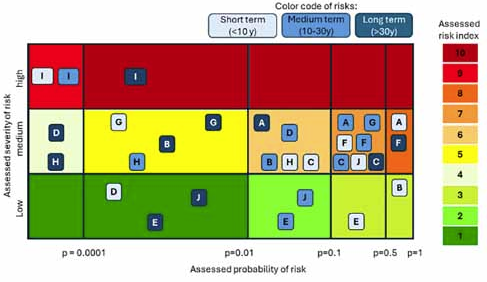
After the outbreak in China of the COVID-19 virus, Italy has fallen in the middle of the most acute sanitary emergency we ever experienced in a long while. And what's worse, other countries are sadly joining it. As I write this piece, over 15,000 Italians have tested positive to the virus, and over 1000 have already died. Based on very convincing analysis of data from China, we know that the real number of cases is higher by at least a factor 20, if not 100. In these conditions, individuals have to protect themselves and help reduce the spread of the virus with all possible means - most importantly, by staying home and cutting all social contacts.

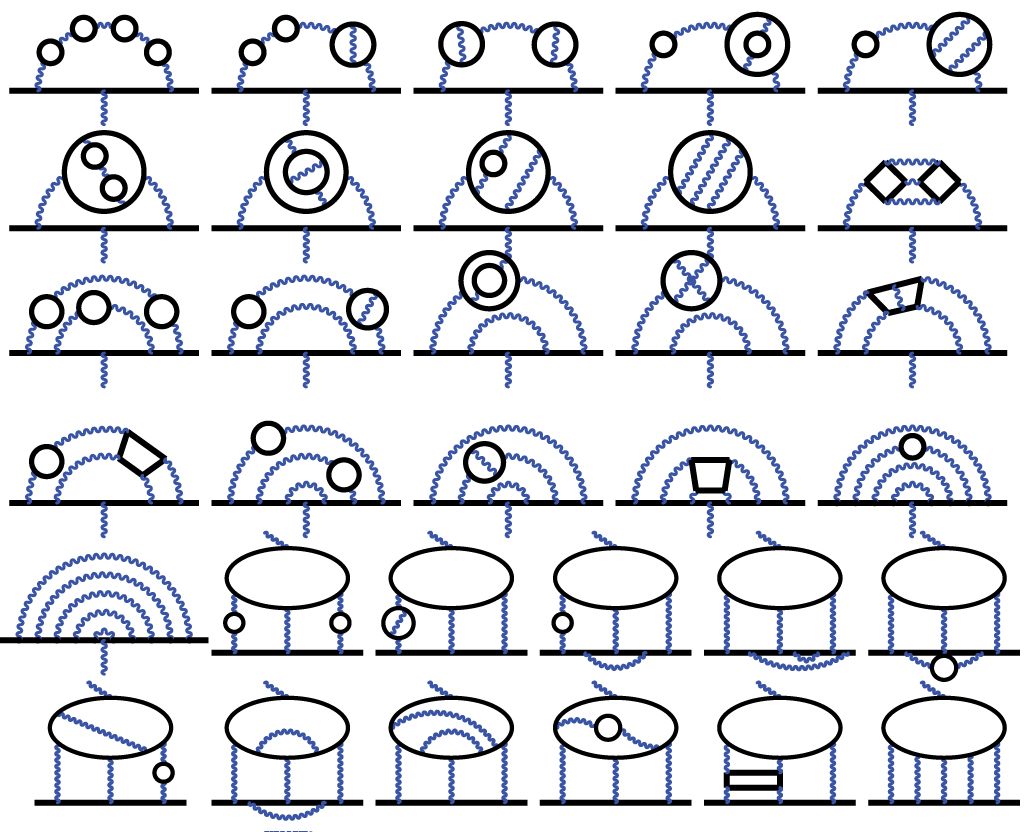
A new long article which appeared on the arXiv preprint repository last week is sending ripples around the world of particle physics phenomenology, as its main result -if proven correct- will completely wipe off the table the one and only long-standing inconsistency of the Standard Model of particle physics, the one existing between theoretical and experimental estimates of the so-called anomalous magnetic moment of the muon.
Tomorrow morning the Cornell arXiv will publish the preprint of a long scientific article, the result of 4.5 months of painstaking work by yours truly. So I thought I would give you a preview of its contents. Of course, it will take more than a single post to do a good job - I guess I can describe the generalities here, and leave it to another time the plunging into technical details that may only be interesting to insiders.

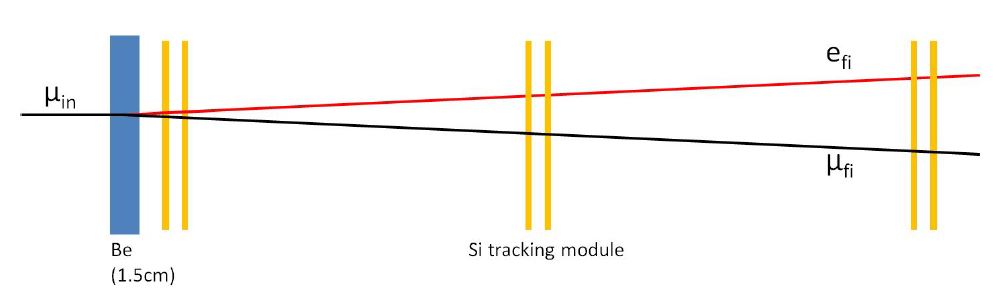
First of all, what experiment are we talking about? It is called "MUonE", and it aims at measuring with the utmost precision the rate at which muons scatter elastically off electrons, as a function of the transferred energy of the scattering reaction. 

A few days ago I received from my esteemed colleague Massimo Passera, a theorist and an INFN director of research in the Padova section where I also work, a draft of a new article he produced with his colleagues Antonio Masiero and Paride Paradisi, which is relevant to my present interests. The paper discusses what new physics effects could be accessible by the precision measurement of elastic scattering of energetic muons off electrons, in a setup which is being considered at the CERN north area for the determination of the hadronic contribution to the effective electromagnetic coupling (the article has meanwhile being published in the arXiv).

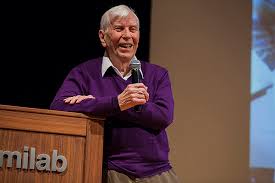
The Tevatron collider, the giant marvel accelerator built at the Fermi National Accelerator Laboratory in the eighties and operated there for over thirty years, until its demise in 2012, lost one of its fathers the other day, as Alvin Tollestrup passed away.

Tollestrup was maybe the key contributor to the project of putting together a 1-TeV particle accelerator, solving many issues for the construction of its superconducting magnets. But he also was for a long time the spokesperson of the CDF experiment, and the driving force behind the collective effort that led CDF to see a first evidence of the top quark in 1994, and then claim discovery for the long sought sixth quark in 1995.