Fake Banner
Living At The Polar Circle

Since 2022, when I got invited for a keynote talk at a Deep Learning school, I have been visiting...

Conferences Good And Bad, In A Profit-Driven Society

Nowadays researchers and scholars of all ages and specialization find themselves struggling with...
USERN: 10 Years Of Non-Profit Action Supporting Science Education And Research

The 10th congress of the USERN organization was held on November 8-10 in Campinas, Brazil. Some...
Baby Steps In The Reinforcement Learning World

I am moving some baby steps in the direction of Reinforcement Learning (RL) these days. In machine...

User picture.
picture for Hank Campbellpicture for Patrick Lockerbypicture for Heidi Hendersonpicture for Bente Lilja Byepicture for Sascha Vongehrpicture for Johannes Koelman
Tommaso DorigoRSS Feed of this column.

Tommaso Dorigo is an experimental particle physicist, who works for the INFN at the University of Padova, and collaborates with the CMS and the SWGO experiments. He is the president of the Read More »

Blogroll
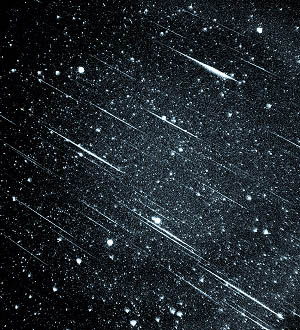
Meteor showers are a spectacular phenomenon that takes place when the Earth intersects the path along which periodic comets (or less frequently, asteroidal bodies) orbit the Sun. Comets lose debris when they get close to perihelion, but the debris does not get lost in all directions - it continues to follow the comet's path in the solar system. 
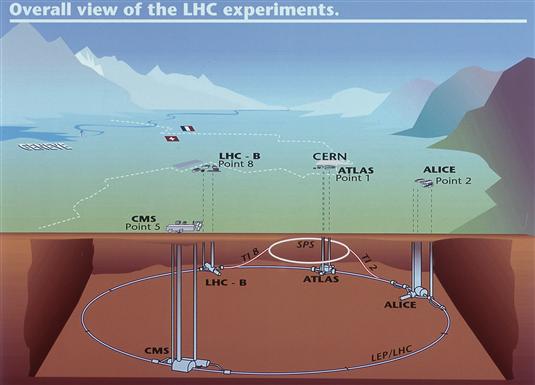
For the (likely going to be dramatically unsuccessful) series "Questions you would have liked your son asked you when you visited CERN together", I feature today a rather unconventional curiosity about LHC and neutrino physics. The source of inspiration for this is a coffee-time conversation I had long ago, I don't even remember with whom - probably a colleague. Anyway, that's the least interesting bit of the whole matter.


The LHC is...
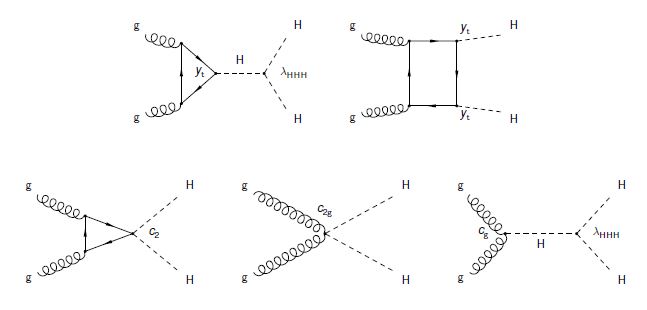
That's right - I finally hit the ground with my creativity, and my jokes are starting to use old material for my post titles. Yet producing a pair of Higgs bosons in a proton-proton collision is seriously cool indeed. The Higgs boson in fact is one of the few particles that does a trick called "self-coupling": in a sort of ermaphroditic act it is capable of giving birth to a pair of objects identical to itself. 
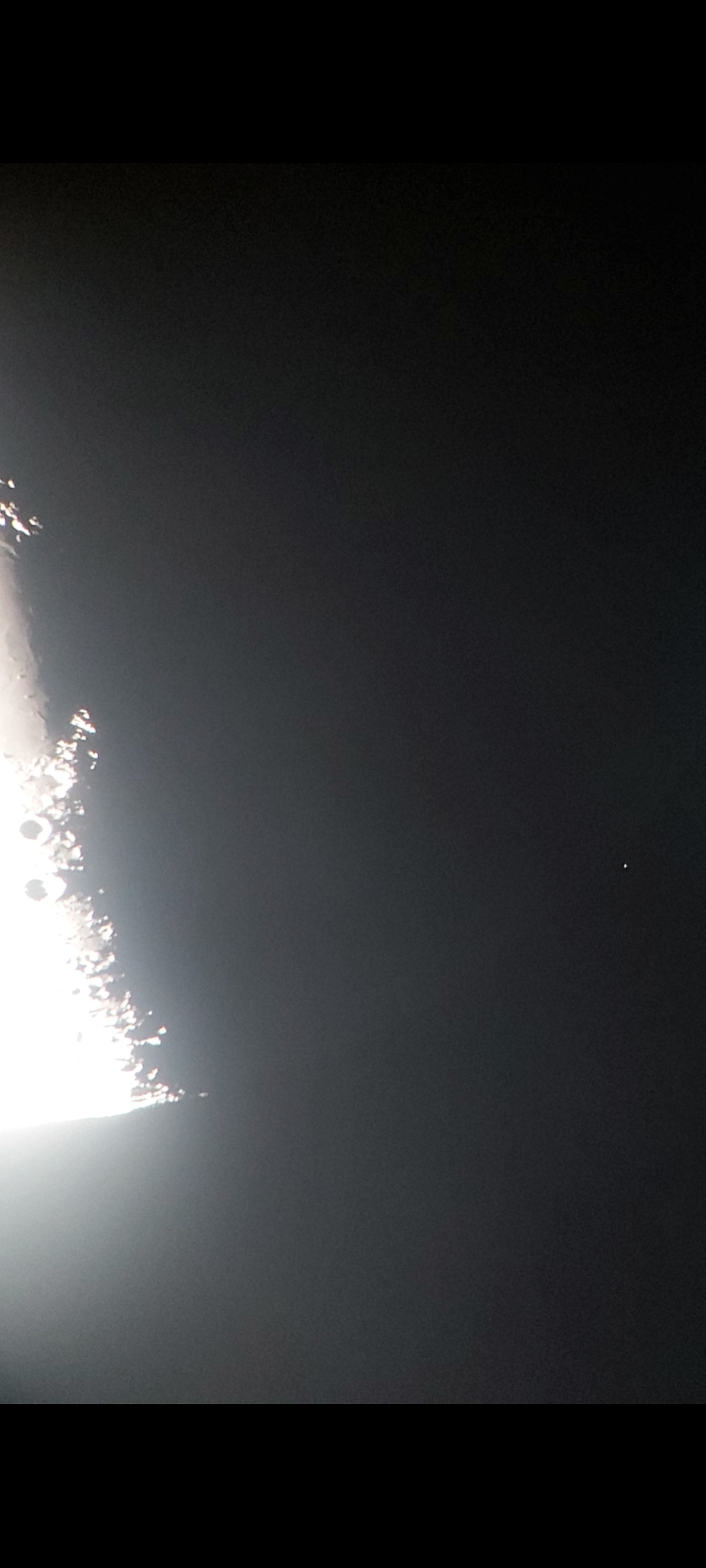
Have you ever looked at the moon through a telescope, or even a pair of binoculars? Our satellite is really beautiful to look at - it is full of detail you can get lost in: craters, mountain ridges, canyons, plateaus. And there's no clouds to obscure the view (if you are a planetary observer and you put an eye on Mars a couple of years ago you know what I mean - a dust storm that went on for weeks completely hid the surface from outside observers).
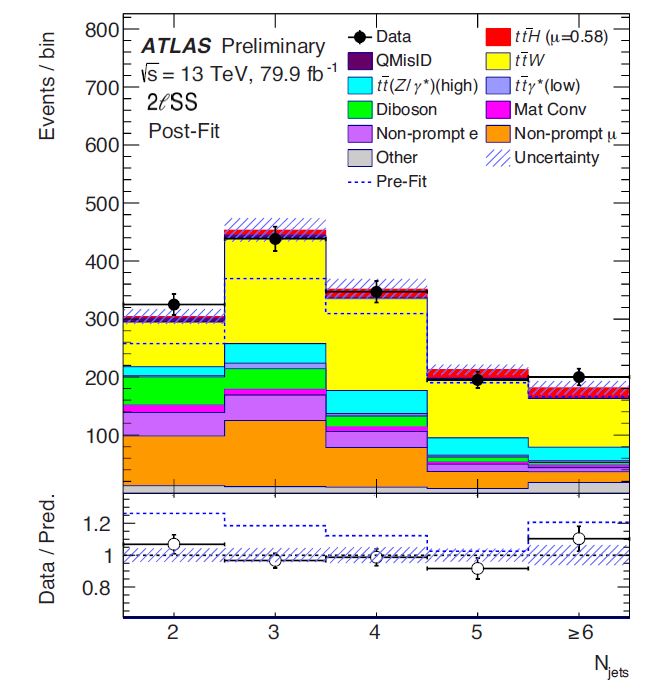
I was blissfully unaware until today of a slightly anomalous effect, which was found by the ATLAS Collaboration when performing a search for top pairs plus Higgs bosons in their Run 2 data. The anomaly I am talking about is an apparent excess of events which could be explained, as ATLAS did in this preprint article, by dialing up the cross section of some background processes producing a top pair and a W boson. 
Tomorrow - that is, November 8th, at 8AM GMT - I am chairing a session titled "Artificial Intelligence for Physics Research, and Physics Research for Artificial Intelligence" at the Vth USERN Congress. The event takes place in Tehran, and is broadcast via zoom. If you are interested in the talks, of which I give some detail below, you will be able to connect through this link.
The agenda of the workshop is as follows (those shown are are Tehran times):

11.30-11.55 Tommaso Dorigo, “Artificial intelligence and fundamental physics research