Fake Banner
Blood Pressure Medication Adherence May Not Be Cost, It May Be Annoyance At Defensive Medicine

High blood pressure is an important risk factor for developing cardiovascular disease and premature...
On January 5th, Don't Get Divorced Because Of Hallmark Movies

The Monday after New Year's is colloquially called Divorce Day, but it's more than marriages ending...

Does Stress Make Holidate Sex More Likely?

Desire to have a short-term companion for the holidays - a "holidate" - is common enough that it...

To Boomers, An AI Relationship Is Not Cheating

A recent survey by found that over 28 percent of adults claim they have an intimate, even romantic...

User picture.
picture for Fred Phillipspicture for Hontas Farmerpicture for Tommaso Dorigopicture for picture for Patrick Lockerbypicture for Ilias Tyrovolas
Hank CampbellRSS Feed of this column.

I founded Science 2.0® in 2006 and since then it has become the world's largest independent science communications site, with over 300,000,000 direct readers and reach approaching one billion. Read More »

Blogroll
Finns are not more liberal about education because kids don't have to wear shoes, they are really conservative - the last country in Europe to create mandatory education and their spending on it is small. There is no need to pay more money to teachers so they can pay union dues so union employees can pay lobbyists to lobby the Education Department to use more federal taxes to redistribute it to schools.

Education is by rote.

They only go to grade 9. Why not extend it to make kids even smarter? It costs too much.

They don't spend a lot of time on social justice, they spend it on education. Kids who do not want to continue in academics go to "vocational" school. 

Professor Anne Glover, the first Chief Scientific Adviser to the President of the European Commission, has been sacked. 

Well, not technically, the European Commission is simply not extending her position. That is diplomatic speech for 'there are a lot more anti-science Europeans voting than there are researchers and they really do not like you.'  
When Ebola was the latest rage in mainstream media (that would be last month - poor people in Africa are so October of 2014) National Institutes of Health Director Dr. Francis Collins was quick to capitalize on it - they could have had a vaccine by now, he claimed, if only funding had not been flat since 2004.

Science blogging was, naturally, quick to blame Republicans and The Sequester and whatever else would get Democrats to the polls in the run-up to elections. 
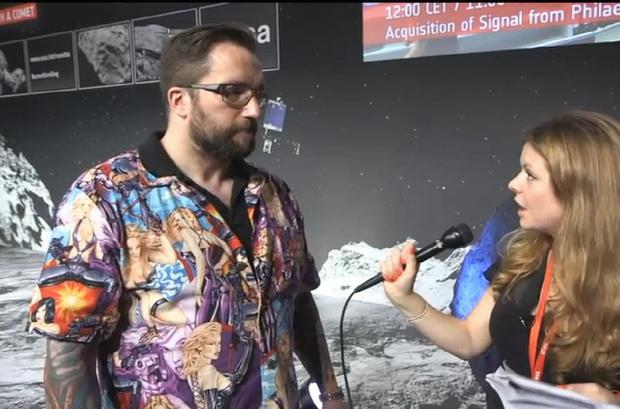
Most of the world that has access to the Internet knows two things about the Rosetta mission - it landed on a comet and a European engineer wore an ugly shirt that offended a lot of American women on Twitter.

The least interesting news is that the ESA now knows that if women can't wear bathing suits to represent them on television, then male project scientists cannot wear bowling shirts and shorts. The important news, however, is that mankind has shown we can go on a 10 year, 4 billion mile journey through the solar system and land on a rock the size of Cork City, Ireland.
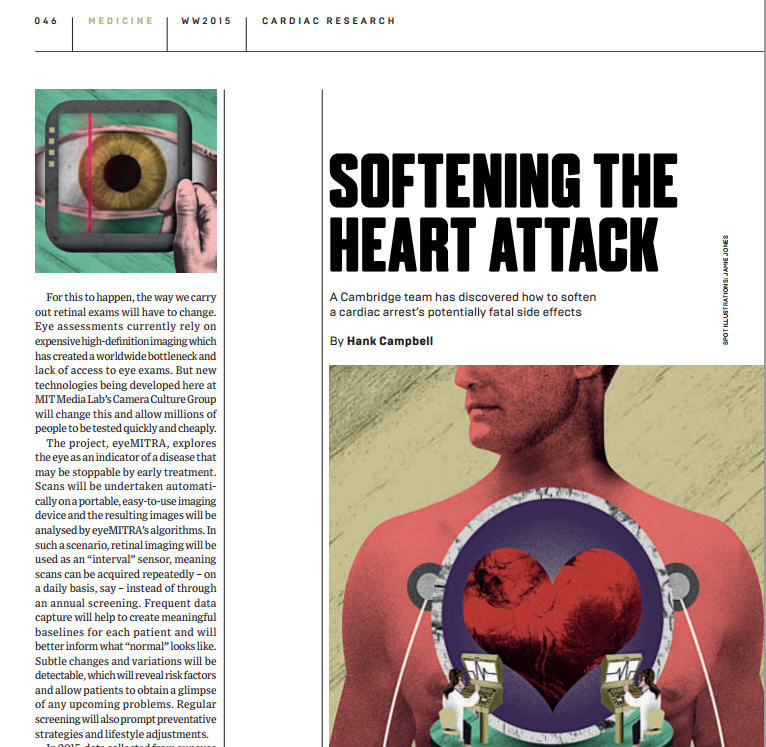
Wired magazine devotes a special issue each November to a "What's Next?" for the upcoming year - and that means it is time to think about what will happen in the world of science in 2015.

Wired asked me to make a solid prediction, kind of like Jeane Dixon, except actually right about the future. Nostradamus, without all of the meaningless mumbo-jumbo.
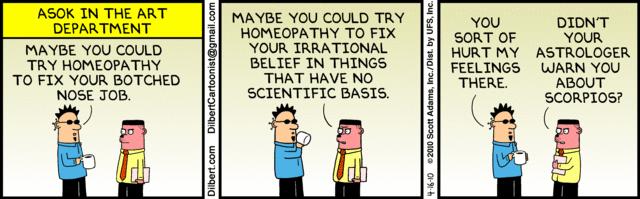
Can homeopathy actually work if someone knows it is a placebo? What if, for example, a skeptical Science 2.0 group was told they got a placebo and that nutritionists were getting medicine? Would we feel better anyway?(1)

Of course it's possible, it just wouldn't be due to magic water. It's a mystery of biology why some people just feel better taking something. That is why homeopathy still exists a few hundred years after its invention even though it has never worked.(2)

Does the placebo effect apply to dogs? Do they understand the concept of medicine? If not, they have a placebo effect.