Fake Banner
A Chess Study Requiring Backpropagation

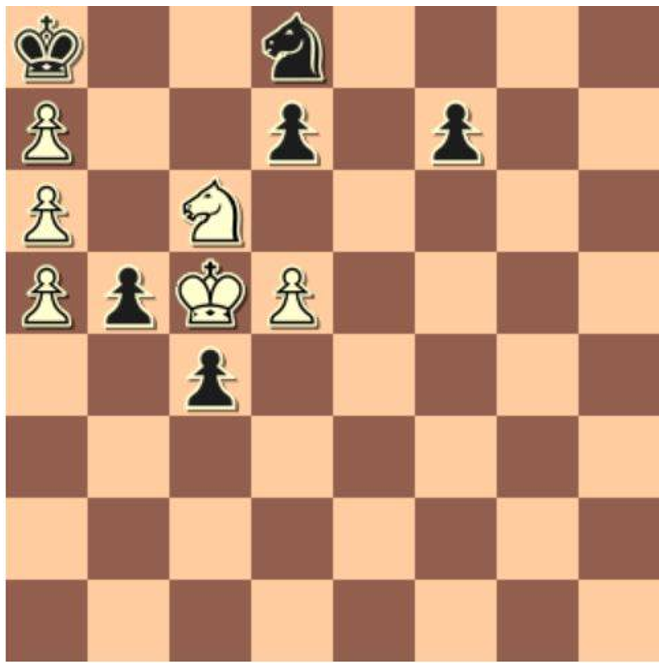
The following position is a win for white. But how?It seems like white is able to grab a knight...
Co-Design Of Scientific Experiments

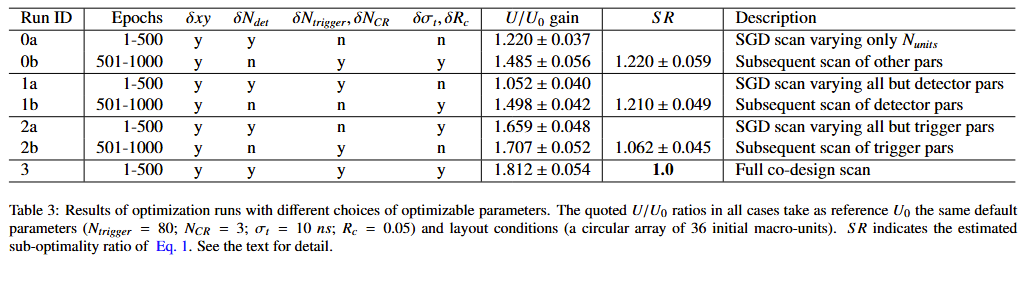
Next Monday, or Tuesday at the latest, you will find a new bulky paper in the arXiv. Titled "On...

Travel With Two Infants

The other day I traveled with Kalliopi and our two newborns to Padova from Lulea. After six full...
A Nice Little Combination

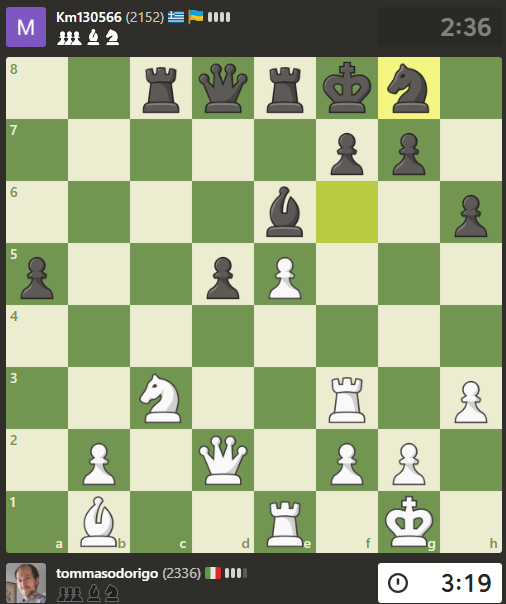
Although I have long retired from serious chess tournaments (they take too much time, a luxury...

User picture.
picture for Hank Campbellpicture for Patrick Lockerbypicture for Heidi Hendersonpicture for Bente Lilja Byepicture for Sascha Vongehrpicture for Johannes Koelman
Tommaso DorigoRSS Feed of this column.

Tommaso Dorigo is an experimental particle physicist, who works for the INFN at the University of Padova, and collaborates with the CMS and the SWGO experiments. He is the president of the Read More »

Blogroll
The paper to read today is one from the ATLAS collaboration at the CERN Large Hadron Collider -my competitors, as I work for the other experiment across the ring, CMS. ATLAS has just produced a new article which describes the search for the CP-odd A boson, a particle which arises in Supersymmetry as well as in more generic extensions of the Standard Model called "two-higgs doublet models". What are these ?
"1. Interaction with matter changes the neutrino mixing and effective mass splitting in a way that depends on the mass hierarchy. Consequently, results of oscillations and flavor conversion are different for the two hierarchies.
2. Sensitivity to the mass hierarchy appears whenever the matter effect on the 1-3 mixing and mass splitting becomes substantial. This happens in supernovae in large energy range, and in the matter of the Earth.[...] 
4. Multi-megaton scale under ice (water) atmospheric neutrino detectors with low energy threshold (2-3 GeV) may establish mass hierarchy with (3-10)σ confidence level in few years. [...]
Less than three weeks separate us from the XVI Neutrino Telescopes, a very interesting conference held in Venice every two years. The physics of neutrinos is a very special niche in the realm of particle physics, one not devoid of cunning experimental techniques, brilliant theoretical ideas, and offering possible avenues to discover new physics. Hence I am quite happy to be attending the event, from where I will also be blogging (hopefully with the help of a few students in Padova).(NB this article, as others with neutrinos as a subject for the next month or so, appears also in the conference blog).
On Friday I traveled to Belluno, a town just south of the north-eastern Italian alps, to give a lecture on particle physics to high-school students for the "International Masterclasses". This was the umpteenth time that I gave more or less the same talk in the last decade or so; but it's not my fault, as particle physics has changed very little in the meantime. Yes, we discovered the Higgs boson, and yes, we excluded many possible extensions of the standard model. But the one-line summary remains the same: we continue to seek, but are not quite sure we'll find, a hint of what lies beyond.
A preprint article by the IceCube collaboration captured my attention today in the Cornell Arxiv, and even more interesting was the main result of the analysis it reports, which can be shown as a "temperature plot" on an equilateral triangle. We will get to that, but let me first explain what is the experiment, what are the goals, and what it is that was measured.

The sixteenth edition of the internationally known Neutrino Telescopes conference will take place on March 2nd-6th 2015 in the usual venue of Palazzo Franchetti in Venice. This is a conference which gathers from around the world researchers who study neutrino physics and related topics.