

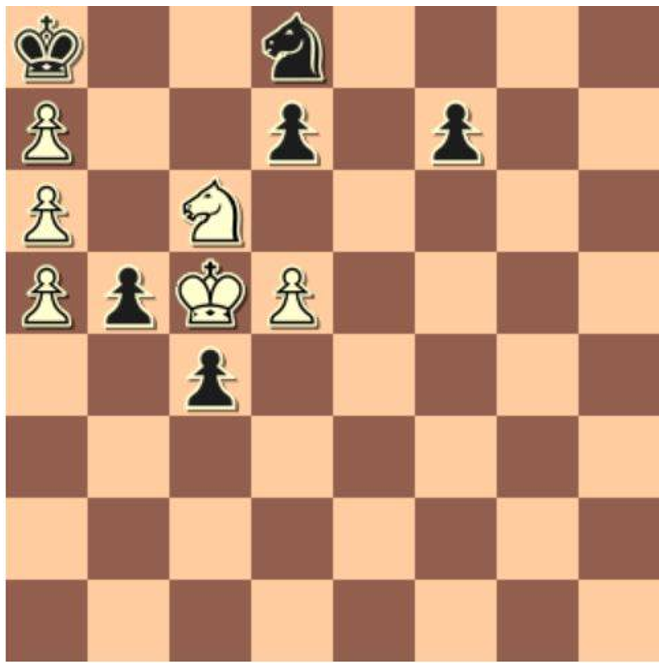
 A Chess Study Requiring Backpropagation
The following position is a win for white. But how?It seems like white is able to grab a knight...
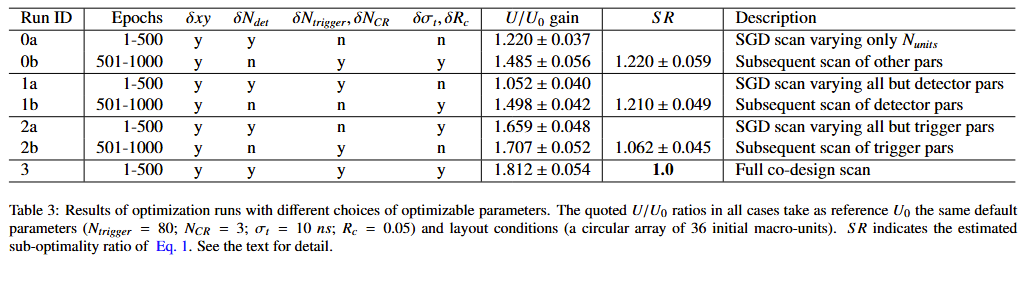 Co-Design Of Scientific Experiments
Next Monday, or Tuesday at the latest, you will find a new bulky paper in the arXiv. Titled "On...
 Travel With Two Infants
The other day I traveled with Kalliopi and our two newborns to Padova from Lulea. After six full...
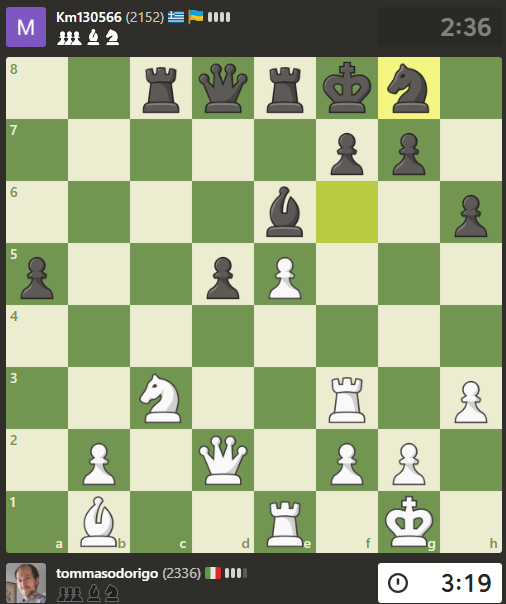 A Nice Little Combination
Although I have long retired from serious chess tournaments (they take too much time, a luxury...
       |
Tommaso Dorigo Tommaso Dorigo is an experimental particle physicist, who works for the INFN at the University of Padova, and collaborates with the CMS and the SWGO experiments. He is the president of the Read More » |
Blogroll |



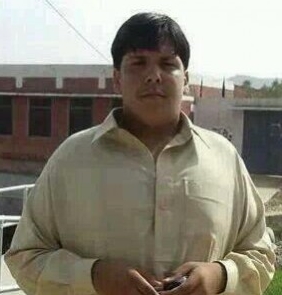 Last Monday Aitzaz was lingering out of school with two friends in the small shiite town of Ibrahimzai, near the Pakistani capital Islamabad. Just before getting in they were approached by a 20-year-old who claimed he wanted to enrol to the school. The students realized that he was concealing a bomb and planned to blow up the school.
