A brand new result in Higgs boson physics has been presented by my old-time CDF colleague Wei-Ming Yao at the Moriond QCD conference two days ago. It is the combination of CDF and DZERO limits on the Higgs boson, and it constitutes a significant advancement in our knowledge of the standard model.
The result is simple to state in a single sentence, although it will take me several pages to explain it acceptably. The Higgs boson is excluded at 95% confidence level in the 130-210 GeV mass range, if there are four generations of matter fields.
"A male astrophysicist talks physics to the astronomers and astronomy to the physicists, but then he meets another astrophysicist, and they discuss women."
Unknown
Have you ever seen a galaxy ?
I mean, not a picture of one. The real thing. A picture is a representation of reality, and as such it conveys to our senses only a pale suggestion of the stimulation that experiencing the real thing provides. In a world where images, still and in motion, have a dominant role in our lives, we tend to forget how different are some things when we experience them directly.
I was delighted to receive news this afternoon of three new interesting results produced by the DZERO collaboration in the analysis of Quantum Chromodynamics (QCD) processes.
QCD, the theory of strong interactions between quarks and gluons, is the "boring" part of the physics of high-energy hadron-hadron collisions. It used to be more more exciting twenty years ago, when the theoretical calculations were not as refined as they are now, and there was still a lot to understand in the physics of strong interactions between quarks and gluons. But nowadays, things are much more clear.
How do we fix science journalism ? Simple: we don't. We let it sink, and be reborn in a different form.
It is rather utopic to insist that in a world of changing means of communications, a world where printed matter is losing ground to the advantage of electronic media, the diffusion of scientific information may or shall stay the same.
The CDF collaboration, which runs one of the two proton-antiproton collider experiments at the Fermi National Accelerator Laboratory since the early eighties, has published hundreds of scienticif papers in the course of its 25 years of operation. I believe the number has abundantly surpassed the half-thousand mark, but I am unaware of its exact entity.


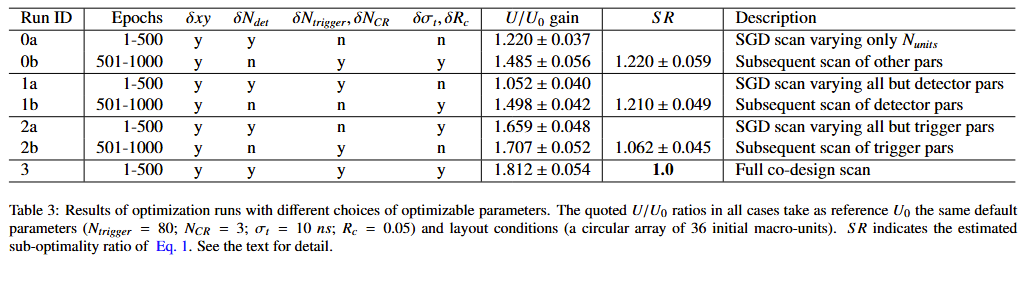 Co-Design Of Scientific Experiments
 Travel With Two Infants
 A Nice Little Combination
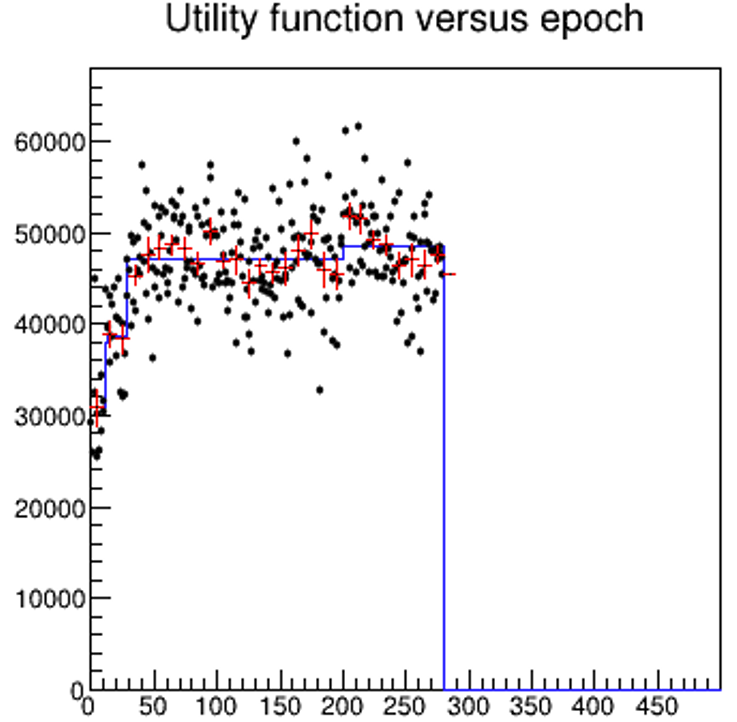 The Strange Case Of The Monotonous Running Average














