It is nice when somebody publishes an article and acknowledges your contribution, even when the input or help you gave was really minimal. I found out today that Marco Matone, a theoretical phyisicist and colleague from the University of Padova,
published on the arxiv (and submitted to Physics Letters, where it will be published as
Phys.Lett. B772 (2017) 435-441) an article titled "Exponentiating Higgs" which quotes me in the acknowledgement section:
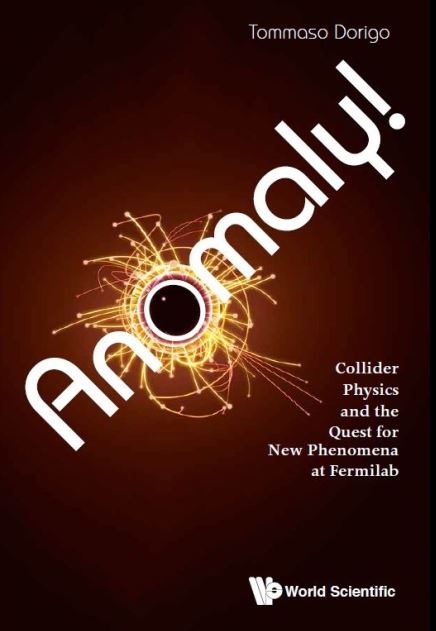 The clip below, together with the following few which will be published every few days in the coming weeks, is extracted from the third chapter of my book "Anomaly! Collider Physics and the Quest for New Phenomena at Fermilab". It recounts the pioneering measurement of the Z mass by the CDF detector, and the competition with SLAC during the summer of 1989.
Do you remember the infamous "g-2" measurement ? The anomalous magnetic moment of the muon has been for over a decade in the agenda of HEP physicists, both as a puzzle and as a hope for good things to come.
Ever since the Brookhaven laboratories estimated the quantity at a value over 3 standard deviations away from the equally precise theoretical predictions, the topic (could the discrepancy be due to new physics??) has been commonplace in dinner table conversations among HEP physicists.
On Saturday, July 8th, the "Sala Perla" of the Palazzo del Casinò was crowded by 600 attendees, who filled all seats and then some. The event, titled "Universo: tempo zero - breve storia dell'inizio", was organized in conjunction with the international EPS conference, which takes place until this Wednesday at Lido of Venice. It featured a discussion between the anchor, Silvia Rosa Brusin, and a few guests: Fabiola Gianotti, general director of CERN; Antonio Masiero, vice-president of INFN; and Mirko Pojer, responsible of operations of the LHC collider. The program was enriched by a few videos, and by readings by Sonia Bergamasco and jazz music by Umberto Petrin.
[UPDATE: see at the bottom for some additional commentary following a post on the matter by our friend Lubos Motl in his blog, where he quotes this piece and disagrees on the interest of finding the Xi mass in perfect agreement with an a priori calculation.]
It is always nice to learn that a new hadron is discovered - this broadens our understanding of the extremely complicated fabric of Quantum Chromodynamics (QCD), the theory of strong interactions that govern nuclear matter and are responsible for its stability.
The
2017 edition of the European Physical Society conference will take place in the Lido of Venice this week, from July 5th to 12th. For the first time in many years -30 as of now- a big international conference in HEP is organized in Italy, a datum I found surprising at first. When I learned it, the years were 26 and I was in a local organizing committee that tried to propose another conference in the same location. Although excellent, our proposal was ditched, and from the episode I learned I should not be too surprised for the hiatus.


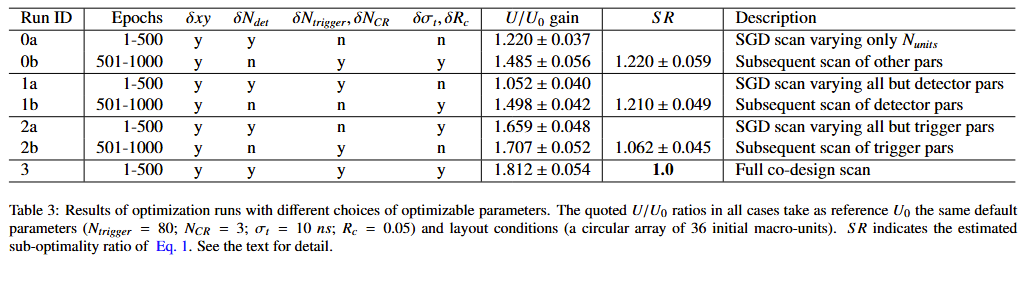 Co-Design Of Scientific Experiments
 Travel With Two Infants
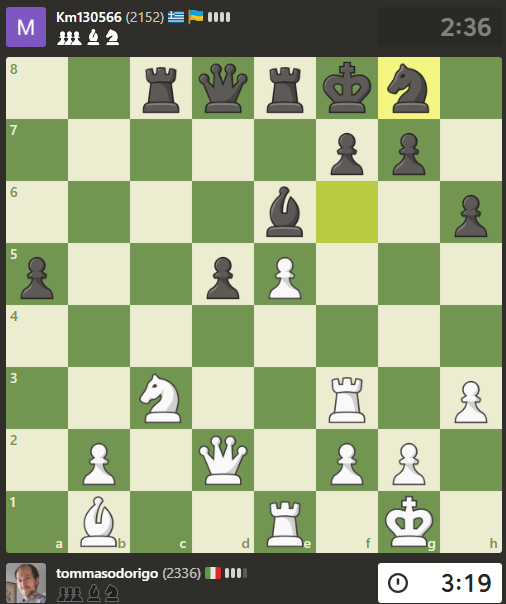 A Nice Little Combination
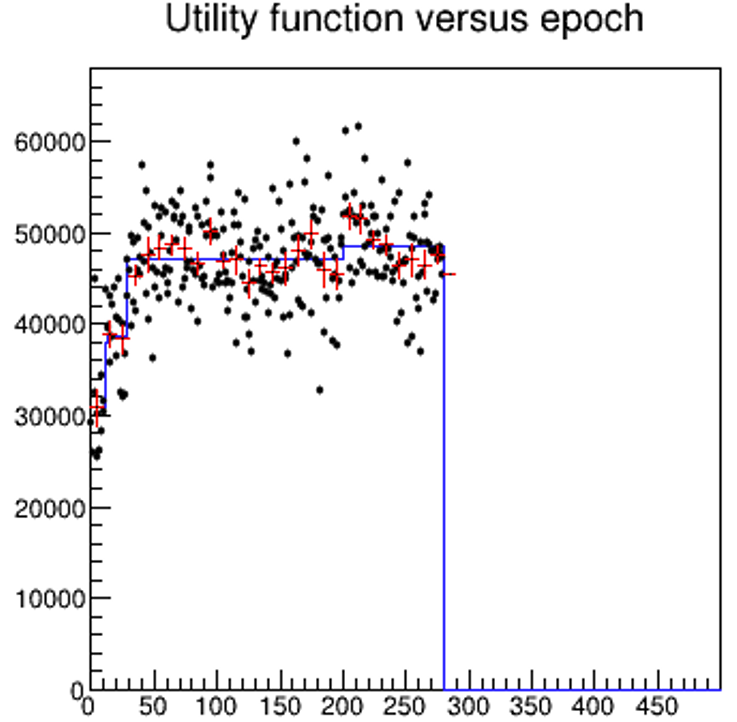 The Strange Case Of The Monotonous Running Average