Fake Banner
Co-Design Of Scientific Experiments

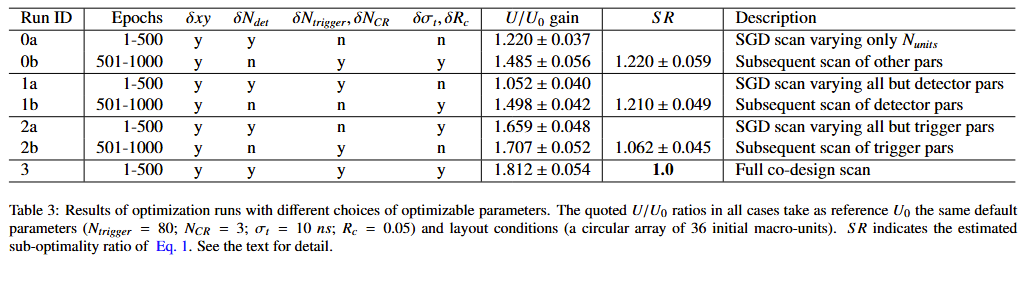
Next Monday, or Tuesday at the latest, you will find a new bulky paper in the arXiv. Titled "On...

Travel With Two Infants

The other day I traveled with Kalliopi and our two newborns to Padova from Lulea. After six full...
A Nice Little Combination

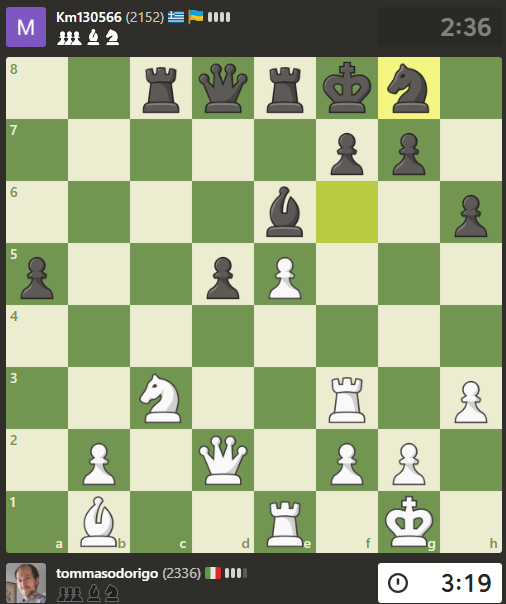
Although I have long retired from serious chess tournaments (they take too much time, a luxury...
The Strange Case Of The Monotonous Running Average

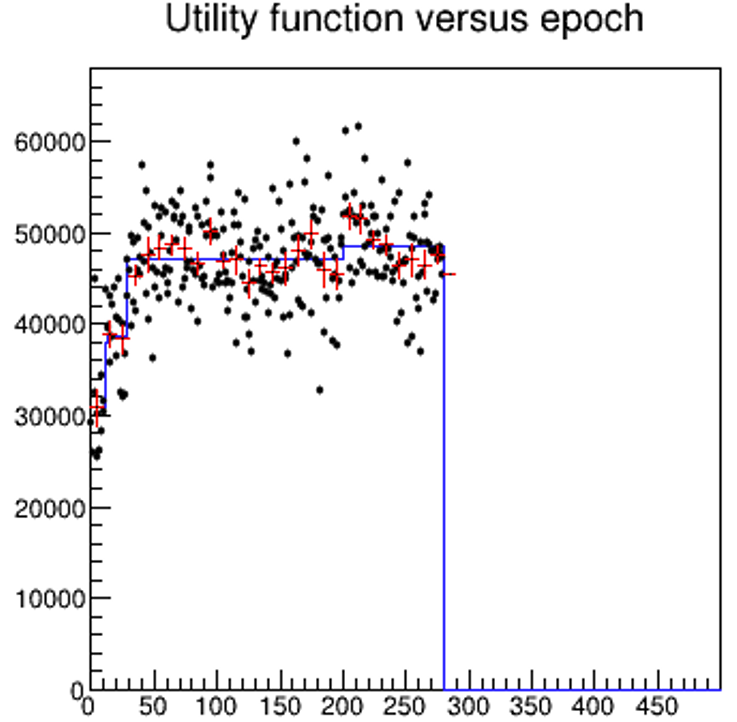
These days I am putting the finishing touches on a hybrid algorithm that optimizes a system (a...

User picture.
picture for Hank Campbellpicture for Patrick Lockerbypicture for Heidi Hendersonpicture for Bente Lilja Byepicture for Sascha Vongehrpicture for Johannes Koelman
Tommaso DorigoRSS Feed of this column.

Tommaso Dorigo is an experimental particle physicist, who works for the INFN at the University of Padova, and collaborates with the CMS and the SWGO experiments. He is the president of the Read More »

Blogroll
As explained in the first installment of this series, these questions are a warm-up for my younger colleagues, who will in two months have to pass a tough exam to become INFN researchers. In fact, now that the application period has ended, I can say that there have been 718 applications for 58 positions. That's a lot, but OTOH any applicants starts off with a one-in-12.4 chance of getting the job, which is not so terribly small. 
The ICHEP conference in Chicago is drawing to a close, and although I did not have the pleasure to attend it (I was busy with real work, you know ;-) I think I can post here some commentary of a few things I find interesting among the multitude of analyses and searches that were shown there. It goes without saying that the selection is biased by my personal interest, plus by my limited patience with peeking at talk slides. In fact, here I only cover one specific Higgs boson decay mode!

But a digression first - and a digression on the digression
So, by now we all know it - there is no 750 GeV resonance in LHC data. But will we ever learn the lesson ?
The facts

Let me start this post by recalling the bare facts, and a quick-and-dirty introduction for anybody who has been on the Moon in the last eight months or so. Last December, the CMS and ATLAS experiments at the CERN LHC collider presented in two back-to-back seminars their first results on data collected at unprecedented proton-proton collision energy of 13 TeV. The 60% higher center-of-mass energy with respect to collisions analized in the previous years left hopes alive for the discovery of some new physics process, which could have been hiding until then thanks to the large required energy to turn on the reactions. 
As explained in the first installment of this series, these questions are a warm-up for my younger colleagues, who will in two months have to pass a tough exam to become INFN researchers.

A disclaimer follows:
As explained in the first installment of this series, these questions are a warm-up for my younger colleagues, who will in two months have to pass a tough exam to become INFN researchers.
A disclaimer follows:
As explained in the previous installment of this series, these questions are a warm-up for my younger colleagues, who will in two months have to pass a tough exam to become INFN researchers.
A disclaimer follows: