After decades of theoretical studies and experimental measurements, forty years ago particle physicists managed to construct a very successful theory, one which describes with great accuracy the dynamics of subnuclear particles. This theory is now universally known as the Standard Model of particle physics. Since then, physicists have invested enormous efforts in the attempt of breaking it down.
It is not a contradiction: our understanding of the physical world progresses as we construct a progressively more refined mathematical representation of reality. Often this is done by adding more detail to an existing framework, but in some cases a complete overhaul is needed. And we appear to be in that situation with the Standard Model.
Expectations are rising for the 2016 run of the Large Hadron Collider. The machine has restarted colliding protons in the cores of ATLAS and CMS, where finally the reality of the tantalizing 750 GeV diphoton bumps seen by the two experiments in their Run 1 and 2015 data *will* be assessed one way or the other.
The flurry of papers discussing possible interpretations of the observed effect, first reported last December during a data jamboree at CERN, has slightly reduced in intensity but is still going rather strong in an absolute sense. Over 300 phenomenological interpretations have been published on the preprint Arxiv (but I wonder how many will end up with a publication on a refereed journal ? Maybe just a handful).
Funny how the internet gives you access to information on your own stuff before you know it. The book I have written, "Anomaly!", is still in production (we have not yet even finalized the book cover), and yet you can even apparently buy a copy already, at the World Scientific site. What is funny is that I discovered the page with the book data by chance, browsing through other books to get inspiration!
I was enthralled by reading the
latest post by Greg Kotkowski on the Amva4NewPhysics blog. He has something to teach us all about how we should be rational and use our knowledge to address everyday problems, rather than follow the groupthink and be driven to take irrational measures.
Have a look at it and let me know if you liked it!
My book "Anomaly! - Collider Physics and the Quest for New Phenomena at Fermilab" is in production at World Scientific, with an expected publication date somewhere in August or September. I have explained what this work is about in previous posts, but maybe what I can do here is to just paste here the few lines of description that have been put together for the back cover:
It's been a while since the last time I talked about myself in this column. I think that a blog must contain personal information to be interesting - otherwise why sticking around, when there's tons of good (yes, also bad) information in the web ? But here you can get some particle physics information mixed in with things that, although you need not know or care about, it's fun to share and comment on. Or at least I hope it's so, for the few of you who read this.


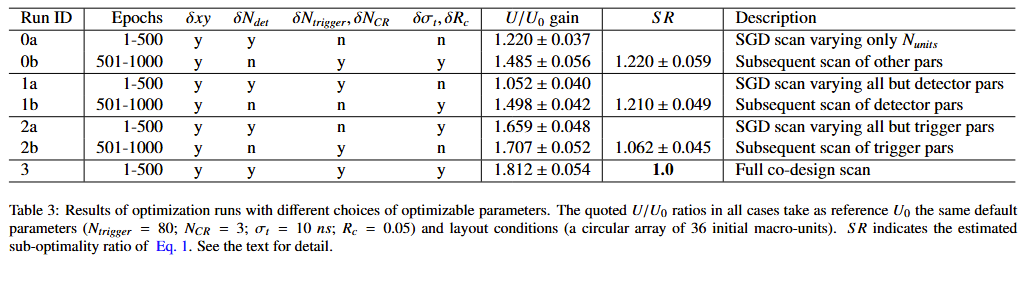 Co-Design Of Scientific Experiments
 Travel With Two Infants
 A Nice Little Combination
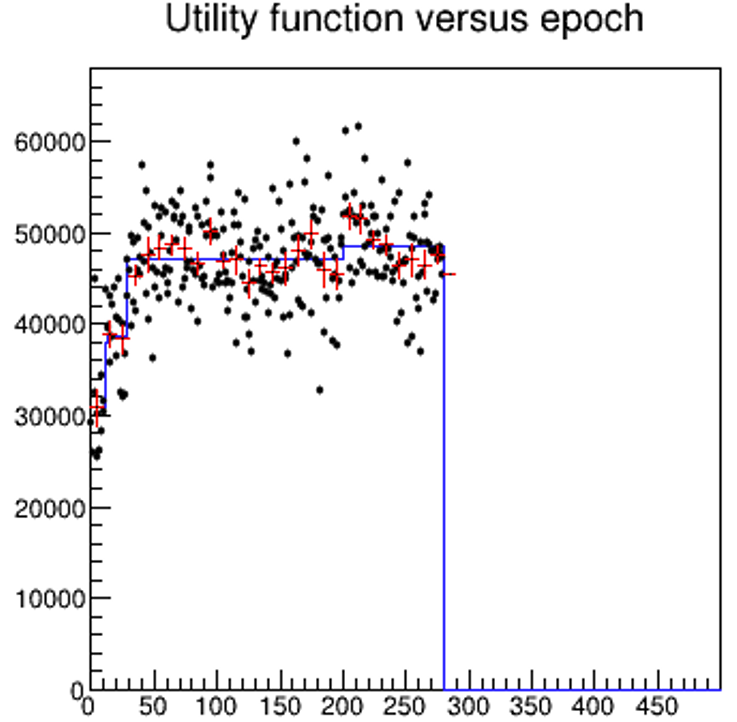 The Strange Case Of The Monotonous Running Average