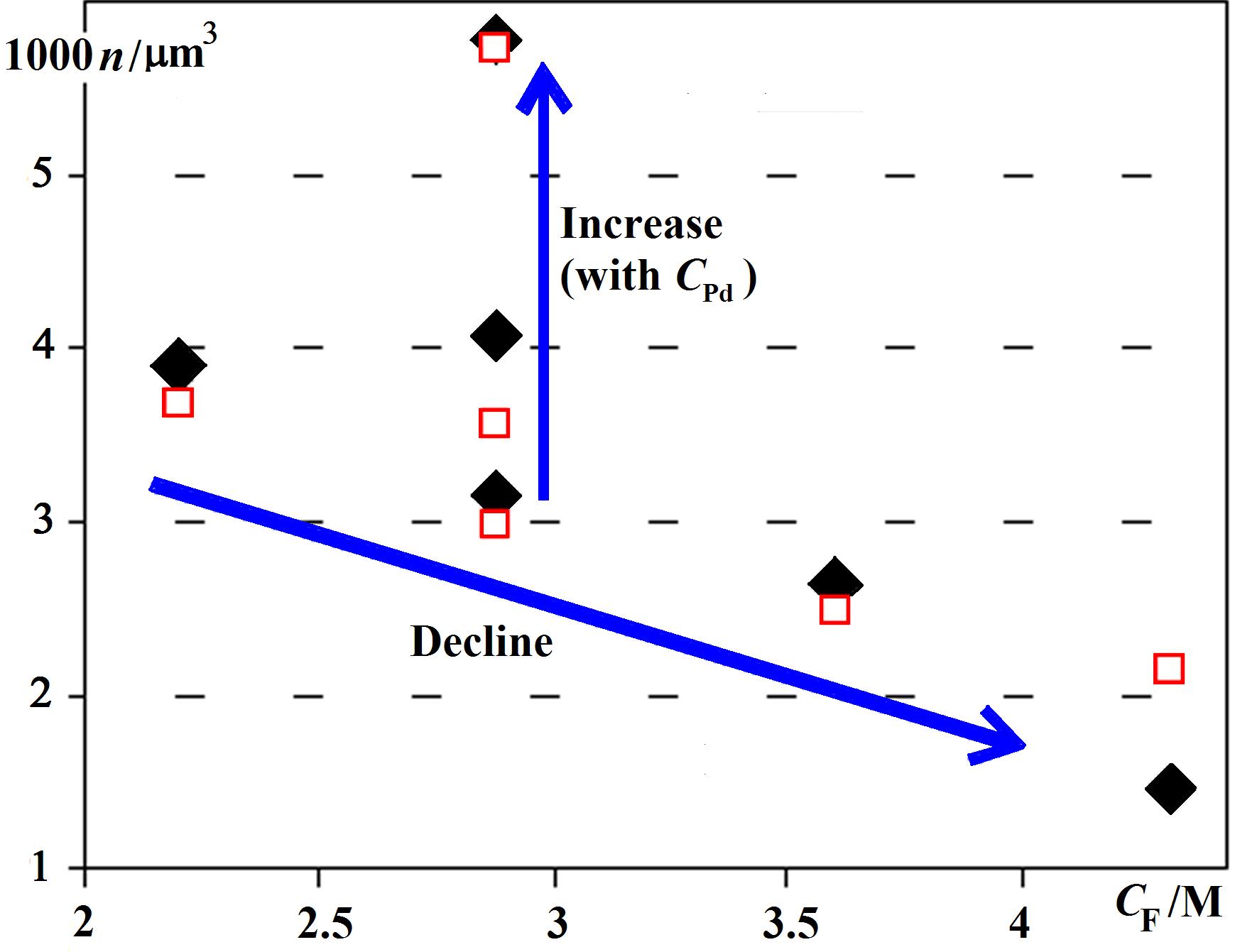
The physics of nanometer sized bubbles is mysterious and controversial. Gas bubbles in liquids are unstable.[2] Also large air bubbles in water are not stable. Even if we keep them somehow from rising to the surface and popping, the surface tension of the bubble itself presses the air out of the bubble and into the liquid! The physicist calls this ‘Laplace pressure’.[3] We do not notice this with large bubbles. However, with a nanobubble, the Laplace pressure dissolves it in a few micro seconds.
Usually the arXiv does time wasting nasty things like delay and then re-categorize articles with inconvenient truths into unsuitable categories where nobody of the target audience will find it and the usual audience is not interested. This however is 2016, the year where the liberal denial of reality has accumulated so much suffering, for example to the Black community, women, the Middle East ..., that people can no longer stand it.
Everybody, males, females, Whites, non-Whites, ... is nowadays personally harmed by the established anti-scientific ideology of denying the differences between humans and our evolutionary constraints. A positive feedback loop after a certain threshold has now been reached:
Zen cooking according to the teachings of the master-less monk Feng Sa Sha (风洒沙, Wind Sprinkling Sand) is, unsurprising perhaps when considering the radical fundamentality of Zen, not only the most inexpensive and easy as well as perhaps most importantly, great tasting of all cooking, but moreover it is the most healthy and wholesome diet – no surprise that it is consistent with and full of good science.
This is the reply after asking a scientist to endorse putting a draft of an article into a more fitting category on the arXiv, which is a mere preprint archive (not a journal or anything like that) where I already put almost 20 articles, and the endorsement would be anonymous, so this established scientist fears that the enforcers at the PC arXiv may notify his or her University - this is the state of free speech today, the reality of the scientific community:
Hi Sascha,
After more research into the roots as well as the current realities of certain issues, I have removed some articles and revised many (as I usually do, but even more). The US does not have a prison or gun problem; it has a problem with certain races. Since separation (segregation) is no longer possible, the US is forced to build more incarceration facilities. It also needs far more holders of concealed weapons - that such is not necessary in certain other places is no argument against such but rather strengthens the case for that it is necessary, and it becomes so all over the decaying West now.
We already must deal with computers too much rather than too little, and there is already lots of advanced computing done also for example in materials science and nanotechnology, for example molecular dynamics (MD) and Monte Carlo simulations.[2] The molecular biologist’s programs for predicting protein folding can also count as nanotechnology. Nevertheless, all of our previous articles* concluded that we need more computing, and several mentioned statistics. This would sound predictable if coming from a statistical physicist with a background in computing, advertising his skills. However, we mean a more efficient computing rather than simply more.


 Stephen Hawking's Final Theory On Many Worlds
 Phil/Evo Fundaments Of Our Deceiving In Denial, Justifying With Obvious Lies II: The Very Bottom
 Symmetry & Relativity, Sexy Virtual Reality (VR) In Modern Relativity Theory - All For Everybody