Scientific Hedging
A favourite theme in disaster movies is the political figure who tries to keep the local population from being alerted to some impending catastrophe. Usually, the political figure tries to impede the publication of findings by one or more scientists. In real life, it is more commonly the scientists themselves who create a barrier that stands between them and non-scientists. That barrier, the 'hedge' is a linguistic device.
I am continually amazed and amused by the wonderful metaphors and similes generated by users of the English language. The phrase "Are you talking to me or chewing a brick?" is a 'hard-man' phrase, contrastive with 'wet-lettuce' phraseology. But after reading this week's New Scientist, I shall never view
'chewing a brick' in quite the same light again.
Edit:For people who may be asking what does 'chewing a brick' actually
mean ? -
"I think, therefore I am." - Descartes.
Are you impressed by this deep and meaningful insight into the human condition? Descartes also wrote, in his Discourse: "... philosophy affords the means of discoursing with an appearance of truth on all matters, and commands the admiration of the more simple." Now, did Descartes come up with "I think, therefore I am." before, or after pushing his tongue firmly into his cheek?
In my first blog entry I mentioned the truth values (plural) of a sentence. What are the truth values of "I think, therefore I am."? Before even attempting to answer that question, the rational philosopher is required to explain the meaning of 'truth'.
What is truth?
Grammar is supposedly a holistic account of how meaning is expressed by using words in categories and in sequences. It is supposed to be a meld of syntax and semantics. Unfortunately, most writers on grammar focus on the syntax to the exclusion of the semantics. For me, that is like focusing on a carrier wave to the exclusion of the superimposed signal.
Spoken language is meaning conveyed by the modulation of a sound signal. It is not the modulation, but the meaning that is master.
'When I use a word,' Humpty Dumpty said in rather a scornful tone, 'it means just what I choose it to mean - neither more nor less.'
'The question is,' said Alice, 'whether you CAN make words mean so many different things.'


 Air India Flight 171 - Flawed EE Bay Water Ingress Theory
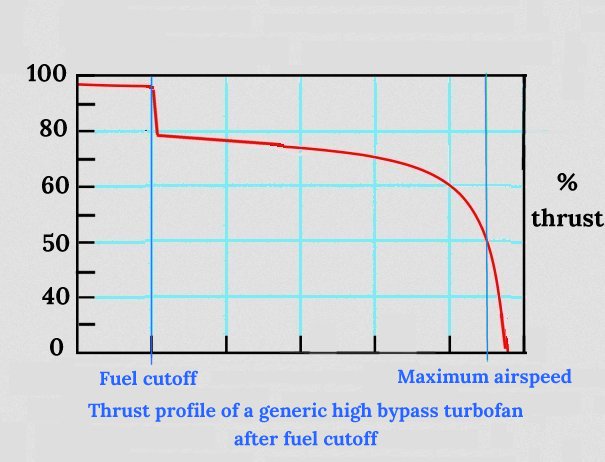 Air India Flight 171 Accident Summary - Key Findings
 Air India Flight 171 - Ask The experts
 Air India Flight 171 - The Vital Seconds