 Smilodon North of the 49th Parallel
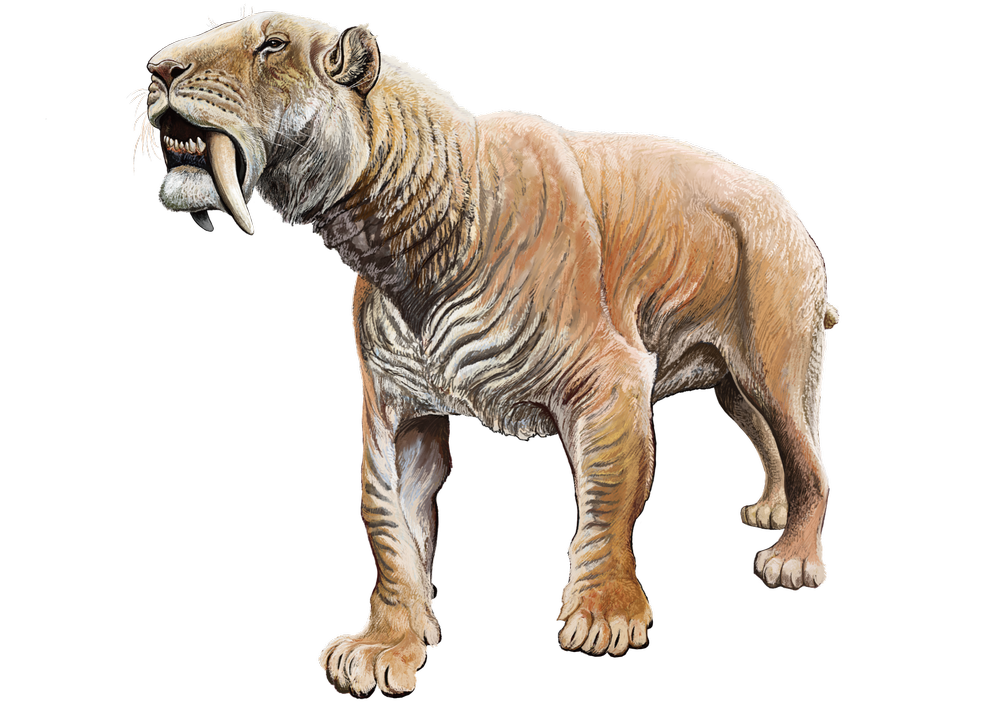
The fierce predator Smilodon fatalis — a compact but robust killer that weighed in around...
 First Nation Shell Middens And True Oysters
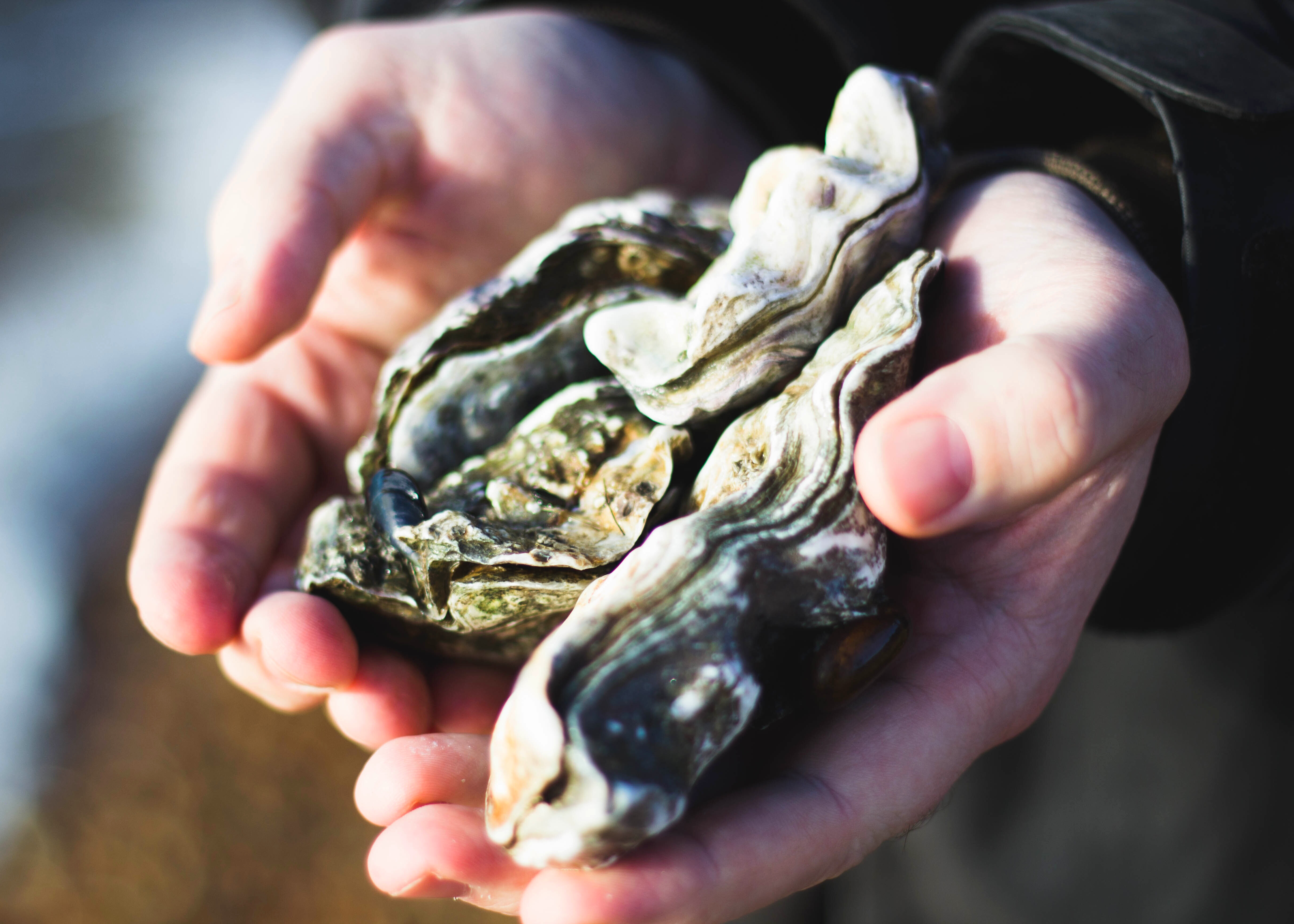
One of the now rare species of oysters in the Pacific Northwest is the Olympia oyster, Ostrea lurida...
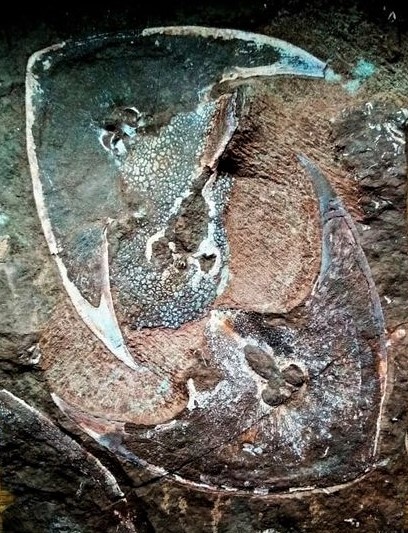 Zenaspis: Lower Devonian Bony Fish Of Podolia, Ukraine
A Devonian bony fish mortality plate showing a lower shield of Zenaspis podolica (Lankester, 1869)...
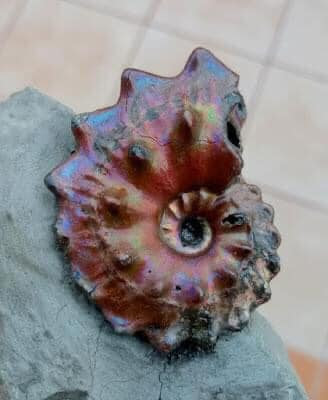 Oil in Water Beauty: Euhoplites of Folkstone
Sheer beauty — a beautiful Euhoplites ammonite from Folkstone, UK. These lovelies have a pleasing...
       |
Heidi Henderson Musings in Natural History—meant to captivate, educate and inspire. |
Blogroll |
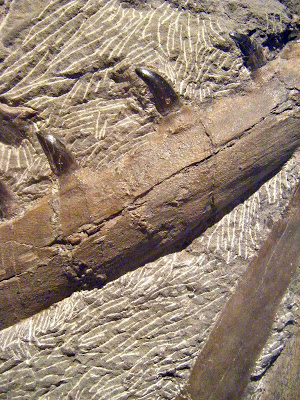
 A close-up of the dentition of an ancient marine, carnivorous lizard, the mighty Mosasaur, from Late Cretaceous exposures on Vancouver Island. Mosasaurs were air breathers and powerful swimmers.
 We have these coiled cephalopods to thank for the naming of the compound ammonia, NH3, the simplest pnictogen hydride, a colorless gas with a distinctive pungent smell. Ammonites were a group of hugely successful aquatic molluscs that looked like the still extant Nautilus, a coiled shellfish that lives off the southern coast of Asia.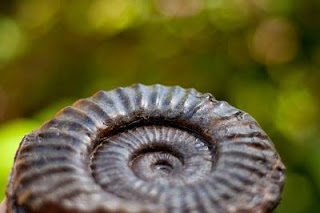
 This Jurassic ammonite is from an all but inaccessible site in Sayward, Bonanza Group, Vancouver Island.
By the time these ammonites were being buried in sediment, Wrangellia, the predominately volcanic terrane that now forms Vancouver Island and the Queen Charlotte Islands, had made its way to the northern mid-latitudes.
Within the basal part of the sequence, sedimentary beds are found interbedded with lapilli and crystal-tuffs.
This Jurassic ammonite is from an all but inaccessible site in Sayward, Bonanza Group, Vancouver Island.
By the time these ammonites were being buried in sediment, Wrangellia, the predominately volcanic terrane that now forms Vancouver Island and the Queen Charlotte Islands, had made its way to the northern mid-latitudes.
Within the basal part of the sequence, sedimentary beds are found interbedded with lapilli and crystal-tuffs..jpg "Dragonflies: Giants of the Past")
.jpg)