
Banner
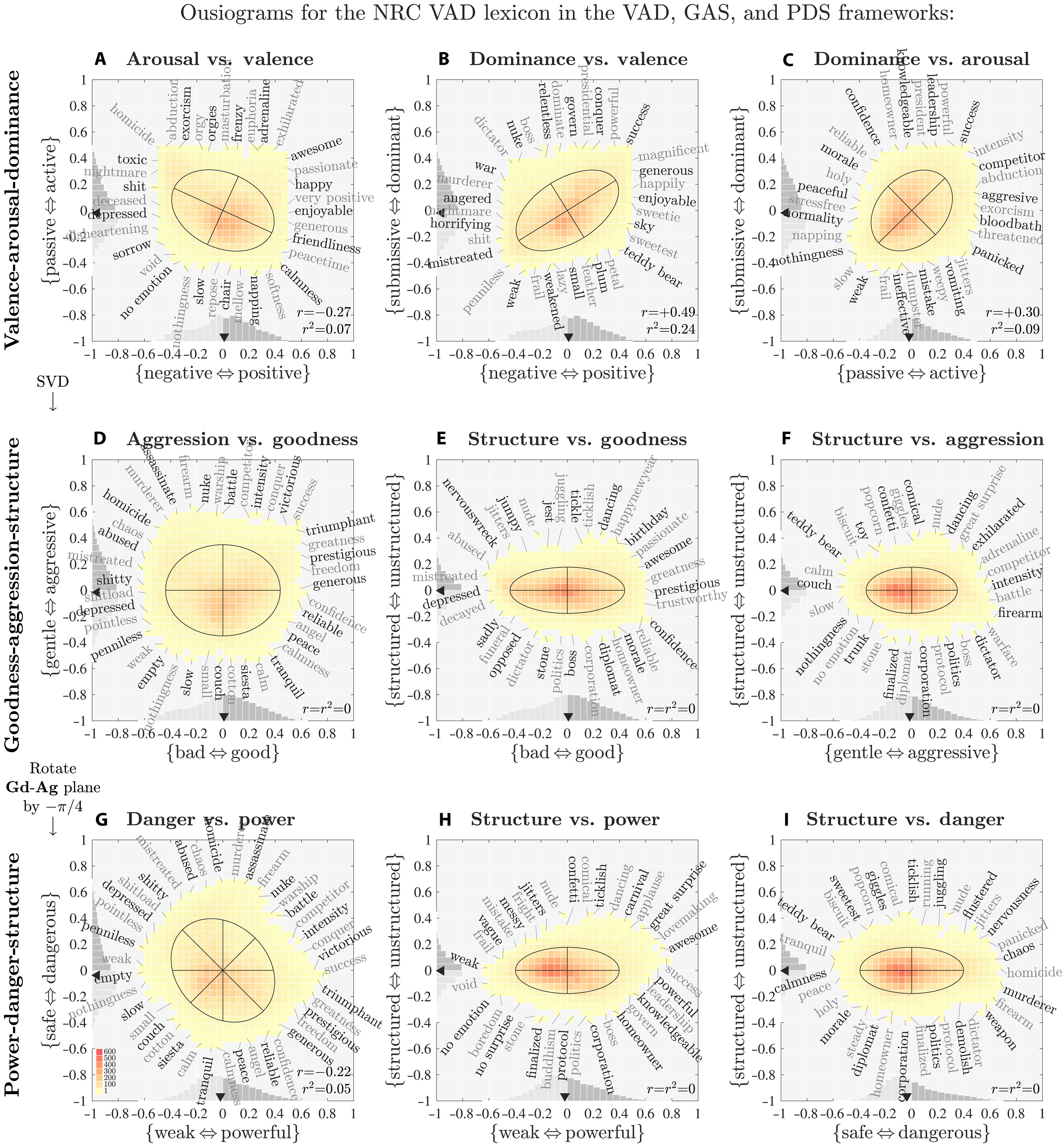
Ousiometrics Analysis Says All Human Language Is Biased

A new tool drawing on billions of uses of more than 20,000 words and diverse real-world texts claims...
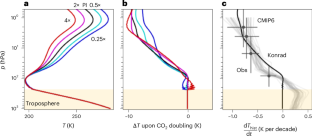
Wavelengths Of Light Are Why CO2 Cools The Upper Atmosphere But Warms Earth

There are concerns about projected warming on the Earth’s surface and in the lower atmosphere...

Here's Where Your Backyard Was 300 Million Years Ago

We may use terms like "grounded" and terra firma to mean stability and consistency but geology...

Convergent Evolution Cheat Sheet Now 120 Million Years Old

One tenet of natural selection is a random walk of genes but nature may be more predictable than...

User picture.
News StaffRSS Feed of this column.

News Releases From All Over The World, Right To You... Read More »

Blogroll

Like computers, our brains work on inductance. A switch is open or closed, a signal is passed. Brains follow rules, like computers. 

But if the brain is like a computer, why do brains make mistakes that computers don't?

Psychologist Gary Lupyan at the University of Wisconsin–Madison says that our brains stumble on even the simplest rule-based calculations because humans get caught up in contextual information, even when the rules are as clear-cut as separating even numbers from odd.

Almost all adults understand that it's the last digit — and only the last digit —that determines whether a number is even. In a new study, that didn't keep them from mistaking a number like 798 for odd.

Women's perceptions of what is considered normal and desirable female genitalia may be influenced by exposure to modified images, according to psychologists writing in BJOG: An International Journal of Obstetrics and Gynaecology.

Requests for labiaplasty - reducing and making the labia minora symmetrical - have become a fad and are now the most widely performed female genital cosmetic procedure covered by Australian government health care over the past decade, increasing five-fold between 2001 and 2010. 

Determining how proteins misfold to create the tissue-damaging structures that lead to type 2 diabetes is complicated. These amyloid fibrils are also implicated in neurodegenerative conditions such as Alzheimer's and Parkinson's, and in prion diseases like Creutzfeldt-Jacob and mad cow disease.   

Species living together are not forced to evolve differently to avoid competing with each other, a notion that that has been debated since the early days of natural selection.

By focusing on ovenbirds, one of the most diverse bird families in the world, a team conducted the most in-depth analysis yet of the processes causing species differences to evolve. They found that although bird species occurring together were consistently more different than species living apart, this was simply an artifact of species being old by the time they meet. In fact, once variation in the age of species was accounted for, coexisting species were actually more similar than species evolving separately.

Solar variation has not strongly influenced climate change, according to a paper which seeks to  overturn a widely held scientific view that lengthy periods of warm and cold weather in the past might have been caused by periodic fluctuations in solar activity.

Research in a narrow time period - the last 1,000 years - examined the causes of climate change in the northern hemisphere and found that until the year 1800, the key driver of periodic changes in climate was volcanic eruptions. These tend to prevent sunlight from reaching the Earth, causing cool, drier weather. Since 1900, greenhouse gases have been the primary cause of climate change.

A new aquifer in the Greenland Ice Sheet holds liquid water all year long in the otherwise perpetually frozen winter landscape. And it's big - 27,000 square miles. 

The reservoir is a "perennial firn aquifer" because water persists within the firn; layers of snow and ice that don't melt for at least one season. Researchers believe it figures significantly in understanding the contribution of snowmelt and ice melt to sea levels.  The Greenland Ice Sheet is vast, covering roughly the same area as the states of California, Nevada, Arizona, New Mexico, Colorado and Utah combined. The average thickness of the ice is 5,000 feet.





