
Banner
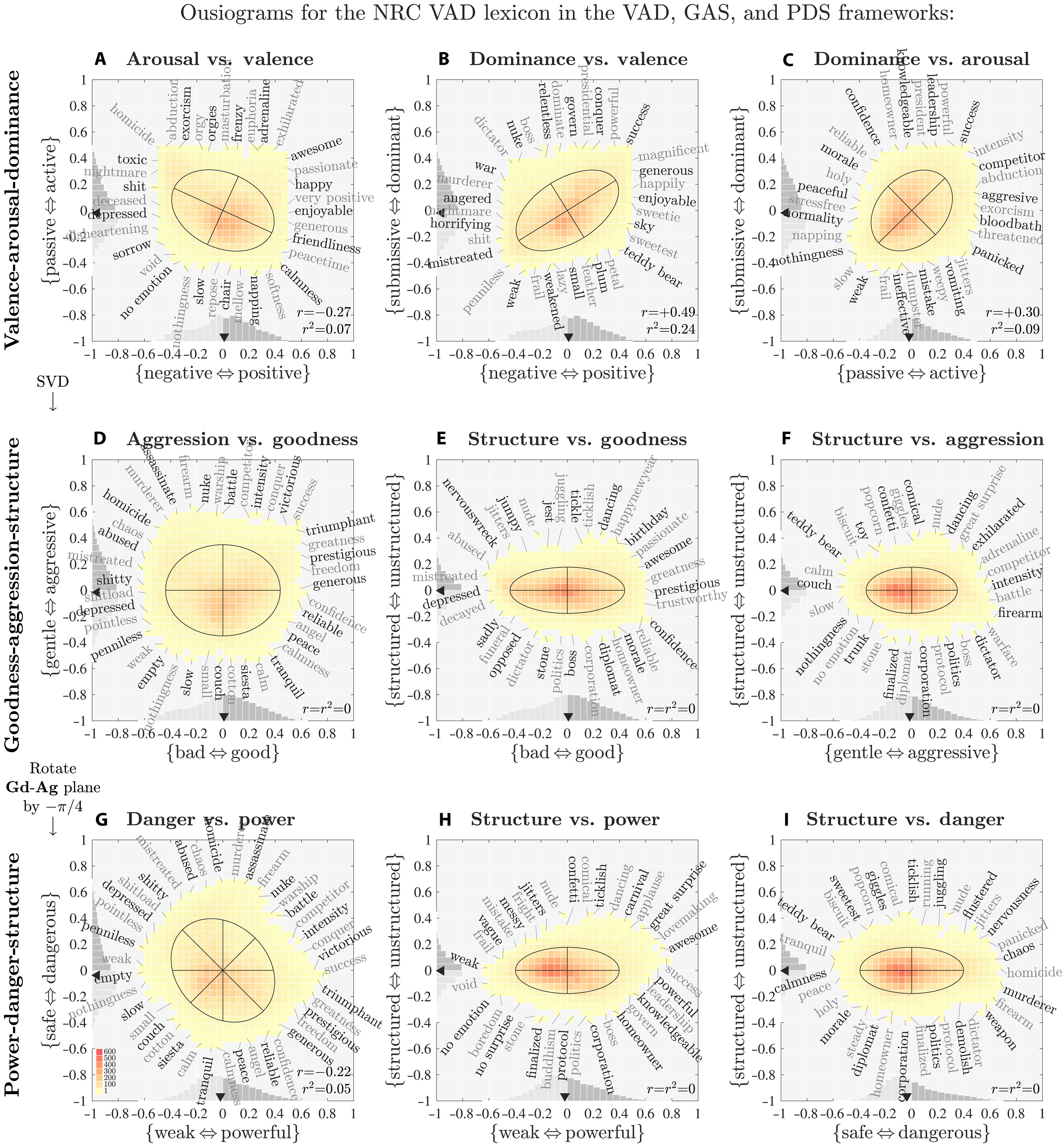
Ousiometrics Analysis Says All Human Language Is Biased

A new tool drawing on billions of uses of more than 20,000 words and diverse real-world texts claims...

Wavelengths Of Light Are Why CO2 Cools The Upper Atmosphere But Warms Earth

There are concerns about projected warming on the Earth’s surface and in the lower atmosphere...

Here's Where Your Backyard Was 300 Million Years Ago

We may use terms like "grounded" and terra firma to mean stability and consistency but geology...

Convergent Evolution Cheat Sheet Now 120 Million Years Old

One tenet of natural selection is a random walk of genes but nature may be more predictable than...

User picture.
News StaffRSS Feed of this column.

News Releases From All Over The World, Right To You... Read More »

Blogroll

A paper in the journal Child Development says that children as young as 3 understand multi-digit numbers more than previously believed and may even be ready for direct math instruction when they enter school.

This will have implications for the debate over education policy, where the chronic lament is that children are not being taught to the test enough and therefore only score in the middle on international standardized tests.

"Contrary to the view that young children do not understand place value and multi-digit numbers, we found that they actually know quite a lot about it," said co-author Kelly Mix, 
Michigan State University psychologist. "They are more ready than we think when they enter kindergarten."

Vodka can make people do strange things - especially if they also have a phone. But it can also do cool things, like demonstrating how to message people using chemical signals when conventional wireless would fail.

Researchers in the UK have successfully text messaged 'O Canada' using evaporated vodka. 

The chemical signal, using the alcohol found in vodka in this case, was sent four metres across the lab with the aid of a tabletop fan. It was then demodulated by a receiver which measured the rate of change in concentration of the alcohol molecules, picking up whether the concentration was increasing or decreasing.

California academics have found that banning smoking - including inside the home and in entire cities - will reduce smoking.

This makes sense. The death penalty also cuts recidivism of criminals by 100 percent, yet we don't use it for every crime. Meanwhile, Californians want to legalize marijuana, which involve smoking. 

Wael K. Al-Delaimy, MD, PhD, professor and chief of the Division of Global Health in the UC San Diego Department of Family and Preventive Medicine, says a survey underscores the public health importance of smoking bans inside and outside the home as a way to change smoking behaviors and reduce tobacco consumption at individual and societal levels. 

Each year, someone writes a book scaring people about food and that gets covered in the New York Times and then a whole rash of junk science studies get produced affirming exactly what the book said. This has been  a tradition since the 1960s, when Rachel Carson wrote Silent Spring, a book of anecdotes and scary claims about how someone she heard of sprayed DDT in her cellar and died, surrounded by science jargon about carcinogens.

In a new paper, a team reports their recent work examining  the effects of spaceflight on microbial pathogens - in this case infectious disease potential of the fungal pathogen, Candida albicans, the first global gene expression profiling and phenotypic characterization of a fungal pathogen during spaceflight.

Candida is a type of fungus—a eukaryotic microorganism. It is often found in soils and water and is ubiquitous in man-made environments, including the space shuttle and International Space Station. C. albicans is part of the normal flora of human beings, present on the skin, in the oral cavity, and in the gastrointestinal, urogenital and vaginal tracts.

For most of its life, a star is pretty stable, slowly consuming the fuel at its core to keep it shining brightly, but once most of the hydrogen that stars use as fuel has been consumed, some stars evolve into very different beasts -- pulsating stars. They become unstable, expanding and shrinking over a number of days or weeks and growing brighter and dimmer as they do so.


